Pakistan Navy Responds to Bulker Fire & Rescues Crew | Mariner News
In a remarkable display of maritime professionalism and unwavering dedication to safety at sea, the Pakistan Navy recently conducted a critical maritime rescue operation, responding to a severe burning Chinese bulker in international waters. This incident saw the swift and coordinated efforts of naval forces to save lives and mitigate a potentially catastrophic marine disaster, reinforcing Pakistan’s commitment to regional maritime security and humanitarian assistance. The vessel, identified as the ‘Gold Autumn,’ a 46,500 deadweight tonnage (dwt) bulk carrier built in 2001 and owned by Chinese interests, found itself engulfed in flames approximately 200 nautical miles off the coast of Pakistan. The prompt and efficient intervention by the Pakistan Navy ensured the safe evacuation of all 18 crew members, averting what could have been a tragic loss of life and a significant environmental incident in the busy shipping lanes of the Arabian Sea.
A Swift Maritime Emergency Response
The alarm was raised through a distress call received by the Maritime Rescue and Coordination Center (MRCC) in Pakistan, signaling an urgent ship fire on board the commercial vessel. The MRCC, acting with precision and speed, immediately initiated a comprehensive search and rescue operation, understanding the immense dangers associated with a fire on a large bulk carrier carrying various types of cargo. The vessel’s distress signal indicated it was en route to Sohar, Oman, a common shipping route for cargo vessels traversing the region. The remote location of the incident, far from shore, added layers of complexity and urgency to the response, emphasizing the critical role of well-equipped naval assets in such situations.
Upon receiving the critical information, the Pakistan Navy immediately dispatched its dedicated vessel, PNS Hunain, to the reported location. The deployment of a naval asset like PNS Hunain underscores the readiness and capability of the Pakistan Navy to respond to emergencies extending beyond its territorial waters, showcasing its role as a vital maritime stakeholder in the Indian Ocean region. Naval personnel are highly trained for a multitude of scenarios, including firefighting, damage control, and medical assistance in hostile environments, making them indispensable in crisis situations on the high seas. The rapid deployment mechanism ensures that precious time is not lost, a factor that is often paramount in saving lives during marine emergencies.
As PNS Hunain steamed towards the distressed vessel, the crew prepared for a multi-faceted operation, encompassing rescue, firefighting, and medical aid. The initial reports indicated a significant blaze, posing serious threats not only to the ship’s integrity but, more importantly, to the lives of the 18 crew members aboard. The vastness of the ocean demands robust communication and coordination protocols, which the Pakistan Navy effectively implemented with other regional maritime authorities to ensure a seamless and efficient response, highlighting the importance of a networked approach to maritime security and emergency services.
Braving the Flames: Crew Evacuation and Firefighting Operations
Upon reaching the scene, PNS Hunain encountered a harrowing sight: the ‘Gold Autumn’ engulfed in flames. The immediate priority shifted to the safe crew evacuation of all personnel from the burning bulk carrier. The crew comprised individuals from various nations, including China, Bangladesh, Myanmar, Vietnam, and Indonesia, reflecting the global nature of the shipping industry. Through meticulous planning and courageous execution, all 18 crew members were successfully rescued from the inferno, a testament to the proficiency and bravery of the Pakistan Navy personnel. Following their rescue, the crew members received immediate medical assistance and were subsequently transported to Karachi, Pakistan, where further care and arrangements for their repatriation could be made, ensuring their well-being after the traumatic experience.
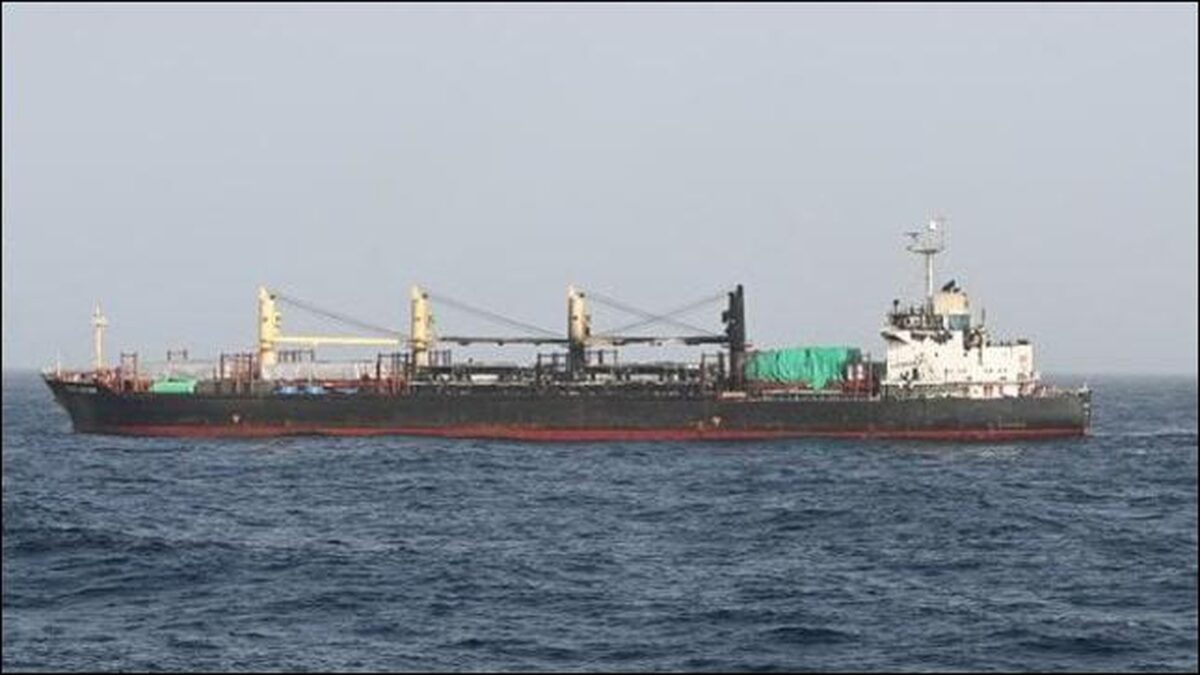
With the crew safely off the burning bulker, PNS Hunain’s mission expanded to assist with the arduous firefighting operations. Naval teams, equipped with specialized gear and training, worked tirelessly to bring the blaze under control. The visual evidence, including photographs later released, depicted significant damage to the vessel, particularly the bridge and upper decks of the deckhouse, which appeared burnt out. Furthermore, fire damage was observed forward around the cargo hatches, indicating the severity and spread of the conflagration throughout the bulk carrier. Containing such a large-scale fire on a commercial vessel at sea is a complex and dangerous undertaking, requiring specialized expertise and unwavering determination to prevent further structural damage or potential explosion.
The firefighting efforts were crucial not only for saving the vessel from total loss but also for preventing potential environmental pollution from any burning cargo or fuel. After the flames were finally extinguished, a preliminary damage assessment was conducted by the Pakistan Navy crew. While the exact cause of the fire remained unclear at the time of the initial reports, the extent of the damage underscored the intensity of the incident. This phase of the operation is critical for understanding the mechanics of the disaster and for informing future investigations, which are essential for enhancing vessel safety protocols across the global merchant fleet. The success of these combined operations highlights the multifaceted capabilities of naval forces in handling complex maritime emergencies.
Ensuring Maritime Safety and International Cooperation
This incident involving the burning Chinese bulker serves as a stark reminder of the inherent risks associated with commercial shipping and the unpredictable nature of the maritime environment. Fires on board merchant vessels, particularly bulk carriers carrying flammable goods or encountering challenging weather conditions, pose significant threats to human life, marine ecosystems, and the global supply chain. The proactive measures taken by the Pakistan Navy in this instance underscore the critical importance of robust maritime safety protocols and rapid response capabilities for all nations with significant coastal interests and shipping traffic. It emphasizes that safety at sea is a shared responsibility, requiring constant vigilance and preparedness from all stakeholders involved in seafaring and maritime transport.
The Pakistan Navy plays a crucial role not only in safeguarding national maritime frontiers but also in contributing to regional maritime security and humanitarian assistance efforts. Its rapid response to the distress call from the ‘Gold Autumn’ demonstrates its commitment to international maritime conventions and its capability to act as a reliable partner in times of crisis. Such operations go beyond traditional naval defense, showcasing the humanitarian aspect of naval forces and their invaluable contribution to preserving life and property on the high seas. Their presence and readiness are deterrents to piracy and other illicit activities, but also a beacon of hope for distressed vessels in need.
Furthermore, this incident highlights the indispensable value of international cooperation in maritime emergencies. The global nature of shipping means that vessels from one nation often find themselves in distress near the shores or operational areas of another. Effective communication, coordination, and mutual assistance between different maritime authorities and naval forces are paramount to ensuring successful outcomes in such complex scenarios. The collaborative spirit demonstrated in this maritime rescue operation sets a positive precedent for future inter-navy engagements and reinforces the principle that maritime safety transcends national boundaries, requiring a collective and unified approach to tackle unexpected challenges on the world’s oceans.
Investigating the Incident and Future Prevention
While the immediate crisis was expertly handled, the incident also raises important questions about the origins of the bulker fire. Investigations into the cause of such marine incidents are crucial for preventing future recurrences. Whether the fire was a result of mechanical failure, electrical malfunction, cargo spontaneous combustion, or human error, understanding the root cause is essential for implementing corrective measures and improving vessel safety standards across the shipping industry. Maritime regulatory bodies, ship owners, and classification societies will undoubtedly analyze the findings to enhance safety protocols, design standards, and operational procedures for bulk carriers and other merchant vessels navigating international waters, ensuring robust frameworks for maritime operations.
Lessons learned from incidents like the ‘Gold Autumn’ blaze are invaluable for continuous improvement in marine incident management. These include refining emergency response plans, ensuring regular maintenance and inspection of fire suppression systems, conducting thorough crew training on emergency procedures and damage control, and implementing advanced monitoring technologies on board cargo ships. The inherent risks of transporting various bulk materials necessitate stringent safety measures, from the loading and stowage of cargo to routine shipboard operations. Each incident provides an opportunity to review and strengthen the defenses against potential shipping disasters, promoting a culture of vigilance and preparedness throughout the maritime sector.
The coordinated efforts of the Pakistan Navy and the MRCC serve as a model for effective emergency response. Their prompt action in rescuing the crew and combating the blaze averted a potentially larger catastrophe. Moving forward, the focus will likely shift to a detailed investigation to ascertain the exact circumstances that led to the fire on the ‘Gold Autumn.’ This crucial step will contribute to the ongoing global efforts by maritime authorities to enhance safety and security for all vessels and personnel operating in the challenging environment of the open sea. By systematically addressing the contributing factors to such fires, the maritime community can work towards minimizing risks and safeguarding precious lives and valuable assets.
The successful maritime rescue operation by the Pakistan Navy in response to the burning Chinese bulker underscores the critical importance of naval readiness, international cooperation, and dedicated professionalism in maintaining maritime security and safety. The safe evacuation of 18 multinational crew members from the ‘Gold Autumn’ is a testament to the skill and bravery of the naval personnel involved. This incident serves as a powerful reminder of the unpredictable nature of sea travel and the indispensable role that naval forces play in humanitarian assistance and emergency response in the vast expanse of the world’s oceans. Continued investment in maritime capabilities and international partnerships remains vital for ensuring a safer future for global shipping.