Oil Prices Flat After U.S.-Iran Talks Yield More Diplomacy | Mariner News
Global oil prices remained remarkably stable despite the backdrop of intense U.S.-Iran nuclear talks that concluded with merely a commitment to further discussions. This scenario highlights the intricate interplay between high-stakes geopolitics and the fundamentals of the global energy market. The initial market jitters surrounding these negotiations, which saw tumultuous trading based on rumors of stalled progress, eventually settled as the agreement to reconvene next week seemingly averted an immediate military confrontation with the Islamic Republic. This diplomatic deferral, while not a resolution, effectively removed an immediate geopolitical risk premium, leaving crude oil benchmarks largely unchanged.
Brent crude, a key international benchmark for oil prices, settled down by a mere 10 cents to $70.75 per barrel, while West Texas Intermediate (WTI), the U.S. benchmark, saw a marginal drop of 21 cents to $65.21. This relative flatness in the face of significant political engagement underscores a market grappling with diverse forces. Investors and traders, having initially reacted to the uncertainty, quickly recalibrated their positions once the threat of imminent conflict subsided, pivoting back to underlying supply and demand dynamics that continue to shape the intricate landscape of global energy markets. The calm after the diplomatic storm suggests that while headlines can create ripples, the deep currents of market fundamentals often dictate the ultimate direction of oil prices.
Geopolitical Tensions and Crude Oil Volatility
The ongoing nuclear negotiations between the United States and Iran are a perennial source of volatility for global crude oil markets. The recent talks, though inconclusive, illustrate a delicate balance where the mere prospect of engagement can influence energy prices. Initial reports and speculation surrounding the U.S.-Iran talks often trigger swift market reactions, either by injecting a ‘geopolitical risk premium’ when tensions escalate or by dampening it when diplomatic avenues appear open.
This specific instance saw oil prices experience tumultuous trading as rumors circulated about the talks stalling. However, the subsequent agreement for further discussions provided a sigh of relief, effectively removing the immediate threat of a military confrontation. As Shohruh Zukhritdinov, a Dubai-based oil trader, succinctly put it, “The crude selloff is simply the market removing a geopolitical risk premium. Fundamentally nothing has changed.” This perspective underscores how the market quickly digests political developments, adjusting `oil prices` based on the perceived immediacy of risk rather than long-term strategic shifts.
Such diplomatic efforts, even when they merely lead to more talks, play a crucial role in stabilizing `energy markets` by deferring or de-escalating potential conflicts. The absence of an immediate strike against Iran had a calming effect, preventing a sharp upward spike in `oil prices` that would typically accompany heightened tensions in a major `oil-producing region`. For the `global energy trade`, this means continued, albeit precarious, stability in the short term, allowing `oil tankers` to continue their `maritime shipping` routes without immediate threats of disruption.
U.S.-Iran Diplomacy: A Closer Look at Nuclear Negotiations
The nature of the nuclear talks between the U.S. and Iran is inherently complex, touching upon a myriad of geopolitical, economic, and security considerations. While the immediate outcome of the latest round was a commitment to continued dialogue, this in itself is a significant development, preventing a breakdown that could have rapidly escalated tensions in the Middle East, a vital region for `global oil supply`.
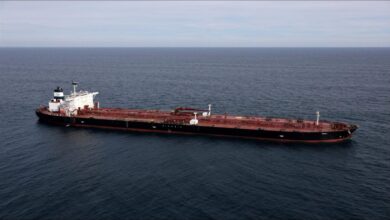
Iran, a major `oil producer` with substantial reserves, has been actively preparing for various scenarios. Reports indicate that the nation has been rapidly loading `crude oil` onto `tankers` in recent days. This proactive measure suggests preparations in case of an attack or further sanctions, illustrating Iran’s strategic efforts to `front-load exports` to mitigate potential future disruptions to its `oil trade`. Such actions, while prudent for Iran, add an element of uncertainty to the `oil market` by influencing `oil supply` perceptions and potentially impacting the global `shipping industry`.
The continuation of `nuclear negotiations` offers a glimmer of hope for a peaceful resolution, yet the pathway remains fraught with challenges. The `oil market` will undoubtedly continue to scrutinize every development, as any significant shift in `U.S.-Iran relations` could drastically alter `oil prices` and the broader landscape of `energy security`. The maritime transportation of `oil and gas` remains highly sensitive to these political currents, with `oil tankers` navigating not just physical seas but also the turbulent waters of international diplomacy.
OPEC+ Strategy and Global Oil Supply Dynamics
Beyond the geopolitical headlines, the decisions of the Organization of the Petroleum Exporting Countries and its allies (OPEC+) remain a dominant force in shaping `global oil supply` and, consequently, `oil prices`. The cartel’s cautious approach to production adjustments reflects its ongoing efforts to balance market stability with the economic interests of its member nations. Reports suggesting OPEC+ will consider raising its `oil output` by 137,000 barrels per day (bpd) for April signal a potential shift in strategy.
This proposed increase aims to end a three-month suspension of `production increases` that was implemented to support `oil prices` during periods of uncertain `oil demand`. The move to potentially add barrels for April is primarily driven by the anticipation of peak summer demand, where `global oil consumption` typically rises. By proactively adjusting `oil supply`, `OPEC+` seeks to prevent significant `oil price` spikes that could hamper global economic recovery, while also capitalizing on expected `demand growth`.
The `OPEC+` alliance faces a delicate balancing act: increasing `oil output` too aggressively could flood the market and depress `oil prices`, hurting member revenues. Conversely, not raising `supply` enough could lead to `oil shortages` and escalating costs, potentially stifling `economic growth` and inviting criticism from major `oil-consuming nations`. The impact of these decisions reverberates across the entire `energy supply chain`, from `oil exploration` and `production` to `refining` and `shipping`, making `OPEC+` a critical player in maintaining `oil market stability`.
Market Fundamentals: Beyond Geopolitics
While `geopolitical events` often capture headlines and cause immediate market fluctuations, the underlying `market fundamentals` provide a more stable, albeit slower, indicator of `oil prices`. As Zukhritdinov noted, “fundamentally nothing has changed: `supply is still long`.” This perspective highlights the ongoing challenge of `oversupply` in the `global oil market`, a factor that exerts downward pressure on `crude oil` valuations independent of political machinations.
Despite the recent diplomatic overtures, the sheer volume of `global oil supply` continues to outweigh `demand growth` in many regions. This `supply-demand imbalance` is a crucial element for traders and analysts. Even with anticipated `demand increases` during summer months or gradual `economic recovery`, the `structural oversupply` can cap `oil price` gains. Moreover, the potential for `OPEC+` to add more barrels in April further underscores this `supply-side pressure`, impacting both `Brent crude` and `WTI` benchmarks.
Analysts also closely monitor `inventory levels` in major `consuming nations`, `refinery utilization rates`, and `global economic indicators`. These factors collectively paint a comprehensive picture of the `oil market’s` health. The sustained `supply surplus` means that even with geopolitical risks temporarily removed, `oil prices` are less likely to experience sustained rallies unless there’s a significant shift in either `global oil demand` or a more aggressive `supply cut` from major `oil producers`. The intricate relationship between these fundamental elements dictates the long-term trajectory of the `energy sector`.
Regional Perspectives: Dubai and Americas Market Insights
Insights from key `energy hubs` like Dubai and market analysis firms in the Americas offer a localized lens on `global oil market` dynamics. Shohruh Zukhritdinov’s observation from Dubai—that `geopolitical risk premium` removal is the primary driver behind `crude oil` movements in the short term, with `fundamentals` remaining unchanged—is a sentiment echoed across trading floors globally.
His point about `supply still being long` and the possibility of `OPEC+` adding barrels in April highlights the pervasive concern about `oversupply` that continues to temper enthusiasm for significantly higher `oil prices`. This regional outlook from a major `Middle Eastern trading center` reinforces the idea that, for many `oil traders`, the underlying `supply-demand balance` is the ultimate arbiter, even as `geopolitical events` cause temporary fluctuations. `Oil shipping` from this region is a constant, and its efficiency is paramount to global `energy security`.
Samantha Hartke, head of market analysis for the Americas at Vortexa Ltd., would likely focus on `demand trends` in the Western Hemisphere, particularly leading into the `summer driving season`. Discussions about potential `oil output increases` from `OPEC+` would naturally be viewed through the lens of how they meet `American demand` and affect regional `inventory levels`. `Market analysis` from the Americas often considers factors like U.S. `shale oil production`, `refinery maintenance schedules`, and local `economic growth forecasts`, all of which influence `WTI crude prices` and broader `energy security` for the region. The interplay of these `regional market` specificities with `global supply` and `geopolitical events` creates a complex web of influences on `oil prices`.
The Future of Energy Security and Oil Market Stability
The ongoing dialogues between the U.S. and Iran, coupled with the strategic maneuvers of `OPEC+`, collectively underscore the persistent challenges in achieving long-term `energy security` and `oil market stability`. The fluctuating `oil prices`, though currently flat, are a constant reminder of the fragility inherent in a `global energy system` heavily reliant on fossil fuels and susceptible to `geopolitical risks`.
The prospect of further `U.S.-Iran talks` leaves open possibilities ranging from a diplomatic breakthrough that could bring more Iranian `crude oil` to the market, to a complete breakdown leading to renewed `tensions and supply disruptions`. Each scenario has profound implications for `global oil supply`, `shipping lanes`, and the overall cost of `energy` for consumers worldwide. For `oil tankers` and `maritime logistics`, navigating this uncertainty means constant vigilance and adaptability.
In the broader context, the world’s reliance on `crude oil` means that `geopolitical stability` in key `producing regions` remains paramount. The interplay between political will, `economic fundamentals`, and `supply-side decisions` by `OPEC+` will continue to define the trajectory of `oil prices` and the quest for `energy security` for years to come. The current flat `oil prices`, far from signaling complete calm, merely reflect a temporary equilibrium in a market perpetually on edge, awaiting the next decisive shift in diplomacy or `market fundamentals`.
Conclusion
The recent U.S.-Iran talks, concluding with a commitment to further dialogue, have left global `oil prices` largely flat, momentarily removing a significant `geopolitical risk premium` from the `energy market`. This outcome highlights the immediate calming effect of continued diplomacy, even in the absence of a definitive resolution. While `Brent crude` and `WTI` saw marginal declines, the underlying `market sentiment` quickly shifted from fear of immediate conflict to a focus on broader `supply and demand fundamentals`.
Experts like Shohruh Zukhritdinov emphasize that despite `geopolitical fluctuations`, the `oil market` remains fundamentally `oversupplied`, with `OPEC+` considering `production increases` to prepare for `peak summer demand`. Iran’s proactive `front-loading of oil exports` also signifies strategic positioning amidst uncertainty. These factors, alongside `regional market dynamics`, suggest a complex `oil market` where `geopolitics` can trigger short-term `volatility`, but `supply-demand balances` ultimately dictate longer-term `oil price trends`.
As the `U.S.-Iran nuclear negotiations` continue, the `global oil market` will remain highly sensitive to any developments, impacting not only `oil prices` but also `energy security` and the intricate operations of `oil tankers` and the `maritime shipping industry`. For businesses and consumers alike, closely monitoring these intricate interactions between diplomacy, `OPEC+ strategies`, and `market fundamentals` will be crucial in understanding the future trajectory of `global energy costs` and `supply stability`.