Marsa LNG Oman: Tank Roof Lift Advances Bunkering Facility | Mariner News
The ambitious Marsa LNG bunkering facility in Oman has achieved a monumental milestone, marking a significant stride forward in its construction journey. The successful tank roof lift, a critical and technically demanding phase, signals robust progress for this vital energy infrastructure project located in the Sultanate of Oman. This development not only underscores the project’s commitment to timeline efficiency but also reinforces Oman’s growing prominence as a strategic hub for clean maritime fuel and a key player in the global energy transition.
This cutting-edge facility, designed to cater to the escalating demand for liquefied natural gas (LNG) as a cleaner marine fuel, represents a substantial investment in sustainable shipping solutions. Its progression is closely watched by industry stakeholders, as it promises to enhance regional energy security and support environmental goals within the shipping sector. The Marsa LNG project is a testament to international collaboration and engineering prowess, poised to redefine the landscape of maritime bunkering in the Gulf region and beyond.
Engineering Prowess: The Marsa LNG Tank Roof Lift
Work on the Marsa LNG bunkering facility took a monumental leap forward with the successful air-raising of the project’s main storage tank roof. This intricate operation, carried out by specialized contractor CB&I on February 16, involved the meticulous lifting of 631 tonnes of steel to an impressive height of approximately 40 meters. The gigantic roof was then carefully secured onto the tank wall, a feat of precision engineering detailed by Marsa LNG in a recent LinkedIn update, highlighting the technical complexities involved in constructing such a massive LNG storage solution.
The air-raising process is widely recognized as one of the most technically demanding stages in the construction of large-scale LNG tanks. It requires the precise application of controlled air pressure to gradually lift the massive roof into its designated position. This method demands not only exceptional engineering expertise but also stringent safety protocols and seamless coordination among diverse project teams to ensure flawless execution. The Marsa LNG team emphasized that the operation’s success was a direct result of extensive planning, rigorous preparation, and exemplary health, safety, and environmental (HSE) performance throughout every step of the process.
Completing this critical phase means the project can now transition into its next crucial construction stages. With the roof firmly in place, work will intensify on the internal components and further structural elements of the LNG bunkering terminal, bringing it closer to its operational readiness. This achievement is not merely a construction milestone; it signifies the robust progress and the unwavering dedication of all parties involved in bringing this ambitious natural gas infrastructure project to fruition.
Strategic Collaboration: The Marsa LNG Joint Venture
Marsa LNG LLC is a powerful joint venture formed by two significant entities in the energy sector: TotalEnergies, holding an 80% stake, and the Omani exploration company OQEP, which holds the remaining 20%. This strategic partnership combines TotalEnergies’ extensive global expertise in LNG project development, liquefaction technologies, and international energy markets with OQEP’s deep understanding of Oman’s local energy landscape, resources, and regional strategic objectives. This synergy is designed to maximize the project’s efficiency and impact, leveraging the strengths of both partners.
The collaboration underscores a shared vision for expanding Oman’s role in the global natural gas market and diversifying its energy portfolio. TotalEnergies brings a wealth of experience from operating major LNG facilities worldwide, ensuring that the Marsa LNG plant adheres to the highest international standards of safety, efficiency, and environmental responsibility. OQEP, as a national energy champion, plays a crucial role in aligning the project with Oman’s long-term economic development and energy transition goals.
The groundbreaking ceremony for the Marsa LNG plant, situated in the industrial port city of Sohar, was held last year, setting the stage for the construction of this groundbreaking facility. This event marked the official commencement of a project that is set to significantly contribute to Oman’s economic growth, create local employment opportunities, and enhance its technological capabilities within the energy sector. The joint venture structure ensures robust governance and a shared commitment to delivering a world-class LNG infrastructure project.
Catalyst for Clean Shipping: Regional Maritime Fuel Supply
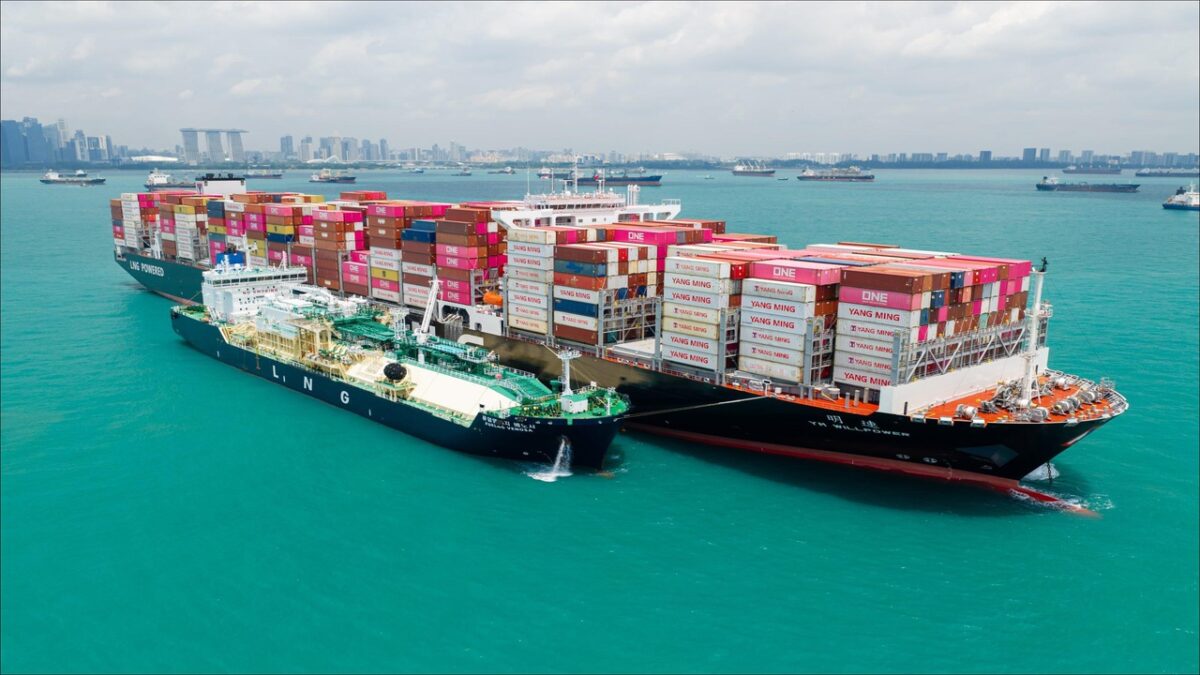
The primary objective of the Marsa LNG facility is to serve the burgeoning regional bunker demand for liquefied natural gas. With an impressive liquefaction capacity exceeding 1 million metric tons per year, this state-of-the-art plant is strategically positioned to become a cornerstone in providing cleaner marine fuel solutions across the Gulf region and major shipping lanes. The facility’s operationalization will significantly bolster the availability of LNG for ships, reducing the reliance on traditional, higher-emission bunker fuels and supporting the maritime industry’s decarbonization efforts.
LNG as a marine fuel offers substantial environmental benefits, including a significant reduction in sulfur oxide (SOx) and particulate matter emissions, virtually eliminating SOx emissions compared to conventional heavy fuel oil. It also cuts nitrogen oxide (NOx) emissions and offers a reduction in greenhouse gas (GHG) emissions, making it a crucial component in shipping companies’ strategies to meet increasingly stringent international environmental regulations. The establishment of Marsa LNG directly supports these global sustainability objectives by providing a reliable and accessible supply of this cleaner alternative fuel.
The increasing adoption of LNG-fueled vessels by leading shipping lines highlights the industry’s shift towards more environmentally responsible operations. Marsa LNG will play a pivotal role in accelerating this transition, offering vital infrastructure for gas bunkering operations. By making LNG more readily available at a strategic maritime crossroads, the facility enhances the attractiveness of LNG as a viable and sustainable fuel option for a wide array of commercial vessels, from container ships to tankers and cruise liners. This will not only facilitate cleaner operations but also contribute to healthier coastal environments and improved air quality in port areas.
Oman’s Vision: Powering a Sustainable Energy Future
The Marsa LNG project is more than just an LNG bunkering terminal; it is a critical component of Oman’s broader national vision for economic diversification and sustainable energy development. By leveraging its vast natural gas reserves, Oman aims to solidify its position as a leading energy producer and exporter, while simultaneously transitioning towards a greener, more sustainable economic model. This facility exemplifies the nation’s commitment to investing in high-value-added industries that promise long-term economic growth and environmental stewardship.
Building such a sophisticated energy infrastructure project brings numerous economic advantages to Oman. It creates significant employment opportunities for Omani nationals, both directly within the facility and indirectly through supporting industries and services. Furthermore, it fosters the transfer of advanced technologies and technical expertise, enhancing the skill set of the local workforce and strengthening the nation’s industrial capabilities. The investment in Marsa LNG also attracts further foreign direct investment into Oman’s energy sector, stimulating overall economic activity.
Oman’s strategic geographical location, at the crossroads of major international shipping routes, positions it uniquely to become a prominent global energy hub. The Marsa LNG facility capitalizes on this advantage, providing essential services to the global maritime industry. This strategic placement, combined with a forward-thinking energy policy, allows Oman to play an increasingly important role in global energy security and the facilitation of cleaner trade. The project aligns perfectly with national strategies aimed at maximizing the value of natural resources while promoting environmental protection and sustainable development for future generations.
The Future of LNG Bunkering in the Gulf
The successful progression of the Marsa LNG project signals a vibrant future for LNG bunkering within the Gulf region and its expanding influence on global shipping. As international regulations tighten and environmental consciousness grows, the demand for cleaner marine fuels like LNG is expected to surge. The presence of a high-capacity LNG bunkering facility in Oman will not only meet local and regional demand but also serve as a crucial node in a growing global network of LNG supply points, enhancing the operational flexibility for LNG-fueled vessels navigating through the region.
This development positions Oman as a competitive player in the evolving maritime fuel market, offering a strategic advantage to shipping companies seeking reliable and environmentally friendly bunkering options. The Marsa LNG facility will help streamline logistics for vessels trading between Asia, Europe, and Africa, encouraging more operators to invest in LNG-powered fleets. This ripple effect is anticipated to accelerate the broader adoption of LNG as a marine fuel, contributing to cleaner oceans and reduced air pollution from international shipping activities.
The long-term impact extends beyond just fuel supply. The establishment of Marsa LNG could stimulate further investment in related industries, such as the development of support services for LNG-fueled vessels, training for specialized personnel, and innovation in maritime energy technologies within the region. It reinforces the Gulf’s importance as a critical artery for global trade, now underpinned by a commitment to more sustainable shipping practices. This facility represents a significant step towards a future where environmental responsibility and economic efficiency go hand-in-hand in the maritime sector.
Conclusion: Marsa LNG’s Vision for 2028 and Beyond
The successful tank roof lift at the Marsa LNG bunkering facility in Oman is far more than a technical achievement; it is a powerful symbol of progress in the global transition towards cleaner energy solutions for the maritime industry. This milestone underscores the dedication and collaboration of TotalEnergies, OQEP, and all project partners in bringing this transformative vision to life. With significant construction phases now complete, the project remains firmly on track to begin production as anticipated in 2028.
Once operational, Marsa LNG will significantly enhance the supply of clean marine fuel, supporting the regional bunker demand and facilitating sustainable shipping practices across major international trade routes. The facility is poised to play a pivotal role in helping the shipping industry meet its ambitious environmental targets, providing a reliable source of LNG that dramatically reduces emissions compared to traditional fuels. This will not only benefit the environment but also ensure the economic viability of cleaner maritime transport for years to come.
As the Marsa LNG plant moves closer to completion, its impact on Oman’s economy, its contribution to global energy security, and its role in fostering environmental stewardship in shipping cannot be overstated. This project stands as a beacon of innovation and international cooperation, highlighting Oman’s strategic importance in the evolving landscape of global energy and its commitment to a greener, more sustainable future for the world’s oceans.