Maritime Safety Guidance for Wind-Assisted Ships | Mariner News
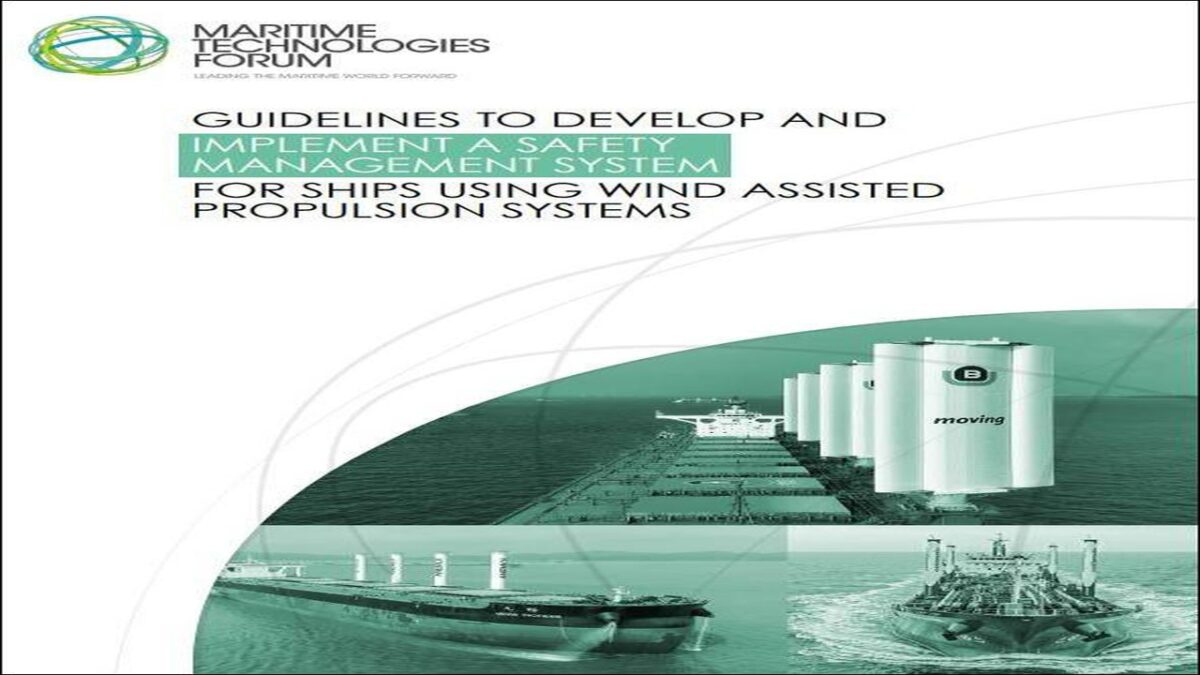
The Maritime Technologies Forum (MTF) has issued vital safety guidance for wind-assisted ships, marking a critical development for the industry’s decarbonization goals and operational security. This publication provides a structured framework for companies to enhance Safety Management Systems (SMS) specifically for vessels employing wind propulsion systems (WAPS). As shipping embraces sustainable technologies, ensuring the safety of these innovative vessels is paramount. The MTF’s comprehensive approach addresses unique operational, technical, and organizational challenges of wind-assisted propulsion, paving the way for a safer, greener maritime future through robust maritime safety practices.
Embracing Wind Power: The Evolution of Green Shipping
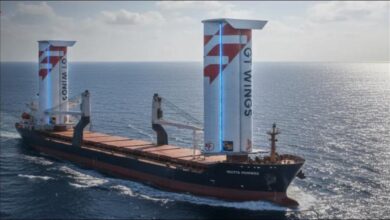
The global maritime industry faces significant pressure to reduce its carbon footprint and achieve ambitious decarbonization targets. Wind-assisted propulsion systems are rapidly re-emerging as a highly promising and economically viable solution to these environmental challenges. Modern WAPS, including sophisticated rotor sails, suction sails, and wing sails, efficiently harness wind energy to supplement conventional engine power, reducing reliance on fossil fuels.
These technologies offer substantial fuel savings, lower operating costs, and significantly cut greenhouse gas emissions, aligning perfectly with the industry’s drive for green shipping and environmental stewardship. Their adoption extends across diverse fleets, from bulk carriers to tankers and container vessels, showcasing a broad industry commitment to sustainability.
However, integrating large physical structures like sails impacts a ship’s air draught, stability, and manoeuvrability. This necessitates meticulous planning and rigorous safety protocols. The MTF’s guidance is designed to effectively manage these novel aspects, ensuring that the transition to wind-assisted shipping is not only environmentally beneficial but also inherently safe and reliable for all stakeholders.
MTF’s Framework: Strengthening Safety Management Systems
The Maritime Technologies Forum, a collaborative body comprising leading flag states and classification societies, leveraged its collective expertise to develop this essential guidance. Its primary objective is to empower shipowners and operators to identify and address procedural gaps within existing SMS, thereby strengthening frameworks for both newbuild vessels with integrated WAPS and retrofitted ships.
This framework offers a structured, methodical approach to safety management that accounts for the distinct characteristics of wind-assisted operations. It considers how sail deployment, retraction, dynamic interaction with winds, and altered ship profiles affect daily operations and vessel performance.
Furthermore, the guidance addresses critical technical challenges like maintenance of complex sail mechanisms, power supply for auxiliary systems, and structural integrity. On the organizational front, it highlights the need for clear communication, redefined roles, and specialized crew training, ensuring all aspects align with wind propulsion technology demands and robust maritime safety measures.
Critical Pillars for Enhanced Operational Safety
Central to the MTF’s guidance for wind-assisted propulsion systems is a strong emphasis on several critical safety pillars, designed to integrate seamlessly with the International Safety Management (ISM) Code. A paramount requirement is formal and thorough risk assessments. These evaluations must specifically identify and mitigate risks associated with wind propulsion, from sail deployment in varying weather conditions to equipment failures.
One significant impact addressed is manoeuvrability. Large wind-catching surfaces fundamentally alter a ship’s hydrodynamic and aerodynamic characteristics. The MTF stresses understanding and planning for these changes, particularly during port entry, narrow channel navigation, and close-quarters manoeuvring. Visibility considerations are also crucial, as structures can obstruct lines of sight from the bridge, requiring careful placement and updated procedures for maritime safety.
Emergency preparedness is another vital component, requiring ship operators to update their emergency response plans for WAPS-specific scenarios, like sudden loss of wind power or sail damage. The report also details maintenance requirements for wind-assisted propulsion equipment, emphasizing regular inspections and proactive servicing to ensure continuous operational readiness and prevent mechanical failures.
Cultivating Competency: Crew Training and Incident Reporting
The operational safety of wind-assisted ships fundamentally hinges on crew competence and readiness. Recognizing the new complexities introduced by wind propulsion systems, the MTF guidance places strong emphasis on comprehensive, role-specific crew training. In the absence of dedicated WAPS certification, rigorous in-house training programs are advocated to equip seafarers with necessary knowledge and practical skills.
This training should cover basic principles of wind dynamics and sail operation, troubleshooting WAPS components, emergency procedures, and understanding the altered handling characteristics of the vessel. The guidance encourages a culture of continuous learning and adaptation as wind propulsion technology evolves, ensuring ongoing maritime safety.
A critical element for continuous safety improvement is the systematic capture and analysis of WAPS-specific incidents and near-misses. By diligently reporting and analyzing every relevant event, companies gain invaluable insights into potential vulnerabilities, refine procedures, and proactively enhance their safety management systems, contributing to a broader industry understanding of WAPS risks and mitigation strategies.
A Collaborative Vision for a Sustainable Maritime Future
The MTF’s issuance of this safety guidance exemplifies the collaborative spirit driving the maritime industry’s sustainability agenda. As a forum comprising global flag states and classification societies, the MTF represents a unique nexus of regulatory authority, technical expertise, and operational insight. This collective strength ensures the guidelines are technically sound and practically applicable.
This collaborative approach extends beyond guidance development; it aims to foster broader industry engagement. By providing clear benchmarks and recommendations, the MTF empowers shipowners, operators, shipyards, and technology providers to work together towards safe and efficient deployment of green shipping solutions. It facilitates dialogue and shared learning, critical for accelerating decarbonization and enhancing maritime safety.
Ultimately, the MTF’s safety guidance for wind-assisted ships is a foundational piece in achieving a truly sustainable maritime future. Prioritizing safety alongside environmental benefits, it strengthens the case for wind propulsion systems as a reliable pathway to decarbonization, ensuring vessels harness wind power with the highest standards of operational excellence and environmental responsibility.