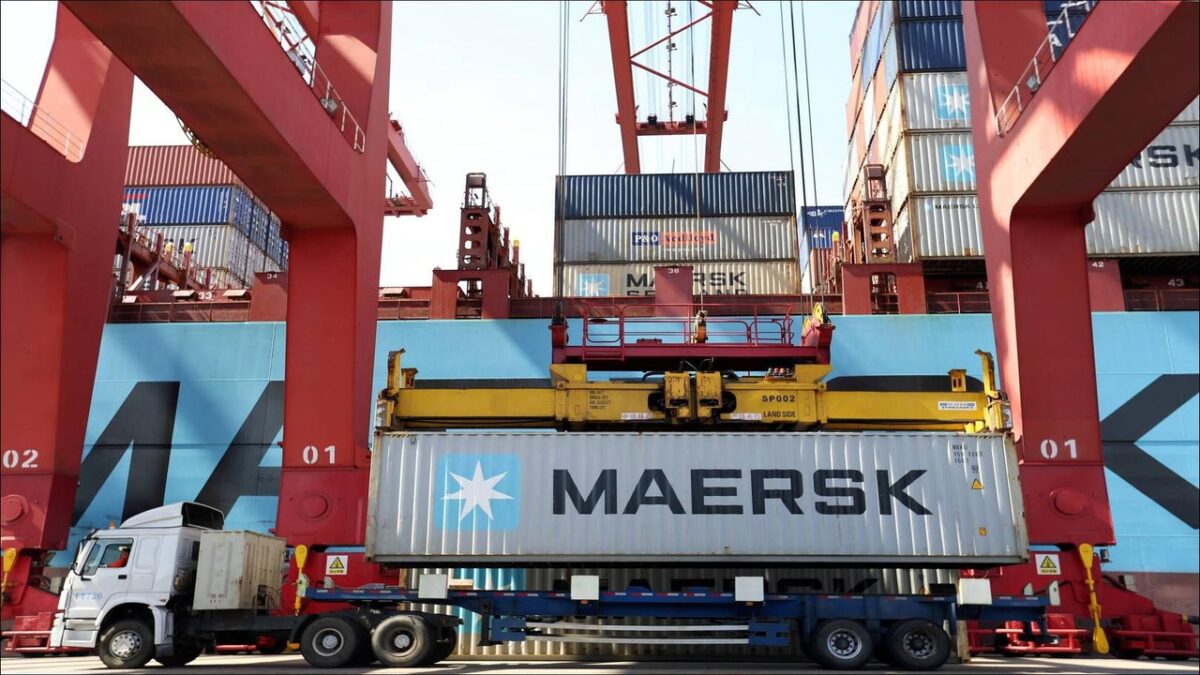
Maersk Edges CMA CGM in Global Logistics Competition | Mariner News
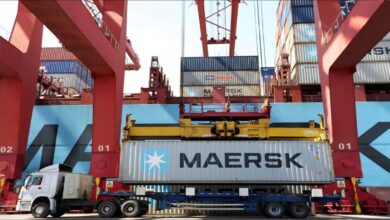
In a fiercely contested global market, Maersk has edged ahead of its long-standing rival, CMA CGM, in the high-stakes logistics sector, marking a significant turn in their years of tight competition. The Danish shipping group, A.P. Møller-Maersk, demonstrated superior profitability in logistics last year, a testament to its strategic focus on integrated supply chain solutions. This achievement comes even as the company faced criticism regarding the execution of its logistics strategy, highlighting the complex dynamics at play within the maritime and logistics industries. The battle for supremacy between these two titans underscores a broader trend: container shipping lines are rapidly diversifying into comprehensive logistics operations to mitigate the inherent volatility of ocean freight rates and capture higher-margin businesses.
For decades, Maersk and CMA CGM have been synonymous with global container shipping, commanding vast fleets and extensive networks. However, recognizing the imperative to offer end-to-end supply chain services, both companies embarked on ambitious journeys to transform from pure-play ocean carriers into integrated logistics providers. This strategic pivot involves significant investments in warehousing, distribution centers, landside transportation, air freight, and digital platforms. Their goal is clear: to become the preferred partner for businesses seeking seamless, resilient, and transparent supply chain management. The competition in this expanded arena is even more intense, as they vie for market share against established logistics giants and innovative tech-driven startups, shaping the future of global trade.
The Battle for Logistics Dominance: Maersk vs. CMA CGM
The strategic rivalry between Maersk and CMA CGM in the logistics sector has intensified dramatically over recent years, transforming the landscape of global supply chain management. Both maritime powerhouses recognized the critical need to diversify beyond volatile ocean freight, aiming to create more resilient business models by integrating logistics services. This pivot saw them aggressively acquire and develop capabilities spanning warehousing, freight forwarding, land transportation, and e-commerce logistics, shifting their identity from port-to-port carriers to comprehensive end-to-end solution providers. Their vision is to offer customers a singular, streamlined partner for all their supply chain needs, from manufacturing plant to final consumer.
The push into integrated logistics represents a proactive measure against the cyclical nature of container shipping rates, which can swing wildly due to geopolitical events, economic shifts, and supply-demand imbalances. By building robust logistics networks, Maersk and CMA CGM aim to smooth out revenue streams and capture a larger slice of the overall supply chain spend, which typically offers higher margins than purely transporting goods across oceans. This strategic reorientation has fueled a fascinating competition, with each company racing to expand its geographical footprint, technological capabilities, and service offerings, making every strategic move a critical play in this high-stakes game for market leadership in integrated logistics services.
Maersk’s Profitability Edge Amidst Strategic Scrutiny
Despite facing justified criticism regarding the speed and execution of its ambitious logistics strategy, Maersk has impressively demonstrated its capacity to generate superior profitability in this crucial business segment. An analyst’s observations, while acknowledging the operational challenges, confirm that the Danish shipping group emerged as the most profitable logistics player last year. This suggests that while Maersk’s transformational journey might not have been without hurdles, its underlying operational efficiencies, strategic acquisitions like LF Logistics and Senator International, and a strong focus on key customer segments have begun to yield significant financial returns, validating their long-term vision for becoming an integrated logistics champion.
Maersk’s focus on integrating its vast ocean network with land-based logistics, including warehousing, distribution, and customs services, has created a formidable offering designed to simplify complex supply chains for its clients. This integration, powered by digital solutions, aims to offer greater visibility, efficiency, and cost savings. While its French rival, CMA CGM, maintained its position as the largest player in terms of overall logistics volume and reach, Maersk’s ability to translate its logistics operations into higher profit margins points to a robust strategy execution in specific, high-value areas. This emphasizes that sheer size does not always equate to the most effective financial performance in a highly competitive and capital-intensive sector like global logistics.
CMA CGM’s Growth Trajectory and Market Position
CMA CGM, a powerful force in global shipping, has pursued an equally aggressive strategy to expand its logistics footprint, solidifying its position as one of the largest integrated logistics providers worldwide. Through a series of high-profile acquisitions, most notably CEVA Logistics, the French rival has rapidly scaled its capabilities across air freight, ocean freight forwarding, contract logistics, and last-mile delivery. This extensive network and diverse portfolio allow CMA CGM to offer comprehensive, global supply chain solutions to a vast array of clients, reinforcing its formidable presence in the logistics arena. The company’s commitment to growth and market dominance is evident in its continuous investment in expanding services and geographic reach, positioning it as a significant challenger to Maersk’s ambitions.
While Maersk may currently boast higher profitability in logistics, CMA CGM’s sheer scale and robust growth trajectory are undeniable. Its strategic investments are designed not just for volume but also to deepen customer relationships and create resilient, end-to-end supply chain ecosystems. The company leverages its extensive global reach and strong partnerships to deliver tailored solutions across various industries, from automotive to retail. CMA CGM’s aggressive expansion reflects a belief that market leadership in logistics will ultimately translate into sustainable competitive advantage, making it a powerful force to reckon with in the ongoing race for global logistics supremacy. Their ability to integrate acquired entities and leverage existing strengths is key to their long-term success.
The Shifting Landscape of Global Supply Chain Solutions
The intense competition between Maersk and CMA CGM highlights a fundamental transformation within the global supply chain industry. The traditional demarcation between ocean carriers and logistics providers is blurring, as customers increasingly demand seamless, integrated, and technology-driven solutions. This shift is driven by several factors, including the acceleration of e-commerce, the need for greater supply chain resilience in the face of disruptions, and a growing emphasis on sustainability. Companies are no longer just looking for a ship to carry their goods; they seek partners who can manage their entire supply chain, from manufacturing to final delivery, with complete visibility and optimized efficiency.
This evolving landscape benefits shippers by consolidating service providers, often leading to reduced complexity, improved communication, and potentially lower overall costs through optimized operations. The focus is now on creating digital ecosystems that connect all nodes of the supply chain, enabling predictive analytics, real-time tracking, and automated processes. As major players like Maersk and CMA CGM continue to invest heavily in technology and infrastructure, the industry is moving towards highly integrated platforms that can adapt quickly to market changes and provide greater value to customers. This evolution is also compelling other maritime companies, such as MSC, to consider similar strategic expansions, further intensifying competition and innovation in supply chain services globally.
Future Outlook and Strategic Imperatives for Shipping Giants
The future of global logistics will undoubtedly remain a battleground for shipping giants like Maersk and CMA CGM. Maersk’s current profitability lead poses a challenge for CMA CGM to convert its larger volume into more substantial margins. Both companies face the ongoing imperative to refine their integrated logistics strategies, ensuring that their extensive investments in infrastructure, technology, and talent translate into sustainable competitive advantages. Key areas of focus will include further digitalization, enhancing last-mile delivery capabilities, and developing advanced data analytics to predict demand and optimize routes. The ability to offer highly customized and flexible solutions will be crucial in winning and retaining high-value clients.
Strategic agility will be paramount as the global economic environment remains unpredictable, and geopolitical tensions continue to influence trade flows. Furthermore, the increasing demand for sustainable logistics solutions will push both companies to innovate in areas such as green shipping, electric vehicle fleets for land transport, and optimized, carbon-efficient warehousing operations. The ultimate success will depend on their capacity to balance their core ocean freight businesses with their expanding logistics portfolios, creating a synergy that offers unparalleled value to customers. As these industry leaders continue to evolve, their strategies will shape the very fabric of global trade and supply chain management for years to come.
Maersk’s recent achievement of higher profitability in logistics, despite strategic criticism, marks a significant milestone in its ongoing rivalry with CMA CGM. While CMA CGM remains a formidable and larger player in the broader logistics market, Maersk’s focused execution has yielded stronger financial returns in this specific segment. This dynamic competition between two of the world’s largest shipping lines underscores the strategic importance of integrated logistics in today’s global economy. As both companies continue to invest and innovate, the beneficiaries will be businesses worldwide seeking more efficient, resilient, and transparent supply chain solutions, driving further transformation in maritime logistics.