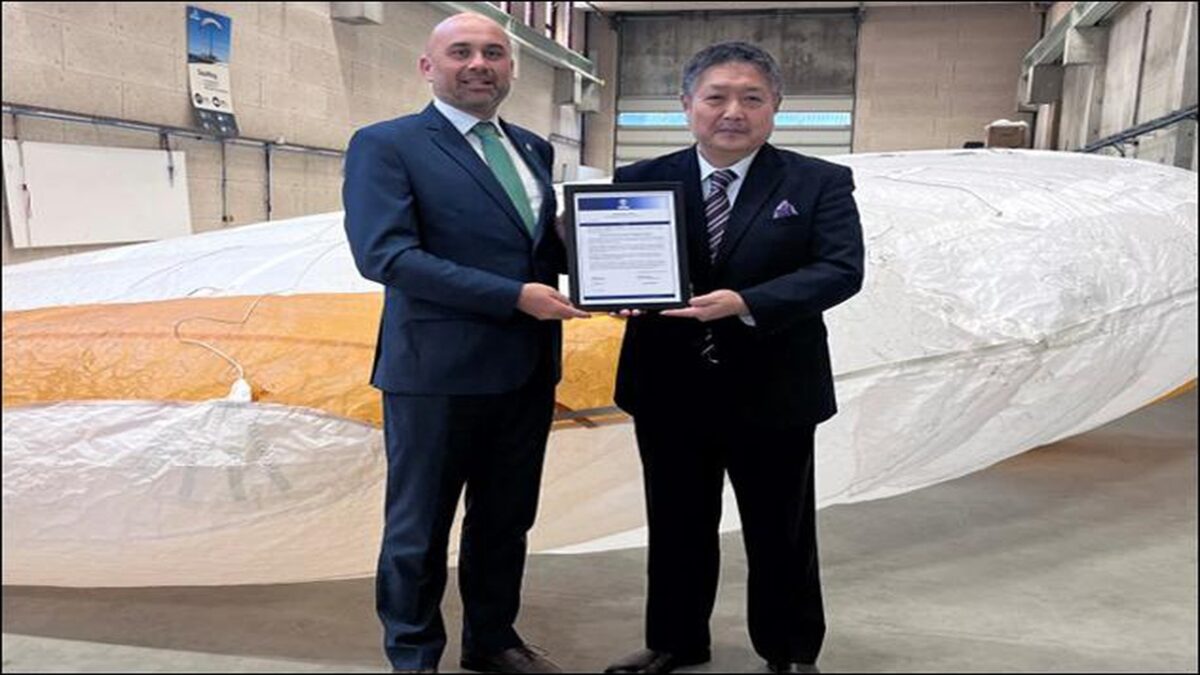
K Line & Oceanicwing Kite Wind Propulsion Validated by ClassNK | Mariner News
The formal validation of K Line and Oceanicwing’s pioneering Kite Wind Propulsion System by ClassNK marks a significant stride towards sustainable maritime operations. This innovative technology promises substantial reductions in fuel consumption and greenhouse gas emissions, positioning it as a key player in the global effort to decarbonize shipping. The maritime industry, facing increasing pressure from regulatory bodies and environmental advocates, is actively seeking viable solutions to reduce its carbon footprint. The formal validation by a respected classification society like ClassNK provides crucial credibility and momentum for the wider adoption of such advanced wind-assisted propulsion methods. This article delves into the details of this groundbreaking system, the rigorous validation process, and its far-reaching implications for the future of eco-friendly shipping.
The Dawn of Sustainable Maritime Travel: K Line’s Vision
Japanese shipping giant Kawasaki Kisen Kaisha (K Line) has long been a proponent of environmental stewardship within the maritime sector. Their strategic partnership with French subsidiary Oceanicwing underscores a deep commitment to pioneering innovative solutions for sustainable shipping. This collaboration is not merely a corporate initiative but a direct response to the urgent need for reducing the environmental impact of global trade. The development and subsequent validation of their advanced Kite Wind Propulsion System represent a tangible step towards achieving a greener maritime future, aligning with increasingly strict global environmental mandates.
The global shipping industry is at a pivotal juncture, grappling with stringent environmental regulations such as the International Maritime Organization’s (IMO) carbon reduction targets. Shipowners and operators worldwide are under immense pressure to enhance fuel efficiency and drastically cut greenhouse gas (GHG) emissions. This pressing need has ignited a fervent search for alternative propulsion systems and energy-saving devices, propelling wind-assisted propulsion technologies to the forefront of innovation. K Line’s foresight in investing in such advanced solutions positions them as a leader in this critical transition, demonstrating a proactive approach to environmental responsibility.
Their vision extends beyond mere compliance; it encompasses a holistic approach to operational sustainability. By integrating cutting-edge technologies like the Kite Wind Propulsion System, K Line aims to set new industry benchmarks for environmental performance while simultaneously optimizing operational costs. This proactive stance not only benefits the planet but also strengthens their market position in an increasingly environmentally conscious world, demonstrating a clear path forward for other maritime stakeholders grappling with the challenges of decarbonization and the pursuit of ecological efficiency.
Unveiling the Oceanicwing Kite Wind Propulsion System
At the heart of this innovation lies a sophisticated kite-based wind propulsion system, designed to harness the abundant, free power of offshore winds. Unlike traditional sails or more rigid wind-assisted technologies, the Oceanicwing system deploys a large, specialized parafoil kite from the bow of a vessel. This kite, once launched, is skillfully maneuvered to fly at significantly higher altitudes than conventional masts, reaching layers of the atmosphere where winds are substantially stronger and more consistent, thereby maximizing its propulsive force and enhancing overall vessel efficiency.
The operational principle is elegantly simple yet technologically advanced. The parafoil kite flies in a dynamic, figure-eight pattern, which optimizes its interaction with the wind to generate substantial forward pull, or traction force. This supplementary thrust effectively reduces the main engine’s load, leading directly to lower bunker fuel consumption and a corresponding decrease in exhaust emissions. The flexibility and high-altitude reach of the kite system offer distinct advantages over fixed structures like rotor sails or rigid wing sails, allowing for greater adaptability to varying wind conditions and suitability for a wider range of ship types.
ClassNK’s performance validation specifically reviewed the effectiveness of a system utilizing a 300 square meter kite. Land-based testing provided crucial data on the traction force generated by the kite and the overall efficiency of the integrated system. This phase of development was critical for proving the theoretical benefits in a practical setting, ensuring that the technology performs reliably and safely under controlled conditions before wider deployment on active vessels. The system’s ability to operate semi-autonomously, adapting to wind shifts, further enhances its appeal as a practical and innovative green shipping solution.
ClassNK’s Rigorous Validation Process
ClassNK, a leading Japanese classification society, plays a pivotal role in ensuring the safety and environmental performance of marine vessels and related technologies globally. Their independent validation process is universally recognized for its stringent standards and meticulous evaluation methodologies. For the K Line and Oceanicwing Kite Wind Propulsion System, ClassNK conducted an exhaustive review of the performance analysis data, which was derived from extensive land-based testing. This rigorous examination provides an impartial and authoritative stamp of approval, crucial for industry acceptance and accelerating market adoption.
The society issued a “statement of fact (SOF)” following their comprehensive review. An SOF is a formal document confirming that the verification process for specific aspects of a system—in this case, the traction force generated by the kite and the overall system performance—was appropriate and met established criteria. This isn’t merely a green light; it’s an affirmation that the scientific and engineering principles underlying the system are sound, and the performance claims are substantiated by robust data and meticulous testing protocols. It signifies that the methodology used to assess the kite’s propulsive capabilities was correct, thorough, and compliant with international standards.
ClassNK’s validation extends beyond just the initial performance figures. Their statement confirmed that the entire verification process, from data collection to analysis, was appropriate and reliable. This level of endorsement is invaluable for stakeholders, including shipowners, investors, and regulators, as it provides a robust foundation of trust in the technology’s capabilities. It not only validates the system’s current state but also signals ClassNK’s commitment to supporting the continued evaluation and broader uptake of such innovative, eco-friendly marine solutions, accelerating their path to commercial viability and widespread integration into global fleets.
Economic and Environmental Benefits of Wind-Assisted Propulsion
The adoption of advanced wind-assisted propulsion systems like the Kite Wind Propulsion System offers a dual advantage of significant economic savings and profound environmental benefits. Foremost among these is the direct reduction in bunker fuel consumption. By effectively supplementing engine power with free, renewable wind energy, vessels require less fossil fuel to maintain speed, leading to substantial savings on operational costs, especially in an era of volatile and often high fuel prices. These cost efficiencies directly translate into improved profitability and a more predictable cost structure for shipping companies.
Environmentally, the impact is even more compelling and critical for global sustainability. A reduction in fuel consumption inherently means a proportionate decrease in harmful exhaust emissions. This includes carbon dioxide (CO2), a primary greenhouse gas responsible for climate change, as well as nitrogen oxides (NOx) and sulfur oxides (SOx), which contribute significantly to air pollution, acid rain, and adverse health effects. Embracing such green technologies helps the maritime industry align with stringent global decarbonization targets and contributes positively to cleaner air and healthier marine ecosystems.
Beyond immediate operational savings and emission cuts, the deployment of the Kite Wind Propulsion System can significantly enhance a vessel’s environmental performance ratings, such as the Energy Efficiency Existing Ship Index (EEXI) and Carbon Intensity Indicator (CII). Improved ratings not only demonstrate a company’s commitment to sustainability but can also lead to competitive advantages, including preferential treatment in certain ports or markets, and potentially lower financing costs from environmentally conscious lenders. This long-term strategic benefit underscores the profound value proposition of investing in advanced wind power solutions for shipping in the pursuit of a greener future.
Overcoming Challenges and Looking Ahead
While the potential of kite wind propulsion is immense, its widespread integration requires addressing several practical considerations. Challenges include the need for specialized crew training for safe and efficient deployment and retrieval, ensuring optimal performance across diverse weather conditions and sea states, and achieving seamless integration with a vessel’s existing navigation and operational systems. Shipowners must also consider the initial capital investment required, though this is often offset by substantial long-term fuel savings and environmental compliance benefits. Addressing these aspects systematically will be crucial for accelerating adoption rates across the global fleet.
Despite these hurdles, the future for kite wind propulsion systems appears exceptionally bright. The maritime sector’s unwavering commitment to decarbonization, coupled with continuous technological advancements, is paving the way for innovations like Oceanicwing’s system to become mainstream. Research and development efforts are ongoing to enhance automation, improve material durability for prolonged exposure to harsh marine environments, and refine flight control algorithms, further boosting both efficiency and reliability. The scalability of such systems, potentially adaptable to various ship sizes and types, also presents a significant opportunity for widespread impact on international shipping.
ClassNK’s ongoing support, not just in initial validation but also in continuous evaluation and uptake, is a testament to the technology’s promise. Their involvement helps build confidence within the industry, facilitating regulatory acceptance and guiding the development of appropriate operational standards. As the maritime world increasingly embraces a multi-faceted approach to sustainability, combining alternative fuels with energy-saving devices, wind-assisted propulsion systems like K Line and Oceanicwing’s kite technology are poised to play a pivotal role in shaping a more sustainable and efficient future for global shipping, making ocean freight more environmentally benign.
The formal validation of K Line and Oceanicwing’s Kite Wind Propulsion System by ClassNK is a landmark achievement, signaling a significant leap forward in the quest for sustainable maritime transport. This innovative technology offers a compelling solution to reduce fuel consumption and emissions, aligning the shipping industry with global environmental objectives. As the world moves towards a decarbonized future, the adoption of advanced wind-assisted propulsion systems will be instrumental. This validation provides a robust foundation for the broader commercialization and integration of kite wind propulsion, ushering in an era of cleaner, more efficient, and environmentally responsible shipping practices globally. The journey towards zero-emission shipping is long, but solutions like this illuminate a promising path forward, offering a tangible step towards a truly green maritime sector.