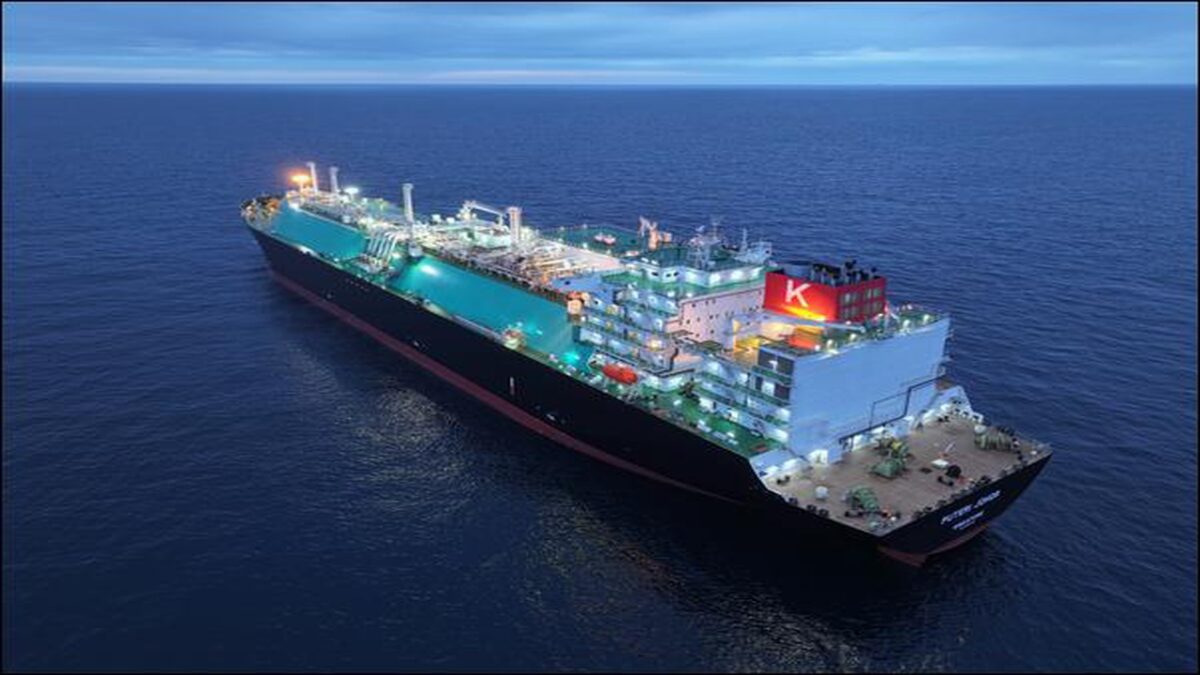
K Line Delivers Dual-Fuel LNG Ships to Petronas | Mariner News
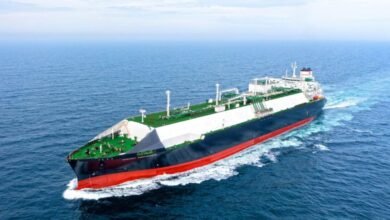
In a significant stride towards more sustainable maritime operations, Japanese shipping giant K Line has announced the successful delivery of two state-of-the-art LNG dual-fuel ships to Malaysian energy powerhouse Petronas LNG Ltd. This pivotal development underscores both companies’ unwavering commitment to environmental stewardship and innovative fuel solutions within the global shipping industry. The newly delivered vessels, named Puteri Johor and Puteri Kedah, represent a crucial investment in reducing the carbon footprint of marine transport and enhancing the efficiency of energy logistics worldwide. This strategic move by K Line not only solidifies its position as a leader in environmentally conscious shipping but also provides Petronas with advanced capabilities for its extensive energy distribution network, setting a new benchmark for industry standards in sustainability.
K Line’s Strategic Commitment to LNG and Decarbonization
K Line has long recognized the imperative for decarbonization within the shipping sector, strategically positioning itself at the forefront of the energy transition. Under its visionary medium-term management plan, the company has identified the liquefied natural gas (LNG) business as a paramount area for future investments and operational expansion. This focus is not merely an operational decision but a testament to K Line’s dedication to meeting stringent international environmental regulations and contributing positively to global climate goals. The delivery of these advanced dual-fuel vessels epitomizes this forward-thinking approach, integrating cutting-edge technology with practical, eco-friendly operational capabilities.
K Line’s investment in LNG-powered vessels reflects a broader industry trend towards cleaner marine fuels. The company’s proactive stance in adopting LNG technology demonstrates its commitment to reducing greenhouse gas (GHG) emissions and improving air quality in port areas and along shipping routes. By prioritizing LNG, K Line is not only complying with evolving environmental mandates but also positioning itself competitively in a market increasingly demanding sustainable logistics solutions. This strategic direction ensures that K Line remains a key player in the maritime industry’s journey towards a greener future, fostering innovation and responsible practices across its fleet.
This robust commitment to sustainable shipping solutions extends beyond mere compliance; it’s ingrained in K Line’s corporate philosophy. The company understands that future success hinges on its ability to adapt and innovate in response to environmental challenges. By continuously exploring and investing in advanced fuel technologies like LNG, K Line is not only safeguarding its own future but also contributing significantly to the maritime sector’s collective efforts to achieve a more sustainable operational paradigm. The delivery of these dual-fuel LNG carriers marks a tangible milestone in this ongoing journey, showcasing practical application of its decarbonization strategies.
Advanced Features of the Puteri Johor and Puteri Kedah
The Puteri Johor and Puteri Kedah are not just any vessels; they are paragons of modern maritime engineering, designed for optimal performance and environmental efficiency. Each of these impressive ships boasts a capacity of 174,000 cubic meters, making them substantial assets for transporting liquefied natural gas across vast distances. Constructed at the esteemed Hudong-Zhonghua Shipbuilding (Group) Co., these vessels embody precision shipbuilding and a commitment to quality. Their design incorporates advanced safety features and operational efficiencies tailored for the complex demands of LNG transportation, ensuring secure and reliable deliveries for Petronas.
At the heart of their eco-friendly design are the sophisticated dual-fuel engines manufactured by WinGD. These powerful engines are engineered to seamlessly operate on both LNG and conventional marine fuels, providing unparalleled operational flexibility. This dual-fuel capability is a critical advantage, allowing the ships to adapt to varying fuel availability and regulatory requirements across different global routes. The ability to switch between fuels ensures not only compliance with emission standards in designated areas but also optimizes fuel consumption and reduces operational costs, making these vessels highly efficient and versatile additions to the global LNG fleet.
Furthermore, the integration of WinGD’s advanced engine technology translates directly into a significant reduction in harmful emissions. When running on LNG, the vessels achieve a substantial cut in sulfur oxides (SOx) and nitrogen oxides (NOx), far exceeding the requirements of current international regulations. While methane slip remains a consideration, the overall environmental profile of these LNG-powered vessels is markedly superior to traditional heavy fuel oil ships. This commitment to cleaner operations, facilitated by their advanced engine systems, underscores the innovative spirit behind their construction and K Line’s dedication to leading the charge in sustainable marine transport.
Petronas LNG Ltd: Enhancing Energy Logistics with Greener Vessels
Petronas LNG Ltd, a subsidiary of the Malaysian state-owned oil and gas company Petronas, plays a crucial role in the global energy market, particularly in the supply and distribution of liquefied natural gas. The addition of the Puteri Johor and Puteri Kedah to its operational portfolio significantly bolsters its capacity to deliver LNG efficiently and sustainably to its worldwide customer base. These new LNG carriers are instrumental in supporting Petronas’s expansive energy logistics, ensuring a reliable and environmentally responsible supply chain that aligns with increasingly stringent global expectations for cleaner energy.
This strategic acquisition of eco-friendly vessels directly aligns with Petronas’s long-term sustainability agenda. As a major energy provider, Petronas is committed to reducing its environmental impact across all operations, from exploration and production to transportation and delivery. The dual-fuel capabilities of these ships enable Petronas to reduce its Scope 3 emissions related to transportation, showcasing a tangible commitment to decarbonization within its value chain. This move reinforces Petronas’s role as a responsible energy company, actively investing in solutions that mitigate environmental risks while maintaining robust operational capabilities.
Beyond environmental benefits, these advanced gas carriers enhance Petronas’s operational resilience and market competitiveness. The flexibility offered by dual-fuel engines ensures that Petronas can navigate a dynamic regulatory landscape while optimizing fuel costs and supply chain efficiency. This investment is not just about environmental compliance; it’s about smart business, enabling Petronas to meet future energy demands with greater agility and a reduced ecological footprint. The partnership with K Line on these deliveries further strengthens Petronas’s global network and its position as a key player in the evolving landscape of sustainable energy transportation.
The Evolving Landscape of LNG as a Marine Fuel
Liquefied natural gas (LNG) has emerged as a prominent transitional fuel in the shipping industry’s quest for decarbonization, offering immediate and significant reductions in key atmospheric pollutants compared to traditional marine fuels. Its adoption leads to near-zero sulfur oxide (SOx) and particulate matter emissions, and a substantial reduction in nitrogen oxide (NOx) emissions, easily meeting IMO Tier III standards. Furthermore, LNG combustion results in approximately 20-25% less carbon dioxide (CO2) than heavy fuel oil, providing a tangible step towards mitigating climate change. These environmental advantages make LNG an attractive option for vessel operators striving for greener operations.
However, the widespread adoption of LNG also presents challenges, primarily concerning methane slip. Methane, a potent greenhouse gas, can be released uncombusted from LNG engines into the atmosphere, partially offsetting the CO2 reduction benefits. This phenomenon necessitates ongoing research and technological advancements to minimize such emissions. Engine manufacturers are continuously developing more efficient combustion technologies and exhaust gas after-treatment systems to address methane slip, ensuring that LNG remains a viable and increasingly cleaner fuel option for the long term. Addressing this challenge is crucial for LNG to fully realize its potential as a sustainable marine fuel.
Looking ahead, the future of LNG as a marine fuel is evolving with the emergence of next-generation alternatives like bio-LNG and synthetic LNG (e-LNG). Bio-LNG is produced from sustainable biomass sources, offering a near-zero carbon footprint on a well-to-wake basis. Synthetic LNG, generated using renewable electricity and captured carbon, promises a similar ultra-low-carbon profile. These drop-in fuels can utilize existing LNG infrastructure, providing a clear pathway for LNG-fueled ships to achieve even greater emission reductions without significant retrofits. As regulations tighten and sustainability demands grow, these advanced forms of LNG are poised to play a critical role in the maritime industry’s journey towards ultimate decarbonization.
Global Impact and Future Outlook for Sustainable Shipping
The delivery of these K Line LNG dual-fuel ships to Petronas represents more than just a transaction; it symbolizes a growing commitment across the maritime industry towards an integrated and sustainable future. This development contributes significantly to the global agenda for reducing shipping’s environmental impact, setting a precedent for other industry players to follow. The ripple effect of such investments extends beyond the immediate benefits to the involved companies, inspiring broader adoption of eco-friendly marine technology and accelerating the energy transition within a notoriously challenging sector.
The global shipping industry is under increasing pressure from international regulatory bodies, environmental groups, and increasingly conscious consumers to adopt greener practices. Initiatives like the IMO’s 2030 and 2050 decarbonization targets necessitate a rapid shift towards alternative fuels and innovative vessel designs. K Line and Petronas, through this collaboration, are demonstrating practical steps towards meeting these ambitious goals. Their proactive approach in deploying advanced LNG vessels showcases how private sector leadership can drive meaningful change, fostering a more sustainable and resilient global supply chain network.
Looking ahead, the trajectory for sustainable shipping points towards a diversified fuel mix, with LNG playing a crucial role as a transition fuel alongside the progressive integration of bio-LNG, e-methanol, ammonia, and hydrogen. The experience gained from operating these dual-fuel LNG carriers will be invaluable for further innovation and the development of even more advanced zero-emission vessels. The collaborative spirit demonstrated by K Line and Petronas serves as an inspiring model for how partnerships can accelerate the journey towards a truly green maritime future. As the industry continues to evolve, these pioneering efforts will pave the way for a healthier planet and a more sustainable global economy.