K Line Boosts Green Shipping with Bio-LNG for Car Carriers | Mariner News
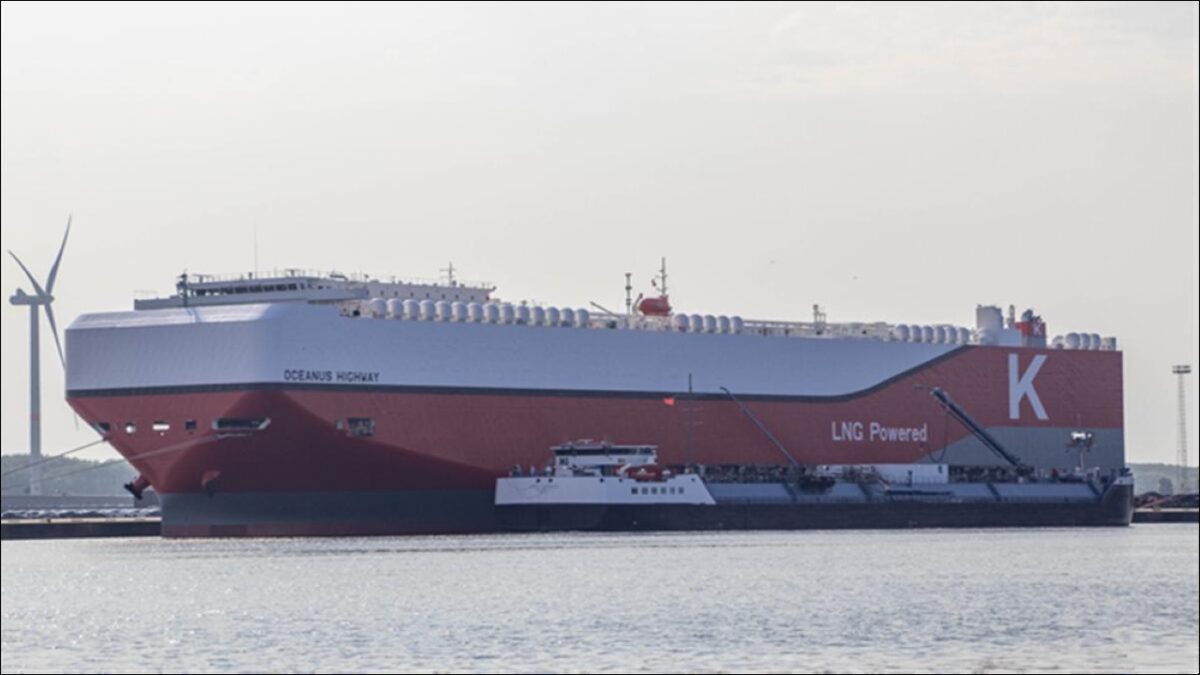
The global shipping industry is at a pivotal moment, facing increasing pressure to transition towards sustainable and environmentally friendly operations. Recognizing this critical imperative, Japanese shipping giant K Line, known formally as Kawasaki Kisen Kaisha, has announced a significant stride in its decarbonization efforts by securing a long-term supply agreement for Bio-LNG. This strategic move will fuel its growing fleet of LNG-fuelled car carriers, marking a crucial step towards a greener maritime future. K Line’s commitment to Bio-LNG underscores its dedication to substantially reducing its carbon footprint and aligning with stringent global environmental targets, thereby setting a powerful precedent for the entire maritime transport sector’s journey towards green shipping and maritime decarbonization.
K Line’s Strategic Shift Towards Green Fuels
K Line’s latest announcement signifies a robust strategic shift, prioritizing environmental stewardship. With an undisclosed supplier, the long-term agreement for advanced sustainable marine fuel ensures a stable, reliable source, with immediate deployment across its LNG-fuelled car carriers. This highlights the company’s agility and commitment to rapid sustainable practice, fundamentally changing marine fuel procurement and directly contributing to the green shipping agenda. K Line expects this initiative to cut GHG emissions by around 60,800 tonnes annually.
Investing in a long-term Bio-LNG supply chain reflects K Line’s forward-thinking approach, addressing immediate needs for maritime decarbonization. Its “drop-in” characteristic makes Bio-LNG an attractive near-term solution for shipping companies, requiring no extensive modifications to existing LNG-fuelled vessels. This proactive planning maintains efficiency while achieving ambitious emission reduction targets, proving environmental impact mitigation and economic viability can coexist, inspiring others in the maritime industry.
The Power of Bio-LNG: A Sustainable Marine Fuel Solution
Bio-LNG, or liquefied biomethane, is a promising sustainable marine fuel due to its unique production and environmental attributes. Unlike fossil LNG, Bio-LNG derives from organic waste materials like livestock manure and food waste. This innovative circular economy approach diverts waste from landfills while converting it into a valuable cleaner energy source. The process involves anaerobic digestion to produce biogas, then upgrading and liquefying, making it chemically identical to conventional LNG but with a lower carbon footprint.
A pivotal advantage of Bio-LNG is its remarkable compatibility with existing LNG-fuelled engines and global bunkering infrastructure. This effortless integration accelerates the transition to truly sustainable fuels, making decarbonization more accessible and economically viable for maritime operators. The flexibility of Bio-LNG positions it as a vital bridge fuel on the path to achieving net-zero emissions, further supported by its ISCC-EU certification which verifies sustainable origin and compliance with the EU’s Renewable Energy Directive (RED II).
Driving Decarbonization: K Line’s Environmental Vision 2050
K Line’s adoption of Bio-LNG is a powerful manifestation of its ambitious “Environmental Vision 2050,” a strategy aimed at achieving net-zero emissions across its operations by mid-century. This framework encapsulates the company’s long-term commitment to addressing climate change and leading the maritime industry towards a truly sustainable future. By setting such a challenging target, K Line demonstrates dedication and constantly pushes itself to innovate and strategically invest in cutting-edge green technologies and advanced alternative fuels.
Within this vision, Bio-LNG is strategically positioned as a critical near-term solution, offering an immediate and effective means to substantially reduce GHG emissions. This allows time for continued research into future-proof zero-emission fuels like green ammonia and hydrogen. K Line recognizes that the journey to net-zero will be incremental, necessitating a diverse portfolio of solutions. The successful inaugural Bio-LNG bunkering operation for a car carrier at the Port of Zeebrugge last year validated operational feasibility, paving a clear path for wider adoption.
Global Impact and the Future of Sustainable Maritime Transport
K Line’s proactive measures in securing a long-term Bio-LNG supply and integrating it into its advanced LNG-fuelled car carriers send a powerful message across the global maritime industry. It demonstrates that sustainable shipping is not merely an aspiration but an achievable reality through astute strategic investment, continuous innovation, and crucial operational adjustments. This trailblazing move by a major Japanese shipping firm is likely to inspire other shipowners and maritime operators to explore similar pathways for substantial emission reduction, fostering a positive ripple effect that accelerates the industry-wide transition to genuinely greener operations.
The wider adoption of alternative marine fuels like Bio-LNG is crucial for the maritime sector to meet its stringent international decarbonization goals. Global organizations such as the International Maritime Organization (IMO) have established ambitious targets, including a significant 50% reduction in GHG emissions by 2050. K Line’s decisive actions directly contribute to these global efforts, showcasing how individual company initiatives can collectively drive truly significant progress towards a more environmentally responsible and ecologically sustainable shipping industry.
In conclusion, K Line’s unwavering commitment to Bio-LNG represents a monumental milestone in the maritime industry’s arduous yet rewarding journey towards comprehensive decarbonization. By strategically embracing this sustainable marine fuel, K Line is not only achieving substantial and verifiable GHG emission reductions for its state-of-the-art LNG-fuelled car carriers but is also profoundly reinforcing its visionary “Environmental Vision 2050” and setting an exemplary benchmark for truly green shipping practices worldwide. This strategic initiative powerfully underscores the accelerating momentum towards cleaner energy solutions and offers a hopeful, optimistic outlook for a future where maritime transport operates in harmonious balance with our precious planet. The continuous pursuit of innovation, diligent research, and collaborative partnerships will be absolutely vital as the industry navigates towards a truly sustainable and ultimately net-zero operational paradigm, ensuring a healthier environment for generations to come.