HD Hyundai Splits Shipbuilding Footprint Amid China Dominance | Mariner News
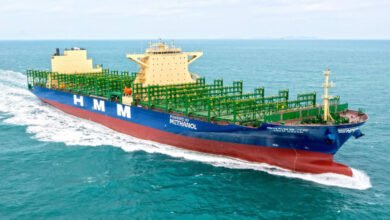
HD Hyundai is strategically diversifying its shipbuilding production footprint across Vietnam, the Philippines, and India, a move aimed at enhancing price competitiveness and securing high-value vessel orders amidst China’s increasing dominance in global newbuild contracts. This expansion sees the Korean conglomerate concentrating its high-end vessel construction in domestic yards while leveraging overseas bases for more conventional ship types.
The strategy, led by HD Hyundai Chairman Chung Ki-sun, explicitly seeks to narrow the cost gap with Chinese shipbuilders. India has recently been designated as the third overseas shipbuilding base, following established operations in Vietnam and the Philippines, accelerating this diversification effort.
A particular focus is the Subic site in the Philippines, which HD Hyundai intends to utilize for both commercial ships and local naval vessel construction. This signals an ambitious push to expand naval orders across Southeast Asia, potentially reshaping regional defense procurement dynamics and offering alternative industrial capabilities beyond traditional suppliers.
The urgency of this shift is underscored by recent market trends. According to U.K.-based Clarksons Research, China secured a significant 3.59 million compensated gross tons (CGT), representing 107 vessels, out of a global total of 4.2 million CGT and 125 vessels ordered worldwide in August. This concentration of orders highlights the competitive pressures driving HD Hyundai’s geographic rebalancing.
This strategic pivot by a major Korean shipbuilder suggests a broader industry adaptation, where the future of newbuild procurement may increasingly involve a tiered approach. Owners seeking advanced or specialized tonnage might continue to favor high-cost, high-skill yards in Korea, while those prioritizing cost efficiency for standard vessels could turn to emerging shipbuilding hubs in Southeast Asia and India. This dual-track production model could lead to greater regional specialization in vessel types and impact the global supply chain for new construction.