Gulf Abandoned Ships: Iran Grounding Sparks Maritime Peril | Mariner News
The recent grounding of an abandoned Thai bulker on Iran’s Qeshm Island has starkly illuminated the escalating danger posed by abandoned ships in the Gulf. This incident serves as a potent reminder of the myriad maritime risks festering in one of the world’s most critical shipping arteries. For weeks, the 30,000 dwt Thai-flagged bulker Mayuree Naree had been adrift after a severe incident, transforming from a commercial vessel into a derelict hazard. Its eventual collision with Iranian coastline underscores a growing problem, highlighting the urgent need for international attention to the unattended vessels scattered across the Persian Gulf, a region already grappling with heightened maritime security concerns and geopolitical tensions. The implications extend far beyond a single vessel, encompassing navigational safety, environmental integrity, and the very fabric of regional maritime commerce.
The Grounding Incident: A Closer Look at the Mayuree Naree’s Ordeal
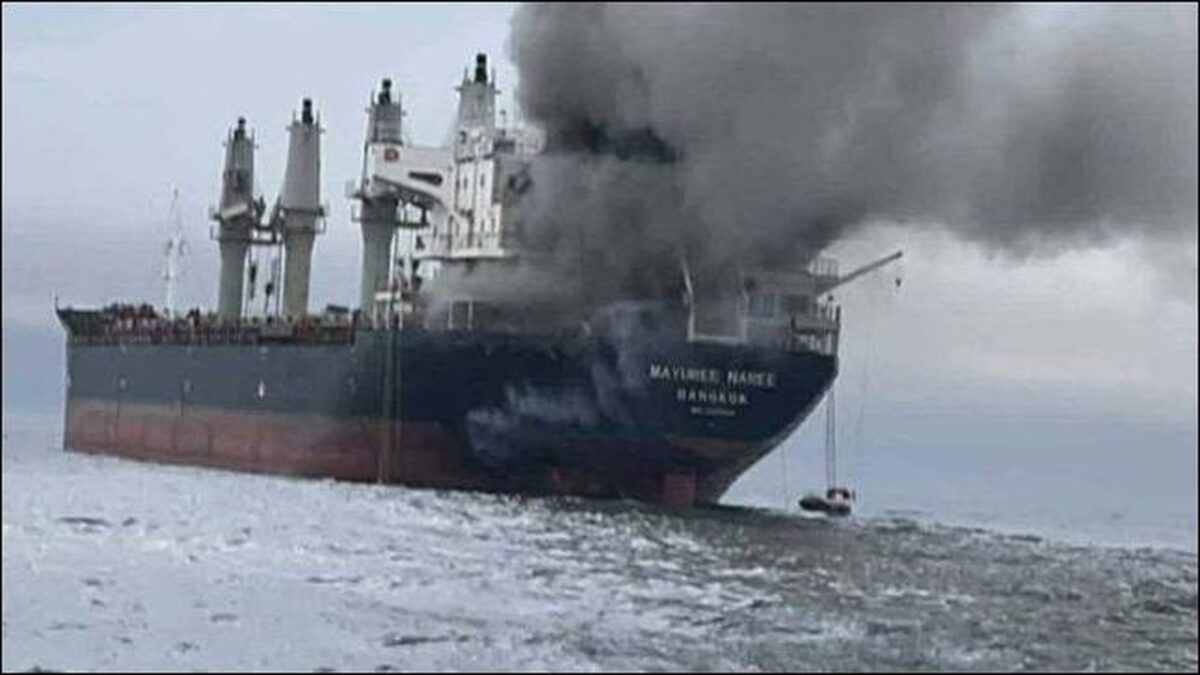
The Mayuree Naree’s journey from active duty to a grounded wreck began on March 11, when it was reportedly struck by two projectiles. The attack, believed to have occurred approximately 11 nautical miles off Oman, near the western side of the Gulf and the Strait of Hormuz, caused an explosion and a subsequent fire in the vessel’s engine room. The severity of the damage prompted the 20 crewmembers to abandon ship, finding refuge in life rafts before being rescued by the Omani Navy. Tragically, three crewmembers, believed to have been in the engine room at the time of the strike, remained unaccounted for. This human cost is a somber reminder of the immediate and personal consequences of such maritime incidents.
Following the attack, the bulker, owned by Precious Shipping of Thailand, was left adrift, a ghost ship in the vast waterway. Despite initial efforts to monitor its status, the vessel continued its unguided drift across the Persian Gulf. Two weeks after the initial incident, Iranian officials reported a significant development: the Mayuree Naree had drifted ashore and grounded on the southern coast of Qeshm Island, north of Larak Island. Local authorities, including the mayor of Ramchah village, inspected the vessel, confirming it was empty of crew. Precious Shipping subsequently confirmed the report to local media, while the Thai Foreign Ministry stated that a joint Omani and Iranian team had reached and searched the ship, further cementing the vessel’s fate. At the time of the strike, the ship was reportedly in ballast, carrying no cargo, and ostensibly attempting to exit the turbulent region.
Escalating Maritime Dangers and Unattended Vessels in the Persian Gulf
The Mayuree Naree incident is not an isolated event but rather a symptom of a larger, more perilous trend within the Persian Gulf shipping lanes. The region has witnessed attacks on 20 commercial ships since the beginning of the ongoing conflict, each incident carrying the potential to create more abandoned vessels. These unattended ships become significant maritime hazards, posing a multi-faceted threat to the already congested and strategically vital waters. For other vessels navigating the Gulf or seeking Iranian permission to exit the area, these derelict ships introduce an unpredictable element of danger, complicating route planning and increasing collision risks.
Beyond direct navigational hazards, the proliferation of abandoned ships in the Gulf significantly elevates maritime security concerns. These vessels can become targets for further attacks, or, if left unchecked, could potentially be used for illicit activities. The broader context of regional instability, coupled with the sheer number of commercial ships traversing the Strait of Hormuz – a critical chokepoint for global energy supplies – amplifies the urgency of addressing this growing problem. The presence of these uncontrolled masses of steel in dynamic sea conditions represents a tangible threat that demands coordinated international maritime security efforts.
Economic and Environmental Fallout of Derelict Shipping Assets
The economic ramifications of these abandoned ships are substantial, extending far beyond the immediate loss of the vessel itself. For shipowners like Precious Shipping, an abandoned vessel represents a complete loss of a significant asset, compounded by complex insurance claims, salvage costs, and potential liabilities for environmental damage. The process of salvaging or scuttling a large bulk carrier like the Mayuree Naree in a sensitive and politically charged region like the Persian Gulf is an arduous, expensive, and often diplomatically challenging endeavor. These costs invariably ripple through the maritime industry, potentially impacting shipping rates and operational budgets for other carriers.
From an environmental perspective, the risk of pollution from unattended vessels is immense. Even a ship in ballast, like the Mayuree Naree, can carry residual fuel oil, lubricants, and other hazardous materials that, if released, could cause significant damage to the marine ecosystem. Oil spills, however minor, can devastate delicate coastal habitats, impact fisheries, and contaminate beaches. The Gulf’s unique biodiversity, including coral reefs and mangrove forests, is particularly vulnerable to such industrial pollution. Moreover, the physical presence of a grounded shipwreck can alter local currents, contribute to coastal erosion, and create artificial reefs from unnatural materials, further disrupting the natural marine environment. The long-term cleanup and rehabilitation efforts after a significant spill can span decades and incur astronomical costs.
International Law, Regional Cooperation, and Future Solutions for Maritime Hazards
Addressing the issue of abandoned ships in the Gulf requires a concerted effort involving international law, robust regional cooperation, and innovative solutions. The complexities of jurisdiction, especially when vessels drift across territorial waters, present significant challenges. International maritime organizations like the IMO (International Maritime Organization) play a crucial role in developing conventions and guidelines for safe shipping and pollution prevention, but enforcement in conflict zones often proves difficult. Flag states bear primary responsibility for their vessels, but when a ship is abandoned, responsibility can become blurred, leading to protracted disputes and delayed action.
There is a critical need for enhanced monitoring capabilities across the Gulf to track these derelict ships and predict their drift patterns, allowing for proactive intervention before they become grounded or collide with other vessels. Rapid response protocols for emergency salvage and pollution control must be streamlined and improved, requiring seamless coordination between coastal states, even those with strained diplomatic relations. Diplomatic channels must be utilized to facilitate safe passage for salvage operations and to establish clear lines of communication regarding maritime incidents. Ultimately, a framework for regional cooperation that transcends political divisions is paramount to effectively manage and mitigate the risks posed by these unattended vessels and prevent future catastrophic events in this vital maritime corridor.
The Human Cost and Crew Welfare in Abandonment Cases
While the focus often shifts to the physical and environmental dangers, it is crucial not to overlook the profound human cost associated with ship abandonment. The three unaccounted crew members from the Mayuree Naree serve as a stark reminder of the ultimate sacrifice seafarers can make in the line of duty. Beyond such tragic losses, thousands of seafarers globally face the harrowing reality of ship abandonment each year, often left stranded for months or even years with unpaid wages, dwindling provisions, and no clear path home. These individuals, the backbone of global trade, suffer immense psychological, emotional, and financial distress.
The International Labour Organization’s Maritime Labour Convention (MLC, 2006) provides critical protections for seafarers, including provisions for financial security in cases of abandonment. However, the enforcement of these conventions can be challenging, especially in complex geopolitical contexts or when flag states fail to uphold their responsibilities. The incidents in the Gulf underscore the vulnerability of seafarers operating in high-risk zones. Ensuring their welfare demands not only adherence to international labor standards but also a collective commitment from shipowners, flag states, port states, and regional authorities to prioritize their safety and timely repatriation in the event of an incident or abandonment. The human element of maritime operations must always remain at the forefront of any discussion about safety and risk mitigation.
Conclusion: A Call for Concerted Action on Gulf Shipping Dangers
The grounding of the Mayuree Naree in Iran is more than just a single maritime incident; it is a resonant alarm bell signaling the growing danger from abandoned ships in the Gulf. This event encapsulates a complex web of maritime hazards, including navigational risks, potential environmental catastrophe, and profound human suffering. The Persian Gulf, already a strategically vital yet volatile shipping lane, simply cannot afford to have its waters become a graveyard for derelict vessels. The economic and environmental integrity of the region, alongside the safety of its seafarers and the efficiency of global trade, hinges on immediate and decisive action. International maritime authorities, regional governments, and shipping stakeholders must forge a unified front to implement robust monitoring, rapid response mechanisms, and enforceable regulations. Only through such concerted action can the escalating threats posed by unattended ships be effectively managed, ensuring the long-term safety and sustainability of maritime activities in this critical part of the world. The time for proactive prevention and cooperative solutions is now, before another ghost ship exacts an even greater toll.