Fujairah Bunker Force Majeure Declared | Mariner News
The critical marine fuel hub of Fujairah, United Arab Emirates, is experiencing unprecedented disruption as several `Fujairah bunker suppliers` have declared `force majeure`, citing escalating security concerns stemming from the ongoing `Middle East conflict`. This pivotal development sends ripples throughout the global `shipping industry`, particularly impacting the supply of `marine fuel` to vessels navigating key trade routes. The declaration underscores the immediate and severe challenges faced by the `bunkering industry` in a region grappling with geopolitical instability. For maritime stakeholders, from `tanker operators` to container lines, understanding the implications of this disruption is paramount to maintaining operational continuity and mitigating financial exposure in an already volatile market. The `Middle East conflict`, particularly Iranian attacks mentioned in reports, has directly jeopardized the safety of `bunker deliveries`, compelling suppliers to suspend services and re-evaluate their operational risks, thereby triggering the formal declaration of `force majeure`.
Escalating Tensions and Supply Chain Impact in Fujairah
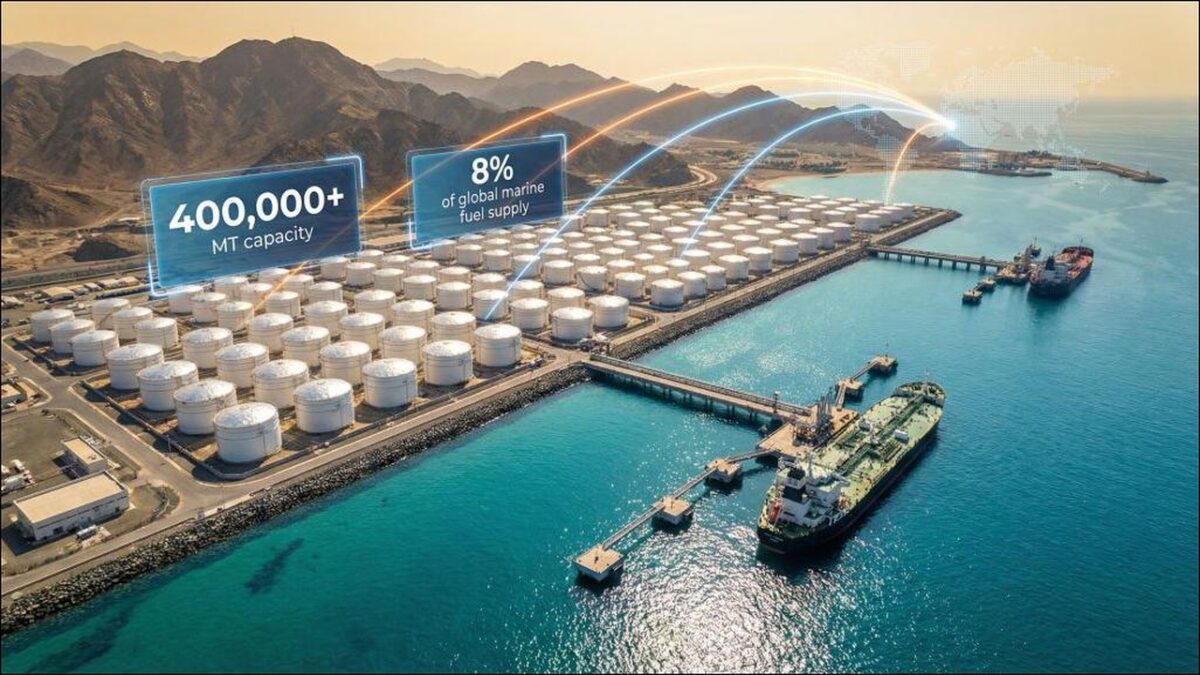
Recent events have painted a stark picture of the deteriorating security situation in Fujairah, a crucial global nexus for `marine fuel` trade. Reports indicate that `Iranian attacks` have begun to directly disrupt `bunkering activity` in the port, a `UAE marine fuel hub` of immense strategic importance. A significant incident involved a fire at the `Fujairah Oil Industry Zone (FOIZ)`, reportedly caused by drone intercept debris. This direct impact on infrastructure highlights the tangible risks posed by the `Middle East conflict` to `energy supply chains`. Such incidents immediately trigger heightened `security concerns` among `bunker suppliers` and `vessel operators` alike.
In the wake of these attacks, a flurry of `bunker orders` has been cancelled, and some suppliers have unilaterally suspended `bunker deliveries`. While `port operations in Fujairah` outwardly appear to be running normally, the underlying sentiment among `marine fuel suppliers` is one of extreme caution. Several `suppliers are holding back` on `bunker deliveries` due to these elevated `security risks`. The immediate consequence is a tightening of `bunker availability` and a sharp increase in `fuel prices`, forcing `shipping companies` to confront unforeseen logistical and financial hurdles. The decision by key players to cease operations or limit supplies signals a significant bottleneck for the intricate `global supply chain` that relies heavily on Fujairah’s robust `bunkering services`.
Force Majeure Declarations and Market Volatility
The formal declaration of `force majeure` by `Fujairah bunker suppliers` is a contractual mechanism signaling an unforeseen circumstance beyond their control, preventing them from fulfilling obligations. This critical announcement has profound implications for `marine fuel buyers` and sellers alike. Sources confirm that major players such as Sinopec, Bakri International Energy, and Mediterranean Eastern Enterprise have completely paused `bunkering operations`, effectively removing substantial `bunker supply` from the market. Other providers, including OMTI and ABC Bunkering, are reportedly operating with severely `limited supplies available`, further exacerbating the `supply shortage`. This partial or complete withdrawal from the market creates an immediate and dramatic shift in `market dynamics`.
The immediate impact of these `force majeure` declarations is a surge in `bunker prices`. With diminished supply and sustained demand, the cost of `marine fuel` has spiked dramatically, imposing significant additional costs on `shipping companies` already operating on tight margins. This sudden `price volatility` complicates budgeting and `fuel procurement strategies`, forcing operators to pay premium rates or explore alternative, often more costly, `bunkering locations`. The declarations also introduce legal complexities, as `shipping contracts` must now navigate the implications of unfulfilled fuel commitments. For `vessel operators`, the challenge is not only securing fuel but doing so at a reasonable cost while ensuring the safety of their crew and vessels in a highly precarious environment. The situation underscores the vulnerability of `global trade` to `geopolitical events` and the need for robust `risk management` frameworks within the `maritime industry`.
Operational Challenges and Strategic Responses for Shipping
The `disruption in Fujairah` presents a myriad of `operational challenges` for the `shipping sector`. `Vessel operators` that planned to refuel in Fujairah now face the urgent need to reroute, adjust their schedules, and identify `alternative bunkering hubs`. Such diversions inevitably lead to `longer transit times`, increased `operational costs`, and potential delays in cargo delivery, impacting `supply chain efficiency` globally. The uncertainty surrounding `bunker availability` and `pricing` also complicates voyage planning and charter party agreements, potentially leading to disputes over demurrage and `fuel surcharges`. `Shipping companies` must now prioritize adaptability and agility in their `logistics operations`.
In response, many `maritime stakeholders` are activating `contingency plans`. This includes exploring `bunker supply options` at ports outside the immediate conflict zone, such as Singapore, Rotterdam, or even other ports within the GCC region that may offer more stable, albeit potentially more expensive, `fuel supplies`. The insights provided by analytics firms like `Spotbarge`, which analyze `bunkering activity` using `AIS data` and other sources, become invaluable for `shipping companies` seeking real-time information to make informed decisions. Furthermore, `shipowners` and `charterers` are engaging in intense discussions to re-negotiate contracts, share `risk exposure`, and implement `fuel efficiency measures` to conserve precious `marine fuel`. Prioritizing `crew safety` and `vessel security` remains paramount, influencing decisions on transit routes and port calls. This evolving situation demands a proactive and collaborative approach from all entities involved in `maritime trade`.
Global Repercussions for Marine Fuel & Maritime Industry
The `Fujairah force majeure` extends its shadow far beyond the `UAE coast`, casting significant global `repercussions for marine fuel` markets and the broader `maritime industry`. As a top-three global `bunkering hub`, Fujairah’s reduced capacity inevitably shifts demand to other major `bunkering ports`. This sudden surge in demand elsewhere can strain `supply chains` in these alternative hubs, potentially leading to increased `bunker prices` and longer waiting times globally. The intricate web of `global shipping routes` means that a disruption in one key node can create cascading effects, impacting `freight rates` and `delivery schedules` for goods worldwide. This highlights the interconnectedness of `maritime commerce` and the sensitivity of `energy security` to `geopolitical events`.
Beyond immediate `market volatility`, the incident raises serious questions about the long-term `energy security` and `resilience of supply chains` in the `Middle East` and globally. `Shipping companies` may now re-evaluate their reliance on single `bunkering hubs` and diversify their `fuel procurement strategies` to mitigate future `geopolitical risks`. This could accelerate trends towards `alternative fuels` or `regional bunkering alliances`. Governments and international `maritime organizations` are also likely to intensify monitoring of `maritime security` in critical waterways, potentially leading to new advisories or regulations. The incident serves as a stark reminder that the stability of `global trade` remains inextricably linked to `regional stability` and the uninterrupted flow of essential resources like `marine fuel`. The global `maritime community` must collectively assess these wider implications and adapt strategies to navigate an increasingly complex and unpredictable operating environment.
Navigating Uncertainty: Advice for Maritime Stakeholders
In this period of heightened `uncertainty`, `maritime stakeholders` must adopt robust strategies to `navigate the challenges` posed by the `Fujairah bunker disruption`. Firstly, it is imperative to closely `monitor geopolitical developments` in the `Middle East` and the specific operational status of `bunker suppliers` in `Fujairah` and surrounding areas. Subscribing to reliable `maritime intelligence` feeds will provide real-time updates on `bunker availability`, `pricing`, and `security advisories`.
Secondly, `shipping companies` should immediately `engage with their bunker suppliers` and `charterers` to understand the full scope of `force majeure` declarations, review existing `contractual obligations`, and `explore alternative bunkering strategies`. This may involve diverting vessels to other `bunkering hubs` even if it entails higher costs or longer voyages. Proactive communication and transparent information sharing between all parties in the `maritime supply chain` are crucial to minimizing disputes and optimizing operational decisions. Furthermore, `vessel operators` should assess their `fuel inventory` and plan for extended durations between refuelling, potentially utilizing slow steaming or other `fuel-saving measures` to conserve supplies.
Finally, `risk management` frameworks need to be robustly tested and updated. This includes stress-testing `contingency plans` for `fuel procurement`, evaluating options for `fuel hedging` to mitigate `price volatility`, and ensuring that `insurance policies` adequately cover `disruption-related losses`. Prioritizing `crew safety` and `vessel security` must remain non-negotiable, guiding all operational decisions. By combining diligent monitoring, proactive engagement, and comprehensive `risk mitigation`, `maritime stakeholders` can better weather the current storm and build greater resilience against future `geopolitical disruptions` impacting critical `marine fuel supplies`.