Finnlines Implements Bunker Surcharge Amid Fuel Price Hike | Mariner News
Finnlines Responds to Surging Fuel Costs with Temporary Bunker Surcharge
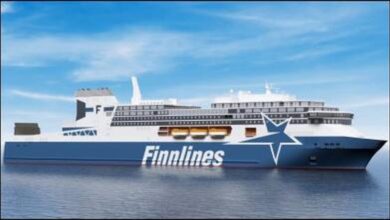
In a direct response to a dramatic surge in global energy markets, Finnlines, a prominent Finnish shipping company and part of the Italy-based Grimaldi Group, has announced the implementation of a temporary bunker surcharge on passenger tickets. This significant decision, effective from April 1, comes amidst a sharply increased fuel price hike, driven primarily by escalating geopolitical tensions, specifically referencing the Iran conflict. The move underscores the inherent volatility in the maritime sector, where operational costs are profoundly influenced by external economic and political events. For the shipping industry, managing marine fuel expenses is a perpetual challenge, and surcharges often become a necessary mechanism for cost recovery.
The company noted that bunker fuel prices have skyrocketed by approximately 50 percent in a short period, compelling the introduction of an emergency bunker surcharge (EBS). This charge will be applied to all new bookings made from the start of April, signifying an immediate impact on travelers and cargo clients. Finnlines, known for its extensive network connecting Finland with Germany and Sweden, operates critical Ro-Ro and passenger services, making any cost adjustment a significant point of interest for both individual passengers and commercial logistics operators. The introduction of such a fee is a direct consequence of an unsustainable increase in one of the most substantial operating expenses for any shipping line.
This temporary levy is designed to offset the unforeseen and rapid escalation in the cost of marine fuel, which directly impacts the profitability and sustainability of shipping operations. While no company wishes to pass additional costs onto its customers, the scale of the recent fuel price increase left Finnlines with little alternative. The maritime industry, characterized by thin margins and intense competition, often sees fuel as its largest variable cost, sometimes accounting for up to 50-60% of total voyage expenses. Therefore, proactive measures like a bunker surcharge are essential to maintain service reliability and financial stability in challenging market conditions. Understanding the mechanics and triggers of such a surcharge is vital for stakeholders across the maritime value chain.
Unpacking the Global Factors Driving Marine Fuel Prices Higher
The recent spike in marine fuel prices is not an isolated incident but rather a symptom of broader global economic and political instability. The referenced Iran war has undeniably contributed to heightened uncertainty in the Middle East, a region critical for global oil supply. Such geopolitical events often trigger speculative trading and genuine supply concerns, driving up the price of crude oil benchmarks like Brent crude. Since bunker fuels are derivatives of crude oil, their prices are intrinsically linked to these global market fluctuations. A 50% increase in a short timeframe represents an extraordinary shock to the system, far beyond typical market oscillations that shipping companies might absorb through hedging or efficiency measures.
Beyond immediate conflicts, the global energy landscape remains complex, with ongoing discussions around supply and demand dynamics, strategic oil reserves, and the slow but steady transition towards cleaner energy sources. While the long-term trend points towards decarbonization, the immediate reality for the shipping industry relies heavily on conventional marine fuels. This dependency leaves shipping companies vulnerable to sudden shifts in oil markets. The cost of crude oil and its refining into various fuel grades directly dictates the expense for operators like Finnlines, influencing everything from passenger ticket pricing to freight charges. Monitoring these global energy markets is a daily imperative for maritime logistics professionals.
The interplay of these factors creates a highly volatile environment for maritime shipping. While fuel hedging strategies can mitigate some risks, they cannot fully insulate companies from extreme, rapid price movements. Therefore, mechanisms like the emergency bunker surcharge become crucial for maintaining operational viability. The sheer scale of the price hike means that absorbing the costs internally would significantly jeopardize financial health, potentially leading to reduced service quality or even route cancellations. This scenario highlights the delicate balance shipping lines must maintain between competitive pricing and ensuring sustainable operations in a world grappling with unpredictable energy costs.
How Finnlines’ Surcharge Impacts Passengers and Freight Operations
The implementation of Finnlines’ emergency bunker surcharge carries direct implications for various stakeholders. For passengers, the charge will be applied per person and per direction, meaning a round trip would incur the surcharge twice. The specific amount levied will vary depending on the chosen route, with longer services such as the Helsinki–Travemünde route attracting the highest charge, ranging from €5 to €30. This tiered structure reflects the increased fuel consumption associated with longer voyages. Importantly, tickets booked before April 1 remain unaffected, providing some relief for early planners but introducing a new cost factor for all subsequent bookings.
For freight operations, while the initial announcement specifically mentioned passenger tickets, it’s customary for bunker adjustment factors (BAF) or similar surcharges to be applied to cargo as well. Although the original statement focused on passenger tickets, Finnlines is a significant Ro-Ro operator, and increased fuel costs invariably impact cargo movement. This means businesses relying on Finnlines for their logistics and supply chain needs may also experience adjustments in their shipping expenses, leading to potential increases in the cost of goods transported. Companies will need to factor these fluctuating maritime shipping costs into their own pricing and budgeting to maintain profitability.
The varied range of the surcharge, from €5 to €30, demonstrates Finnlines’ effort to proportionalize the impact based on actual fuel consumption per route. This differentiated approach, while adding complexity, aims for a fairer distribution of the increased fuel burden. Travelers planning their journeys and businesses managing their supply chains must now account for this additional cost element when evaluating their transport logistics and overall travel costs. The transparency regarding the effective date and the route-specific charges allows for better planning, though the underlying cause—unstable fuel prices—remains a persistent challenge for both operators and their customers.
The Mechanism and Removal Conditions of Finnlines’ Emergency Bunker Surcharge
A key aspect of Finnlines’ temporary bunker surcharge mechanism is its direct linkage to the movements of Brent crude oil prices. The company has explicitly stated that the surcharge will be removed once the monthly average price of Brent crude falls below $70 per barrel. This threshold represents the level observed before the recent escalation in the Persian Gulf, providing a clear and transparent trigger for the cessation of the charge. This commitment offers a degree of predictability for customers, indicating that the surcharge is not an indefinite addition but a reactive measure tied to specific market conditions. Such clarity in cost recovery mechanisms is vital for building trust in the shipping industry.
This transparent condition for removal differentiates Finnlines’ approach and provides insight into their operational philosophy. Many shipping lines implement various forms of fuel surcharges, some with more complex formulas or less explicit removal criteria. By tying the EBS directly to a widely recognized global crude oil benchmark, Finnlines provides a tangible metric that can be independently verified. This approach helps to allay concerns that the surcharge might become a permanent fixture, emphasizing its emergency and temporary nature. Continuous monitoring of fuel markets is an ongoing responsibility for the company, ensuring adjustments are made as required by the prevailing economic environment.
The specific conditions for the surcharge’s application and removal are critical for both financial planning and maintaining customer relations. It underscores the maritime industry’s need for flexible financial instruments to navigate unpredictable operating costs. The $70/bbl benchmark for Brent crude serves as a critical indicator, providing an objective standard for when the exceptional market conditions warranting the surcharge are deemed to have subsided. This mechanism ensures that the additional charge is directly responsive to the extraordinary market volatility, rather than becoming a fixed component of the overall shipping expenses, thus reflecting a fair approach to fuel cost recovery.
Broader Maritime Industry Response to Fuel Volatility
The challenges faced by Finnlines are not unique; the entire maritime industry grapples with the volatility of fuel prices. Other major players, including fellow Grimaldi Group companies and large container lines like Hapag-Lloyd, continuously implement strategies to mitigate the impact of fluctuating marine fuel costs. These strategies range from sophisticated fuel hedging programs, where companies lock in future fuel prices, to aggressive investments in fuel efficiency technologies and operational optimizations. For instance, Hapag-Lloyd has reported significant fuel savings by optimizing engine performance on its vessels, demonstrating a proactive approach to reduce consumption rather than solely relying on surcharges.
Beyond immediate cost recovery, the broader industry trend leans towards long-term sustainability and reduced dependency on fossil fuels. Investments in alternative fuels, such as LNG, methanol, or even hydrogen, as well as the development of more energy-efficient ship designs, are increasingly common. While these initiatives require substantial capital outlay and time to implement, they represent the ultimate solution to insulating shipping operations from the whims of the oil market. However, in the interim, for current fleets and immediate operational needs, managing conventional fuel costs through mechanisms like bunker surcharges remains a practical necessity, reflecting the dual challenge of immediate economic pressures and long-term environmental goals.
The Grimaldi Group, as a global Ro-Ro and logistics operator, to which Finnlines belongs, likely employs a coordinated strategy across its fleet to manage fuel expenses and operational resilience. This involves not only implementing surcharges but also leveraging economies of scale in fuel procurement and investing in fleet modernization. The dynamic nature of global logistics demands constant adaptation, and fuel cost management is a central pillar of this adaptability. The collective experience of major operators highlights that while temporary surcharges address immediate financial pressures, the long-term solution lies in technological advancement and strategic energy transition, ensuring a more stable and sustainable future for global trade.
Navigating Future Horizons: Stability and Sustainability in Shipping
The introduction of Finnlines’ temporary bunker surcharge serves as a stark reminder of the fragile balance within the maritime industry, constantly susceptible to global economic and geopolitical shifts. The rapid escalation of fuel costs, triggered by regional conflicts, underscores the imperative for shipping companies to maintain robust strategies for managing operational expenses. While temporary surcharges provide immediate relief, the industry’s long-term resilience hinges on a multi-faceted approach encompassing market monitoring, technological innovation, and a commitment to sustainable practices. The need for adaptability is paramount in an era where unpredictability seems to be the only constant.
Looking ahead, the maritime sector faces ongoing challenges, not least the ambitious decarbonization targets set by international regulators. These environmental mandates, while crucial for the planet, will inevitably influence fuel choices and operational costs. The transition to cleaner, alternative fuels is a capital-intensive journey, and its progress will be closely intertwined with global energy prices and infrastructure development. Companies like Finnlines, supported by the larger Grimaldi Group, are positioned to navigate these complex waters through strategic investments and continuous optimization of their fleet and routes, ensuring competitive pricing while meeting evolving industry standards.
Ultimately, the stability of maritime shipping, which forms the backbone of global trade, relies on transparency, foresight, and collaborative efforts across the supply chain. For passengers and cargo owners, understanding the factors that influence shipping costs, such as the emergency bunker surcharge, fosters greater appreciation for the complexities involved in moving goods and people across oceans. As Finnlines continues to monitor fuel markets and adjust its surcharges as required, all stakeholders must remain informed and adaptable, collectively contributing to a resilient and sustainable future for the vital maritime industry, ensuring seamless global connectivity despite prevailing economic headwinds.