Finland, Sweden Boost Baltic Maritime Security Cooperation | Mariner News
HELSINKI – Finnish and Swedish naval commanders have formalized agreements to significantly enhance Baltic Maritime Security, including immediate resource sharing and joint procurement initiatives. These developments follow the conclusion of a three-day Marsec EU26 exercise, the first of its kind staged in the Baltic Sea.
Under the new agreements, Sweden will deploy a Visby-class maritime corvette to operate in the Gulf of Finland, specifically under the command of the Finnish Defence Forces. This strategic deployment will allow Finland to concentrate its naval assets in the eastern Gulf of Finland, an area where Finnish commanders perceive the greatest threat, including from drones, according to Finnish news outlet Yle.
The arrangement signals a deepening of operational integration between the two nations, enabling a targeted division of labor to address specific regional vulnerabilities. This coordinated approach implies a more efficient allocation of naval power within critical areas of the Baltic Sea.
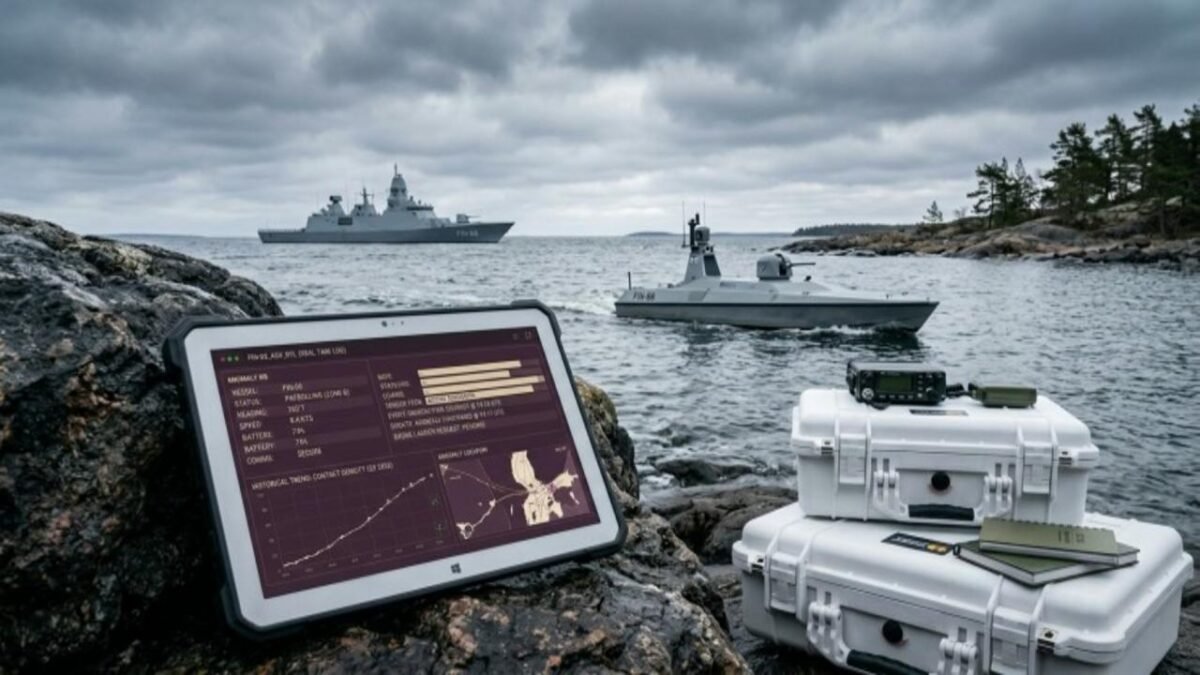
Further cooperation includes exploring the joint procurement of unmanned surveillance vessels. These units, described as “surface drones that look like a sailboat,” will be utilized for monitoring, intelligence gathering, and inspections. Finnish Navy Commander Tuomas Tiilikanen indicated that temporary resource sharing of these vessels is planned, with initial patrols potentially commencing before the end of the year.
The adoption of civilian-appearing surface drones for military surveillance marks an evolution in maritime domain awareness, suggesting a strategy to maintain persistent intelligence gathering while potentially mitigating the visible military footprint. This dual-use characteristic could influence how maritime traffic and security are perceived throughout the region.
The Marsec EU26 exercise, co-funded by the European Union as part of its Maritime Security Strategy, concluded on September 17, 2026. The live training included coordination and information sharing, with forces practicing the boarding and seizure of a vessel suspected of dragging its anchor, using the icebreaker Polaris as the target. This specific drill highlights a focus not only on traditional military threats but also on preventing or responding to potential disruptive actions affecting navigational safety and critical maritime infrastructure.