Essberger’s Second Methanol-Ready Tanker Construction Begins | Mariner News
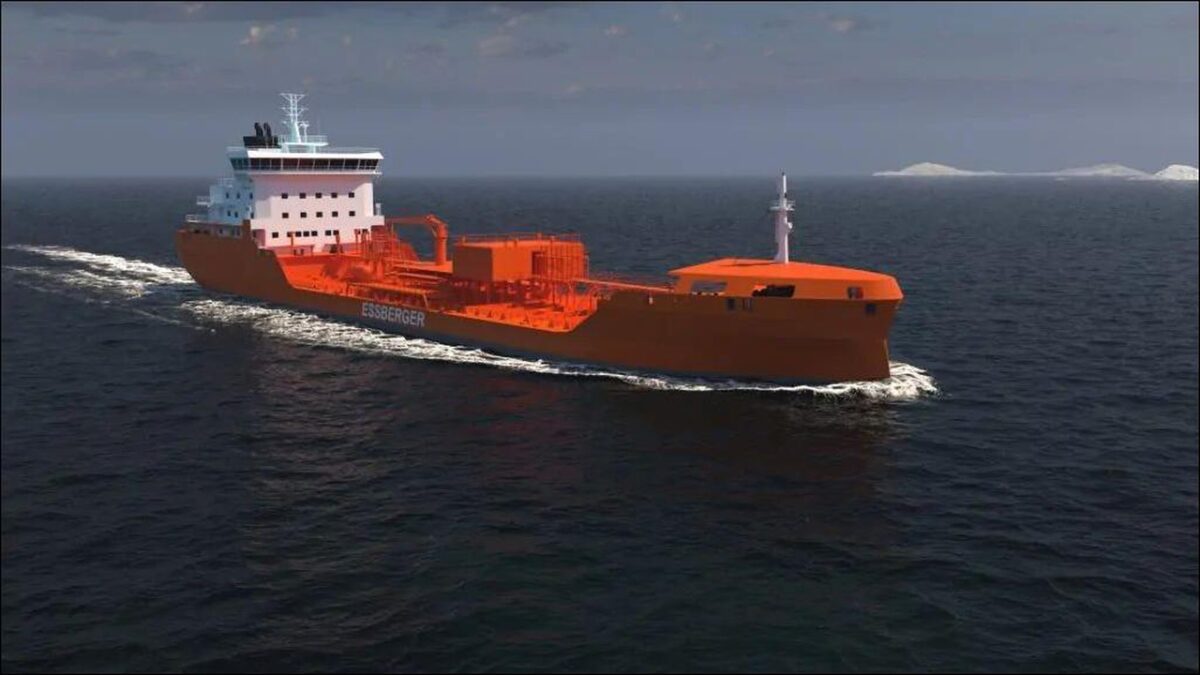
The global maritime industry is charting an ambitious course towards decarbonization, and a significant milestone has just been reached as construction begins on the second methanol-ready tanker for Germany’s John T. Essberger. This development, spearheaded by China’s Nantong Rainbow Offshore & Engineering Equipment (ROC), underscores a growing trend in shipbuilding to equip new vessels with the flexibility to adapt to future, cleaner marine fuels. The 13,000 DWT duplex stainless steel chemical tanker represents a tangible step in modernizing fleets and embracing innovative propulsion solutions, even as the industry navigates the complexities of alternative fuel adoption.
This newbuild is not merely another addition to the Essberger fleet; it is a testament to foresight and strategic planning in an era of stringent environmental regulations. Designed to Ice Class 1A standards, the vessel is built to withstand challenging operational environments, ensuring robust performance and reliability. Crucially, it will meet IMO Tier III emissions requirements, reflecting a deep commitment to reducing nitrogen oxide emissions and minimizing the ecological footprint of maritime transport. The inherent design features, including 18 independent cargo tanks, highlight its specialized function in chemical transport, demanding high standards of safety and material integrity.
Pioneering Sustainable Maritime Operations with Advanced Tankers
The construction of Essberger’s second methanol-ready chemical tanker signifies a proactive approach to environmental compliance and operational flexibility within the shipping sector. This vessel’s specifications are geared towards optimizing performance while significantly reducing its environmental impact. Measuring an overall length of 132 meters with a breadth of 21.8 meters, its substantial 13,000 DWT capacity ensures efficient transport of various chemical cargoes across global routes. The use of duplex stainless steel for its tanks is a critical choice, offering superior corrosion resistance and longevity, essential for carrying diverse chemical substances safely.
Beyond its structural integrity and cargo capacity, the tanker’s ‘methanol-ready’ designation is its most forward-looking feature. This means the ship is built with the necessary design provisions to be converted to run on methanol, a lower-carbon fuel, in the future. Furthermore, it is also ‘wind-assisted propulsion-ready,’ indicating that it can be retrofitted with technologies like sails or rotors to harness wind energy, further enhancing fuel efficiency and reducing greenhouse gas emissions. These readiness features position the vessel at the forefront of sustainable shipping practices.
Initially, the vessel will operate on conventional marine fuels upon delivery, a pragmatic approach adopted by many shipping companies. This strategy allows owners to benefit from immediate operational capabilities while monitoring the evolving landscape of alternative fuel infrastructure, supply chains, and regulatory frameworks. This cautious yet prepared stance minimizes initial investment risks associated with new fuel types, providing flexibility for future adaptation when the market for alternative fuels matures.
The Strategic Shift Towards Methanol as a Marine Fuel
Methanol is gaining considerable traction as a viable alternative marine fuel due to several key advantages. As a liquid fuel, it is easier to store and handle compared to gaseous fuels like LNG or ammonia, requiring fewer modifications to existing bunkering infrastructure. Its combustion produces significantly lower emissions of sulfur oxides (SOx), nitrogen oxides (NOx), and particulate matter, contributing directly to cleaner air and meeting stricter environmental regulations. Moreover, green methanol, produced from renewable sources, offers a pathway to truly carbon-neutral shipping, aligning with the industry’s long-term decarbonization goals.
However, the transition to methanol is not without its challenges. The current global supply chain for green methanol is still in its nascent stages, with production volumes and availability needing significant scaling up to meet future demand. Additionally, the energy density of methanol is lower than conventional marine fuels, meaning larger storage tanks might be required or voyages could be shorter. These factors contribute to the industry’s ‘methanol-ready’ strategy, allowing shipowners to defer the full commitment until these infrastructure and supply issues are more fully resolved.
Despite the hurdles, the move towards methanol-ready vessels like Essberger’s second tanker demonstrates a clear commitment to sustainable maritime transport. It reflects an industry-wide recognition that a multi-fuel future is inevitable. By investing in adaptable newbuilds, companies are strategically positioning themselves to seamlessly integrate cleaner fuels as they become more economically viable and widely available, ensuring their fleets remain competitive and compliant in an increasingly environmentally conscious world.
Collaborative Excellence in Global Shipbuilding
The successful commencement of this advanced chemical tanker’s construction is a direct result of the strong partnership between John T. Essberger and Nantong Rainbow Offshore & Engineering Equipment (ROC). Essberger, a prominent German shipping company with a rich history in chemical tanker operations, is known for its commitment to safety, efficiency, and environmental stewardship. Their decision to invest in methanol-ready vessels highlights their leadership in fleet modernization and their vision for a more sustainable future in maritime logistics.
ROC China, a leader in offshore engineering and shipbuilding, brings extensive expertise in constructing specialized vessels. Their proficiency in handling complex projects, particularly those involving advanced materials like duplex stainless steel and stringent environmental compliance, makes them an ideal partner for Essberger’s ambitions. The collaboration between a European owner and an Asian shipyard also exemplifies the global nature of the shipbuilding industry, where international partnerships drive innovation and efficiency.
Such collaborations are vital for accelerating the maritime industry’s green transition. They combine the operational insights and strategic vision of shipowners with the technical capabilities and manufacturing prowess of shipyards. This synergy enables the development and deployment of cutting-edge vessels that not only meet current demands but are also future-proofed against evolving regulatory landscapes and technological advancements, fostering a more resilient and sustainable global shipping infrastructure.
Charting a Course for Future-Proof Chemical Transport
Essberger’s investment in a second methanol-ready chemical tanker is a strong indicator of the evolving landscape within the chemical transport segment. As global economies continue to rely on the efficient movement of specialized chemicals, the demand for vessels that can perform this task with minimal environmental impact will only intensify. This new tanker, designed for robustness and adaptability, ensures that Essberger remains at the forefront of providing responsible and compliant chemical logistics services.
This project also sends a clear message to the broader maritime community: the future of shipping is green, and readiness is key. While the pace of alternative fuel adoption might vary, the foundational steps taken by companies like Essberger – investing in ‘ready’ technologies – are crucial for setting the industry on a definitive path toward net-zero emissions. These vessels serve as prototypes for future fleets, demonstrating the feasibility and commercial viability of sustainable marine practices.
Looking ahead, the successful integration of methanol and potentially wind-assisted propulsion into the Essberger fleet will provide invaluable operational data and insights. This real-world experience will further inform future shipbuilding decisions, fuel infrastructure development, and regulatory frameworks. It is through such pioneering efforts that the shipping industry collectively moves closer to its ambitious decarbonization targets, ensuring cleaner oceans and a more sustainable future for global trade.
Conclusion
The commencement of construction on Essberger’s second methanol-ready chemical tanker marks a pivotal moment for both the company and the broader sustainable shipping movement. This project, undertaken by ROC China, highlights the industry’s commitment to innovation, environmental stewardship, and future-proofing fleet operations. By integrating advanced design features, meeting stringent emission standards, and ensuring readiness for alternative fuels like methanol and wind-assisted propulsion, this vessel embodies the strategic steps necessary for the maritime sector’s green transition.
Essberger’s investment underscores the cautious yet determined approach many operators are taking towards decarbonization. While initially operating on conventional fuels, the vessel’s adaptability ensures it can swiftly embrace cleaner energy sources as infrastructure and supply chains mature. This forward-thinking strategy not only strengthens Essberger’s position as a leader in chemical transport but also contributes significantly to the global effort to reduce carbon footprints and achieve a more sustainable maritime future. The construction of this methanol-ready tanker is indeed a beacon of progress.