Dry Bulk Market Resilient Amid Middle East Conflict | Mariner News
The global shipping industry frequently faces an array of geopolitical challenges, with the ongoing Middle East conflict being a significant one. While various maritime sectors, particularly container shipping and crude oil tankers, have grappled with notable disruptions, the dry bulk market has remarkably emerged as the least impacted. This resilience highlights the unique characteristics of the dry bulk sector, its operational flexibility, and the fundamental nature of the commodities it transports, proving crucial for global supply chain stability despite regional tensions.
Understanding the Dry Bulk Sector’s Unique Position
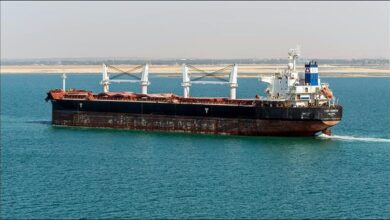
The dry bulk shipping segment is pivotal for global commerce, transporting unpackaged commodities like iron ore, coal, grains, and bauxite. These essential raw materials fuel industrial production, energy generation, and food supply worldwide. Unlike time-sensitive manufactured goods in containers, dry bulk cargoes often have less stringent delivery schedules, offering greater operational leeway to carriers when facing route disruptions.
A key differentiator lies in the typical trade lanes for dry bulk vessels. Major routes often involve long-haul voyages from resource-rich regions such as Australia, Brazil, and North America to large consumption hubs, predominantly in Asia. For instance, the vast majority of iron ore voyages from Brazil to China or coal from Australia to India do not traditionally traverse the most volatile areas of the Red Sea or the Strait of Hormuz. This geographical separation insulates a significant portion of the fleet from direct exposure to these specific conflict zones.
Moreover, dry bulk commodities are less susceptible to the “just-in-time” inventory pressures that affect containerized cargo. While delays are never ideal, a few extra days for a shipment of iron ore or grain typically have a less immediate impact on downstream production compared to high-value electronics. This inherent buffer, coupled with the varied operational scales of Capesize, Panamax, Supramax, and Handysize vessels, significantly contributes to the dry bulk market’s observed resilience amid the complexities of the Middle East conflict.
Navigating Geopolitical Tensions: Route Diversification and Flexibility
The recent escalations in the Middle East, particularly attacks on commercial shipping in the Red Sea, prompted many lines to reroute vessels away from the Suez Canal, opting for the longer journey around the Cape of Good Hope. While this diversion profoundly impacted container and tanker traffic, its effect on dry bulk shipping has been comparatively muted. Many dry bulk routes, as mentioned, inherently avoid the Suez Canal or have readily available alternative paths.
For dry bulk vessels that do utilize the Suez Canal, primarily those transiting between the Black Sea and Asia or from Europe/Atlantic to Asia, rerouting around Africa adds significant transit time and fuel costs. However, the volume of dry bulk traffic through this specific chokepoint, relative to the global dry bulk trade, is lower than for other segments. This means the overall disruption to the global dry bulk supply chain is less systemic, allowing for adjustments without critical bottlenecks.
Furthermore, dry bulk commodities are often sourced from multiple global origins. If one trade route becomes too perilous or expensive, alternative suppliers or slightly different routes can often be utilized. This diversified sourcing capability provides an additional layer of protection against localized disruptions, unlike sectors reliant on very specific manufacturing hubs and linear supply chains. This flexibility is a critical asset when navigating unpredictable geopolitical landscapes.
Demand Fundamentals Drive Dry Bulk Stability
Beyond operational considerations, the robust and inelastic demand for dry bulk commodities forms the bedrock of the sector’s stability. Global industrial activity, particularly in emerging economies, continues to drive the need for iron ore for steel production, coal for energy generation, and grains for food security. These are not discretionary purchases; they are fundamental inputs for sustaining economies and populations, making their transport essential irrespective of regional conflicts.
Key consuming nations, notably China and India, maintain substantial appetite for these raw materials, often sourcing from diverse global origins. For example, China’s demand for iron ore from Australia and Brazil remains a dominant force in Capesize shipping, largely unaffected by the Red Sea situation. Similarly, India’s coal imports continue apace, demonstrating how core demand factors override localized geopolitical turbulence.
The underlying economic cycles and growth trajectories of major economies play a far more significant role in dictating the trajectory of dry bulk freight rates and volumes than discrete geopolitical flashpoints. While a global recession would undoubtedly dampen demand across all shipping segments, a regional conflict, even one as significant as that in the Middle East, tends to have a more contained effect on the broad dry bulk market due to its dispersed cargo origins and destinations, ensuring continuous cargo flow.
Freight Rates and Operational Considerations
Analysis of dry bulk freight rates during periods of heightened Middle East tensions further substantiates the claim of minimal impact. While the container shipping index and tanker rates have seen considerable volatility, dry bulk indices like the Baltic Dry Index (BDI) have shown comparatively subdued reactions. Any observed spikes have often been more attributable to seasonal factors, port congestion, or specific commodity demand surges rather than direct conflict repercussions.
Insurance premiums for dry bulk vessels operating in or near designated high-risk zones, such as the Gulf of Aden, have undoubtedly risen. This increase in operational costs is a shared burden. However, for a significant portion of the dry bulk fleet on routes far from these specific areas, the impact on overall voyage costs remains marginal. Owners and operators have adapted by adjusting charters to account for potential rerouting or increased security measures, internalizing these costs.
Furthermore, dry bulk charter parties often allow for more flexibility in route determination and risk allocation compared to the fixed schedules of liner shipping. This contractual adaptability provides a mechanism for owners and charterers to mitigate risks and share burdens associated with navigating complex geopolitical environments. This prevents widespread disruptions to operations or dramatic shifts in pricing, contributing to a remarkably stable freight market.
Long-Term Outlook and Future Resilience
The dry bulk market’s ability to withstand the immediate pressures of the Middle East conflict offers valuable insights into its inherent robustness. This resilience points to fundamental strengths within the sector: a diverse global operational footprint, crucial commodity types, and a less time-sensitive logistical chain compared to other maritime industries. These factors combine to create a significant buffer against geopolitical turbulence.
Looking ahead, while the potential for the conflict to escalate or widen remains a concern for all global trade, the core drivers of the dry bulk market – global economic growth, infrastructure development, and food security – are likely to persist. Any prolonged disruption to key global trade arteries would eventually affect all shipping, but the dry bulk sector’s diversified routes and less rigid schedules provide a stronger foundation for adaptation.
In conclusion, the dry bulk market stands out for its limited exposure and remarkable adaptability in the face of the Middle East conflict. Its foundational role in transporting essential raw materials, coupled with inherent operational flexibility and diverse global trade routes, positions it as a robust sector capable of navigating significant geopolitical headwinds. This performance solidifies its reputation as the least impacted segment within the global shipping industry amidst current regional instability.