Deadly Houthi Attack Claims Three Lives on Cargo Ship | Mariner News
The maritime world is reeling from tragic news: a recent Houthis attack on a commercial cargo ship has resulted in the confirmed deaths of three crew members. This devastating incident underscores the rapidly escalating risks faced by seafarers and the profound threat to global shipping navigating the vital Red Sea and Gulf of Aden lanes. The unprovoked aggression against a civilian vessel highlights a perilous new chapter in regional geopolitical tensions, sending shockwaves through the industry and demanding immediate international attention to safeguard maritime security.
This deadly Houthis attack serves as a grim reminder of the human cost of conflict impacting critical trade routes. Beyond the immediate fatalities, several other crew members sustained serious injuries, and the vessel itself suffered significant damage. The maritime community is united in condemning this act of violence, which imperils not only the lives of innocent seafarers but also the stability of the global supply chain, which relies heavily on safe passage through these international waters.
The Horrific Details: A Direct Strike on a Commercial Vessel
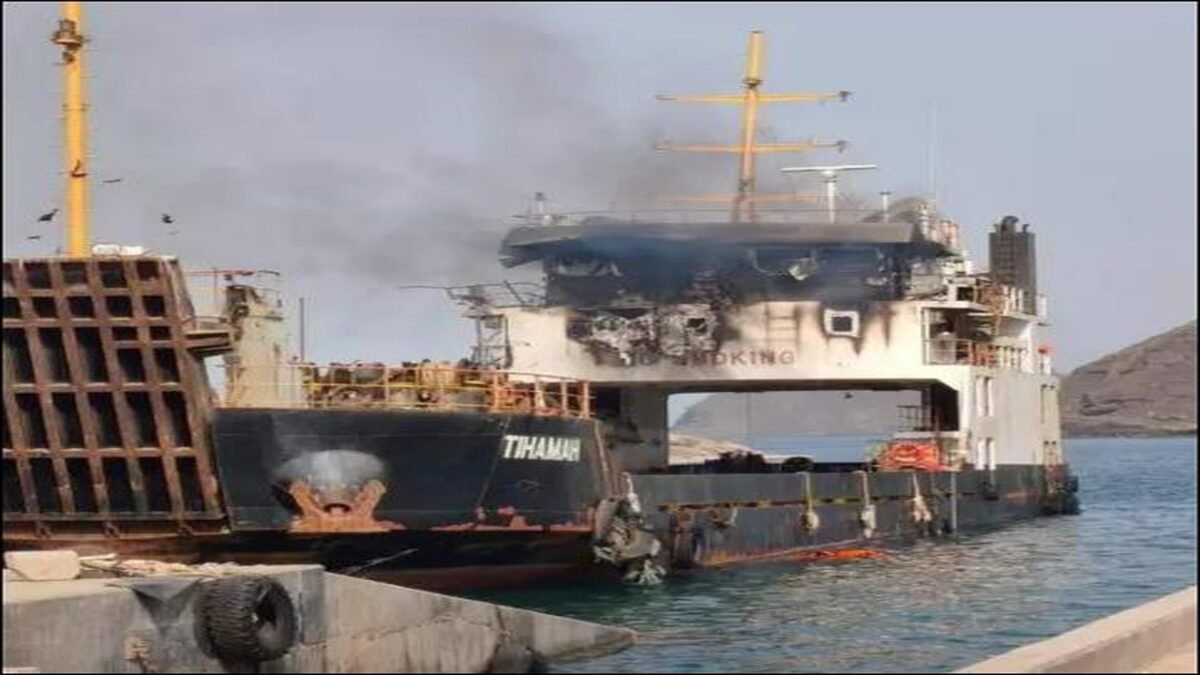
Reports confirm that the ill-fated cargo ship was traversing a designated international shipping corridor when it was targeted by a projectile, believed to be a missile or a drone, launched by Houthi forces operating from Yemen. The strike was direct and devastating, quickly overwhelming the vessel’s defenses and leading to an immediate emergency situation on board. The crew, caught completely off guard, faced a desperate struggle to control the damage and attend to their fallen and injured colleagues.
This particular incident marks a severe escalation in the nature of attacks, transitioning from harassment and near-misses to a direct, lethal strike on personnel. The three lives lost represent the ultimate sacrifice made by individuals simply performing their duties to facilitate global commerce. Their deaths are a stark and somber reminder that the geopolitical conflict on land is now directly translating into a deadly threat on the high seas, putting countless commercial vessels and their crews in harm’s way.
Rescue efforts were promptly initiated, with naval assets in the vicinity responding to distress calls. However, the severity of the attack meant that for some, help arrived too late. The injured crew members were evacuated for urgent medical attention, while the surviving seafarers endured immense trauma, grappling with the loss of their shipmates and the terrifying reality of their close escape. The maritime industry mourns these tragic losses and calls for greater protection for those who keep the world’s economy moving.
Escalating Threats: Understanding the Houthi Campaign Against Shipping
Since late 2023, the Houthi movement has intensified its campaign against international shipping in the Red Sea and Gulf of Aden. Citing solidarity with Palestinians in Gaza, the Yemen-based group has declared its intention to target vessels linked to Israel, the United States, and the United Kingdom. However, the reality on the ground, or rather on the water, shows that vessels with no clear affiliation are often caught in the crossfire, demonstrating a broader disregard for international maritime law and the principle of freedom of navigation.
This recent Houthis attack is not an isolated incident but rather part of a pattern of increasing aggression. Initially, attacks involved drone swarms and ballistic missiles aimed at general shipping areas, often resulting in near misses or minor damage. Over time, the sophistication and accuracy of these attacks have seemingly improved, posing a greater existential threat to commercial vessels. The strategic importance of the Bab el-Mandeb Strait, a narrow chokepoint connecting the Red Sea to the Gulf of Aden and onward to the Indian Ocean, makes any disruption here catastrophic for global trade flows.
Naval analysts and security experts warn that the Houthis’ capabilities, bolstered by external support, represent a significant challenge for international forces tasked with maintaining maritime security. Their ability to launch sustained and varied attacks from land, targeting vessels hundreds of miles offshore, complicates defensive strategies. The unpredictable nature of these assaults creates a climate of fear and uncertainty for every commercial vessel traversing these perilous waters, directly impacting shipping safety and crew welfare.
Global Ripples: Impact on Supply Chains and Commercial Shipping
The immediate consequence of such a deadly Houthis attack is the disruption to the global supply chain. Major shipping companies, fearing for the safety of their crews and vessels, have already begun rerouting their ships away from the Red Sea. Instead, they are opting for the much longer and more expensive journey around the Cape of Good Hope, adding thousands of nautical miles and weeks to transit times. This change has a cascading effect, causing delays in deliveries of everything from consumer goods and electronics to oil and gas, impacting industries worldwide.
Financially, the rerouting strategy comes with a hefty price tag. Increased fuel costs, longer voyages, and higher insurance premiums are significantly driving up operational expenses for shipping companies. These additional costs are inevitably passed down to consumers, contributing to inflationary pressures in economies already grappling with post-pandemic recovery. The economic viability of certain routes is being severely tested, leading to difficult decisions for carriers and potentially reshaping long-term global trade patterns.
The volatility in the Red Sea also creates significant uncertainty for future planning and investment in the maritime sector. Charter rates can become unpredictable, and the willingness of vessel owners to send their ships into high-risk areas diminishes. This climate of fear and unpredictability, exacerbated by a fatal Houthis attack, challenges the very foundations of international shipping, which thrives on stability and assured transit through global waterways. The broader implications for global trade and economic stability cannot be overstated.
International Response and Maritime Security Operations
In response to the escalating threats, a coalition of nations, led by the United States, launched Operation Prosperity Guardian. This multinational initiative aims to protect commercial vessels traversing the Red Sea and Gulf of Aden from Houthi attacks. The presence of naval warships provides a defensive shield, intercepting missiles and drones and offering close escort to vulnerable commercial vessels, bolstering maritime security in the region.
However, the complexity of the situation and the vastness of the area of operations mean that patrolling every vessel continuously is an impossible task. International naval forces face significant challenges in countering a non-state actor employing asymmetric warfare tactics. While defensive measures have undoubtedly prevented numerous successful attacks, as tragically demonstrated by the recent incident, no system is entirely foolproof. The international community continues to explore both defensive and deterrent measures to restore stability and ensure the safe passage of commercial vessels.
Beyond military intervention, diplomatic efforts are also underway to de-escalate tensions and find a peaceful resolution to the conflict in Yemen, which underpins the Houthis’ actions. International bodies and key global powers are engaged in complex negotiations, recognizing that a sustainable solution to the Red Sea shipping crisis must address the root causes of the conflict. The ultimate goal remains to safeguard the lives of seafarers and maintain the free flow of international trade without the constant specter of violence.
Prioritizing Seafarer Safety in Perilous Waters
The human element remains at the heart of the maritime crisis. Seafarers, often from developing nations, are the unsung heroes of global trade, spending months away from their families, facing harsh conditions, and now, unprecedented danger. The recent Houthis attack is a stark reminder of their vulnerability. Shipping companies and maritime organizations are intensifying efforts to enhance crew safety, including reviewing emergency protocols, improving training for attack scenarios, and providing psychological support for those operating in high-risk zones.
Industry bodies are advocating for stricter adherence to international humanitarian law and greater protection for civilian mariners. Calls for the immediate and unconditional release of any unlawfully detained seafarers also resonate loudly across the sector. The psychological toll on crews is immense; the constant threat of attack, coupled with the extended periods at sea, can lead to severe stress and mental health challenges. Ensuring robust support systems for these essential workers is paramount.
This tragic event highlights the moral imperative for all stakeholders – governments, shipping companies, and international organizations – to prioritize the safety and well-being of seafarers above all else. Measures such as enhanced security details, secure communication channels, and clear guidance for evasive maneuvers are becoming standard practice. However, the most effective solution remains the cessation of hostilities and the establishment of true maritime security, allowing these vital workers to perform their duties without fear for their lives.
The Path Forward: De-escalation and Sustainable Maritime Security
The recent deadly Houthis attack on a cargo ship is a sobering call to action for the global community. The immediate priority must be de-escalation of hostilities in the Red Sea and Gulf of Aden, paving the way for a more stable and predictable environment for international shipping. This requires sustained diplomatic engagement, robust military deterrence, and a clear, unified stance from international powers condemning attacks on civilian vessels.
Looking ahead, sustainable maritime security will necessitate a multi-faceted approach. This includes strengthening international law against piracy and aggression, ensuring accountability for those who target commercial vessels, and fostering regional stability through political solutions. The Red Sea is too crucial a artery for global trade to remain a theatre of conflict. Protecting this vital shipping route is not merely an economic imperative but a humanitarian one, safeguarding the lives of the seafarers who navigate its perilous waters.
Ultimately, the path forward must combine immediate protective measures with long-term strategic initiatives to address the root causes of instability. The maritime industry, in collaboration with governments and international organizations, must continue to innovate in security protocols while simultaneously advocating for peace and de-escalation. Only through concerted global effort can the world ensure that the tragedy of three lives lost on a cargo ship is not repeated, and that the essential arteries of global trade remain open and safe for all.