Damen Delivers Combi Freighter 3850 to Reederei Bernd Sibum | Mariner News
In a significant move towards a greener maritime future, Damen Shipyards Group proudly announced the delivery of the second of four advanced Combi Freighter (CF) 3850 vessels to Reederei Bernd Sibum. This latest handover, which took place on March 25 following successful sea trials in Shanghai, underscores a joint commitment to enhancing sustainable shipping practices across the global maritime industry. The delivery of this state-of-the-art vessel represents a pivotal step in Reederei Bernd Sibum’s fleet modernization program and Damen’s dedication to providing highly efficient, environmentally conscious cargo solutions. With the first vessel already on its maiden voyage to Norway, laden with project cargo, the maritime sector is keenly watching the positive impact these next-generation combi freighters will have on operational efficiency and ecological footprint reduction.
Advancing Sustainable Maritime Transport with the CF 3850 Series
The Damen Combi Freighter 3850 series stands as a testament to cutting-edge shipbuilding and a proactive approach to environmental stewardship within the maritime industry. Designed with high efficiency at its core, these robust cargo vessels are engineered to meet the stringent demands of modern short sea shipping while significantly mitigating their environmental impact. A standout feature is their inherent capability to operate on 100% biofuel in their standard configuration, offering an immediate pathway to reduced carbon emissions. Furthermore, the design incorporates future-proof features, as the vessels are prepared for seamless integration of hybrid propulsion systems, ensuring adaptability as green technologies continue to evolve.
Constructed with precision and expertise at the renowned Damen Yichang Shipyard in China, these Combi Freighters exemplify Damen’s commitment to quality and innovation. The meticulous construction process, combined with rigorous testing protocols, guarantees that each vessel delivered is capable of delivering optimal performance and reliability for Reederei Bernd Sibum. The strategic choice of these versatile cargo ships reinforces Reederei Bernd Sibum’s position as a forward-thinking operator, embracing advanced maritime solutions that align with global decarbonization efforts.
The CF 3850’s design philosophy extends beyond just fuel flexibility; it encompasses operational versatility crucial for the diverse needs of coastal and short sea shipping. These multi-purpose cargo vessels are built to handle a wide array of goods, ensuring that they are not only environmentally sound but also economically viable for long-term operations. This dual focus on sustainability and functionality makes the Combi Freighter 3850 a benchmark for future vessel designs in the increasingly eco-conscious shipping landscape.
German Government Funding Fuels Green Shipping Initiatives
Recognizing the urgent need for greener maritime transport, Reederei Bernd Sibum successfully secured vital funding from the German Government, specifically designed to accelerate the adoption of sustainable features on their new fleet. This critical financial support has enabled the shipping company to go above and beyond the standard specifications, investing in advanced eco-friendly modifications that set a new standard for coastal shipping vessels. The German Federal Ministry of Digital Affairs and Transport (BMDV) awarded this funding through the NaMKü program, an acronym for “Nachhaltige Modernisierung von Küstenschiffen” (sustainable modernization of coastal ships), highlighting a national commitment to reducing the environmental footprint of short sea shipping.
The NaMKü program is instrumental in driving the transition towards more environmentally benign maritime operations within Germany’s coastal waters and beyond. It represents a significant policy instrument aimed at encouraging shipowners to invest in innovative technologies that reduce emissions and enhance overall sustainability. This initiative not only benefits individual shipping companies like Reederei Bernd Sibum but also contributes to Germany’s broader climate protection goals and its leadership role in sustainable maritime practices globally. The program’s focus on modernization ensures that the existing fleet, as well as new builds, can be retrofitted or equipped with the latest green technologies.
The green modifications incorporated into Reederei Bernd Sibum’s Combi Freighters are a collaborative effort, jointly funded by the NaMay program and the vessel owner. Further strengthening this commitment to sustainable investment, Mare Trust AG, based in Oldenburg, Germany, has played a pivotal role by taking the lead on the equity side. This multi-party financial backing underscores the collective industry-wide recognition that transitioning to eco-friendly vessels requires concerted effort and strategic partnerships between governmental bodies, private companies, and financial institutions. Such collaborative models are essential for overcoming the financial hurdles often associated with adopting pioneering green technologies in the shipping sector.
Cutting-Edge Green Technologies for Zero-Emission Capabilities
As a direct result of the German Government funding and collaborative investment, these four Combi Freighter 3850 vessels are equipped with an array of state-of-the-art green technologies designed to significantly enhance their environmental performance. Foremost among these is the advanced hybrid propulsion system, featuring a Power Take-Off (PTO) and Power Take-In (PTI) system. This innovative setup provides the invaluable opportunity to operate the vessels with zero emissions for specified periods, particularly beneficial when navigating sensitive coastal areas or entering port. This capability marks a substantial leap forward in reducing localized air pollution and noise, contributing directly to healthier port communities and marine ecosystems.
Further bolstering their eco-credentials, the vessels are fitted with shore power connection capabilities. This allows the ships to switch off their auxiliary engines entirely while docked, drawing clean electricity from shore-side grids. The benefit is twofold: it eliminates onboard emissions during port stays and reduces noise pollution, aligning perfectly with international efforts to create ‘green ports.’ This feature is crucial for urban ports where air quality is a significant concern, making these Combi Freighters exemplary models of responsible maritime operations. The ability to connect to shore power also supports the broader trend towards integrated energy solutions for the maritime sector, pushing for a seamless transition from fossil fuels to renewable energy sources.
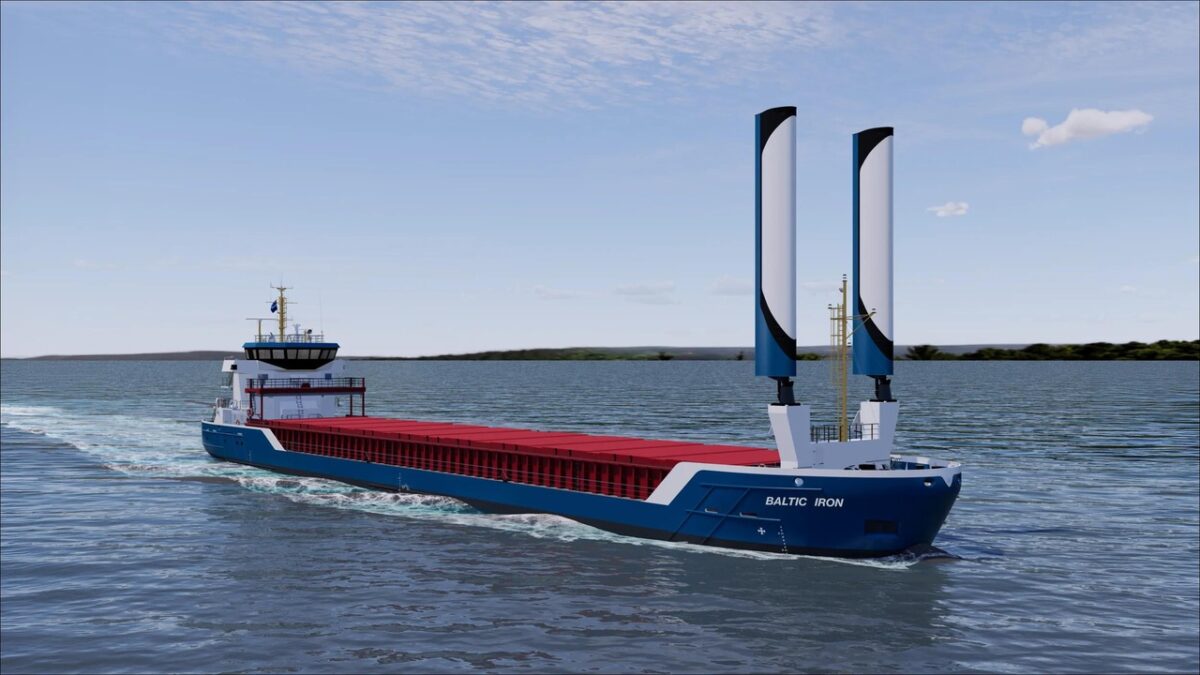
In a groundbreaking move to further boost fuel efficiency, the Combi Freighters will also incorporate Econavina Ventifails. These innovative wind-assisted propulsion devices are strategically designed to harness wind energy, providing additional thrust and significantly reducing the load on the main engines. It is anticipated that the Ventifails will cut fuel consumption by an impressive 12.5%, representing a substantial saving in operational costs and a proportional reduction in greenhouse gas emissions. The first vessel in the series is scheduled to undergo the installation of these Econavina Ventifails at Damen Shiprepair Harlingen shortly after its arrival in Europe, demonstrating the rapid deployment of these advanced sustainable technologies. These combined technologies underscore a holistic approach to environmental performance, addressing various aspects from propulsion to energy consumption during transit and at berth.
Damen’s Innovation in Shipbuilding and Commissioning
Damen Shipyards Group’s reputation for innovation and engineering excellence is further solidified through the meticulous development and commissioning process of the Combi Freighter 3850 series. A key aspect of this efficiency-driven project involved extensive Hardware-in-the-Loop (HIL) testing of the onboard systems and automation. HIL testing is a sophisticated methodology where complex control systems of a vessel are connected to a simulated physical environment, allowing engineers to test and validate software and hardware components under realistic operating conditions without needing the actual ship in water. This rigorous simulation process enabled Damen to identify and resolve potential issues in a virtual environment, long before the physical integration, thus significantly reducing commissioning time and costs.
By connecting the actual control hardware to a comprehensive software model of the vessel’s dynamics and propulsion, Damen ensured that all intricate systems, from engine management to navigation and power distribution, would operate seamlessly together. This proactive approach to system integration is particularly vital for vessels featuring complex hybrid propulsion and energy management systems like the CF 3850s, where multiple power sources and energy flows need to be meticulously orchestrated. The success of the HIL testing contributed directly to the smooth and successful sea trials in Shanghai, ensuring that the vessels performed precisely as designed upon hitting the water.
This commitment to advanced testing and meticulous engineering exemplifies Damen’s role as a leader in sustainable shipbuilding. By investing in sophisticated tools and methodologies such as HIL testing, Damen not only delivers highly efficient and reliable cargo vessels but also fosters an environment of continuous improvement and technological advancement. Their expertise in managing complex projects, from design and construction at Damen Yichang Shipyard to the final sea trials and delivery, underscores their capability to meet the evolving demands of the global maritime sector for advanced, eco-friendly tonnage. This dedication ensures that clients like Reederei Bernd Sibum receive vessels that are not only compliant with current regulations but also future-proofed against upcoming environmental standards and operational challenges.
The Future of Coastal Shipping and Environmental Responsibility
The delivery of these modern Combi Freighter 3850 vessels to Reederei Bernd Sibum signifies more than just a routine fleet expansion; it represents a significant stride towards a more sustainable and environmentally responsible future for coastal shipping. The proactive investment in hybrid propulsion, shore power connectivity, and wind-assisted technology like Econavina Ventifails positions Reederei Bernd Sibum at the forefront of the industry’s green transition. This strategic decision showcases a clear understanding that environmental stewardship is not merely a regulatory burden but a crucial component of long-term operational success and corporate responsibility. The vessel operator is demonstrating that economic viability can go hand-in-hand with ecological consciousness, setting a compelling example for other maritime stakeholders.
The widespread adoption of such eco-friendly vessels will have a transformative impact on the maritime industry’s overall carbon footprint. By reducing fuel consumption and enabling zero-emission operations in sensitive areas, these ships contribute directly to cleaner air, healthier marine environments, and a reduction in greenhouse gas emissions. The NaMKü program, which facilitated many of these innovations, serves as a powerful model for how governmental support can accelerate the decarbonization process across various shipping segments. Such initiatives are vital in meeting the ambitious targets set by international maritime organizations and global climate agreements, driving the industry towards a net-zero future.
Ultimately, the collaboration between Damen Shipyards Group, Reederei Bernd Sibum, the German Government, and Mare Trust AG highlights a synergistic approach to maritime innovation. This partnership underscores the belief that by combining shipbuilding expertise, forward-thinking vessel ownership, strategic governmental funding, and robust financial backing, the industry can overcome the challenges of environmental transition. As the remaining Combi Freighter 3850 vessels are delivered and enter service, they will not only enhance Reederei Bernd Sibum’s operational capabilities but also stand as beacons of a new era in maritime transport – an era defined by advanced technology, environmental responsibility, and an unwavering commitment to a sustainable blue economy. These pioneering ships pave the way for a future where commerce and conservation navigate hand-in-hand.