Container Ship Abandoned After Strait of Hormuz Attack | Mariner News
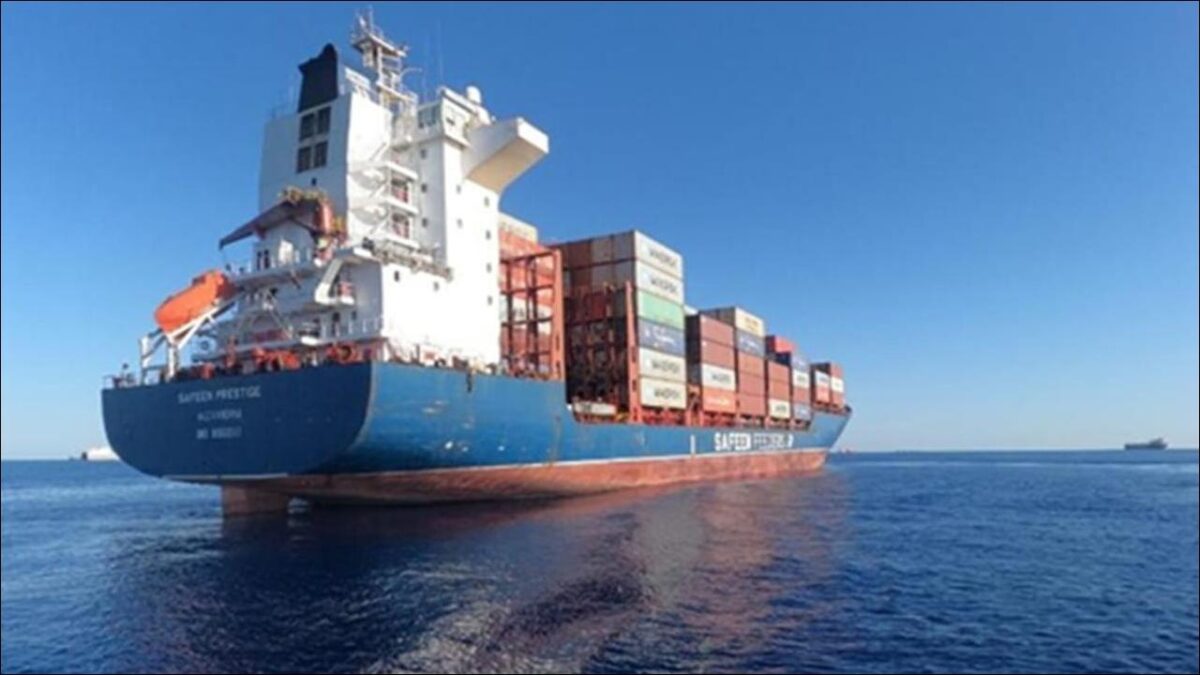
In a alarming development that underscores the escalating risks to commercial shipping in critical global waterways, a container ship was abandoned in the Strait of Hormuz after an attack caused an engine fire. This serious maritime incident, which occurred just off the coast of Oman, immediately triggered concerns across the shipping industry and among international observers. The attack on the boxship not only endangered the lives of the crew but also cast a renewed spotlight on the fragile state of maritime security in a region vital for global trade and energy supply. As authorities investigate and the vessel’s fate hangs in the balance, the broader implications for supply chains and geopolitical stability are now a primary focus for governments and commercial entities worldwide. The incident serves as a stark reminder of the volatile nature of marine operations in contested waters, emphasizing the critical need for enhanced vigilance and international cooperation to ensure safe passage for all vessels.
The Unfolding Crisis: Details of the Attack and Abandonment
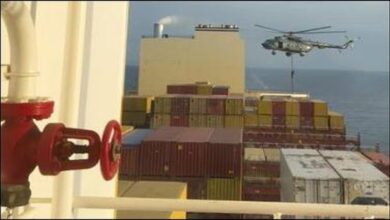
The incident unfolded swiftly, with reports indicating the container vessel, a crucial link in the international shipping network, came under attack approximately two nautical miles north of Oman. The UK Maritime Trade Operations (UKMTO) agency, a key source of maritime information, confirmed that the boxship was hit by an unknown projectile just above the waterline. This impact, occurring at 11:09 AM UTC on a Wednesday, ignited a significant fire within the engine room, a critical area for any vessel’s propulsion and power systems. The suddenness and severity of the attack left the crew with little choice but to take immediate evasive action and, ultimately, abandon the ship.
The rapid escalation of the situation necessitated the prompt evacuation of all personnel onboard. Fortunately, initial reports confirmed that all crew members were accounted for after abandoning the vessel, a testament to effective emergency protocols and the coordinated response. While the immediate focus was on personnel safety, the abandonment of such a large commercial vessel in a busy international shipping lane raises numerous operational challenges. Efforts would subsequently turn to assessing the damage, controlling the fire, and planning for the salvage or recovery of the abandoned ship. This critical phase of the incident demanded swift and decisive action from regional maritime authorities and salvage experts to prevent further complications.
Crucially, as of the initial reports, no environmental impact had been reported. This detail offers a small measure of relief amidst the gravity of the situation, given the potential for significant marine pollution from a burning or derelict vessel, especially one carrying various cargo and fuel. The absence of immediate environmental damage, however, does not diminish the overall severity of the attack or its potential long-term repercussions on maritime safety and the operational security of vessels traversing the Strait of Hormuz. The incident underscores the inherent dangers faced by commercial shipping as geopolitical tensions in the Middle East continue to simmer.
The Strait of Hormuz: A Vital Artery for Global Trade
The Strait of Hormuz is not merely a body of water; it is one of the world’s most strategically important chokepoints for global trade and energy transport. Connecting the Persian Gulf with the Arabian Sea and the broader Indian Ocean, this narrow waterway is the only sea passage from the Persian Gulf to the open ocean, making it indispensable for the international flow of crude oil, liquefied natural gas (LNG), and a vast array of other commodities. Annually, billions of dollars worth of goods and energy resources pass through this maritime corridor, making its secure and uninterrupted operation paramount for global economic stability. Any disruption in this shipping route sends immediate tremors through international markets, affecting commodity prices and supply chain reliability.
The sheer volume of maritime traffic through the Strait highlights its critical role. A substantial percentage of the world’s seaborne crude oil, along with significant volumes of LNG, transits these waters daily. For energy-importing nations, particularly in Asia and Europe, the Strait of Hormuz is a lifeline. Consequently, incidents of maritime insecurity here can directly impact global energy prices and raise concerns about the security of future energy supplies. The reliance on this single chokepoint makes the entire global economy vulnerable to regional instability, compelling international stakeholders to closely monitor and safeguard passage through the strait.
Geopolitical tensions in the Middle East have historically complicated operations in the Strait of Hormuz. Iran, bordering the northern side of the Strait, has periodically threatened to block transits in response to escalating conflicts or international sanctions. Such threats, whether actualized or merely implied, invariably lead to heightened maritime security alerts and a re-evaluation of shipping lanes and risk assessments by commercial operators. The recent attack on the container ship occurs within a context of worsening regional conflicts, contributing to an already precarious security environment that upends various commodity markets around the world that depend on safe passage through this critical area.
Ripple Effects on Global Supply Chains and Maritime Security
The attack on the container ship in the Strait of Hormuz is not an isolated event but rather part of a troubling trend of escalating maritime security risks in and around the Middle East. While distinct from the Houthi attacks targeting commercial vessels in the Red Sea and Bab-el-Mandeb, this incident further contributes to a landscape of heightened vulnerability for the global shipping industry. Such `vessel attacks`, regardless of their specific origin, amplify existing concerns about the safety of `shipping routes` and the potential for widespread `supply chain disruption`. The direct targeting of a commercial `boxship` in a strategically vital `shipping lane` sends a clear message of increased danger to all `maritime operations` in the region.
One of the most immediate financial impacts of such incidents is on insurance premiums for `commercial shipping`. Insurers, faced with increased risk exposure, invariably raise rates for vessels transiting designated war-risk zones. These additional costs are ultimately passed down through the supply chain, affecting freight rates and potentially consumer prices. Furthermore, the threat of further attacks could compel shipping companies to consider `rerouting` their `vessels` around the Arabian Peninsula, similar to actions taken in response to Red Sea incidents. Such `rerouting` would involve significantly longer transit times, increased fuel consumption, and higher operational costs, further straining `global supply chains` that are still recovering from previous disruptions.
The broader implications for `global trade` are substantial. `Container shipping`, the backbone of international commerce, relies on predictability and secure passage. When a key `shipping route` like the Strait of Hormuz becomes perilous, the ripple effects can be felt across various `commodity markets`, from energy to consumer goods. `Supply chain vulnerability` is exposed, prompting businesses to reassess their logistics strategies and potentially diversify sourcing, even at higher costs. This dynamic creates a climate of uncertainty, discouraging investment and potentially hindering economic growth in an interconnected world where `international shipping` plays an irreplaceable role. The maritime community and international bodies are now grappling with how best to mitigate these ever-present threats.
Safeguarding Crews and Ecosystems Amidst Conflict
The safety of maritime crews remains the paramount concern in any `maritime incident`, especially when a `vessel` is under attack in hostile waters. The fact that all crew members of the abandoned `container ship` were accounted for is a testament to the training and `emergency response` protocols in place, as well as the inherent bravery of seafarers. `Crew safety` protocols, including drills for security threats, fire suppression, and abandonment procedures, are continuously refined to prepare mariners for such extreme circumstances. However, these incidents place immense psychological and physical strain on crews, highlighting the need for robust support systems and international protection for those who keep `global trade` moving.
International maritime organizations, alongside naval forces from various nations, play a critical role in responding to distress calls and ensuring assistance in areas prone to `vessel attacks`. The UKMTO, for instance, serves as a vital conduit for information and coordination. Naval patrols and enhanced surveillance in `international waters` are key components of `security measures` aimed at deterring hostile actors and providing rapid assistance when incidents occur. Such international cooperation is indispensable for maintaining a semblance of order and safety in crucial `shipping lanes` that are frequently targeted due to `geopolitical tensions`.
Beyond human life, `environmental protection` is another critical consideration in `marine operations` affected by attacks or fires. A burning `vessel` carrying fuel, lubricants, and potentially hazardous cargo poses a significant risk of pollution to the marine ecosystem. While initial reports indicated `no environmental impact` from the `engine fire` on the abandoned `container ship`, the long-term risk remains until the `vessel` is secured and its contents are safely managed. International regulations and contingency plans are in place to address potential spills and mitigate ecological damage, but proactive prevention through enhanced `maritime security` remains the most effective strategy to protect both life and environment in vulnerable `shipping routes`.
Navigating Future Risks: The Shipping Industry’s Resilience
The attack on the `container ship` in the `Strait of Hormuz` marks a severe challenge for the `shipping industry news` cycle and `global trade` narratives. It underscores the critical need for robust, internationally coordinated `maritime security` strategies that can adapt to evolving threats. The geopolitical landscape of the `Middle East conflict` continues to be a driving factor in these vulnerabilities, making it imperative for diplomatic efforts to de-escalate tensions and ensure the `safe passage` of `commercial shipping` through vital `shipping lanes` like Hormuz, the Red Sea, and the Bab-el-Mandeb Strait. Without such stability, the economic consequences could be far-reaching, impacting everything from energy prices to the cost of everyday consumer goods.
In response to these persistent threats, the `shipping industry` is continually evaluating and implementing advanced `security measures`. This includes exploring technological innovations for `vessel protection`, enhanced on-board security protocols, and leveraging intelligence to anticipate and avoid high-risk zones. The challenge lies in balancing necessary security enhancements with the efficiency and economic viability required for `global supply chains`. While `rerouting` vessels might be an option in some cases, the strategic importance of `chokepoints` means that comprehensive solutions, involving international collaboration and naval presence, are often the only truly sustainable approach to safeguarding `maritime commerce`.
Ultimately, the resilience of the `global shipping industry` will be tested as it navigates these increasingly complex geopolitical storms. The incident involving the `container ship abandoned in the Strait of Hormuz after attack causes engine fire` serves as a potent reminder that the free flow of `global trade` cannot be taken for granted. It requires constant vigilance, significant investment in `maritime security`, and a unified international commitment to uphold `international law` and ensure the safety of seafarers and `commercial vessels`. The incident compels a re-evaluation of long-term strategies, emphasizing the intertwined nature of global politics, `shipping routes`, and economic stability for all nations that rely on the vital arteries of the world’s oceans.