CMA CGM Red Sea Return: Shipping Risks & Routes | Mariner News
The global shipping industry is intensely observing the Red Sea as reports confirm French container giant CMA CGM is sending vessels back into the region, challenging the cautious approach adopted by most major shipping lines amidst persistent Houthi attacks. Navigating the CMA CGM Red Sea route, a vital global trade artery near the Suez Canal, follows a period where carriers diverted around Africa’s Cape of Good Hope, incurring significant delays and operational costs. This development raises critical questions about risk assessment, competitive strategy, and the future of maritime security in this crucial waterway. The global supply chain is highly sensitive to Red Sea disruptions, making CMA CGM’s actions a significant focal point for the entire shipping industry.
For months, the Bab al-Mandab Strait, connecting the Red Sea to the Gulf of Aden, has been a major flashpoint. Houthi militants in Yemen have repeatedly targeted commercial shipping, leading to widespread diversions by behemoths like Maersk and MSC. These longer routes add weeks to transit times, inflating freight rates and container shipping costs while straining supply chains. The resulting bottlenecks threaten global inflationary pressures. CMA CGM’s decision to re-enter these waters is therefore met with considerable scrutiny regarding its strategic rationale and potential market implications.
The Red Sea Dilemma: Navigating Conflict Zones
The Red Sea shipping routes dilemma is a complex interplay of geopolitical tensions, economic pressures, and security concerns. Historically, the Suez Canal and Red Sea offered the shortest maritime link between Asia and Europe. However, escalating Houthi attacks transformed this efficient pathway into a high-risk zone. The costly decision to divert ships was driven primarily by crew and cargo safety, as intense assaults made passage untenable for most carriers. The extended journey around Africa adds thousands of nautical miles, dramatically increasing bunker fuel consumption and delaying deliveries by 10-14 days, with ripple effects on port schedules and consumer prices.
Economic repercussions of these diversions are substantial, with container shipping rates soaring and impacting global importers and exporters. Retailers face stock replenishment delays, while manufacturers grapple with raw material supply uncertainty. “War-related surcharges” by carriers, covering increased insurance premiums and operational costs, have agitated customers, directly reflecting the financial cost of heightened maritime security risks. The industry’s widespread avoidance of the Red Sea underscores the gravity of the threat, making CMA CGM’s re-entry particularly salient. Their prior early return after a lull suggests a calculated strategy, balancing speed, cost, and safety.
CMA CGM’s Strategic Maneuver and Market Implications
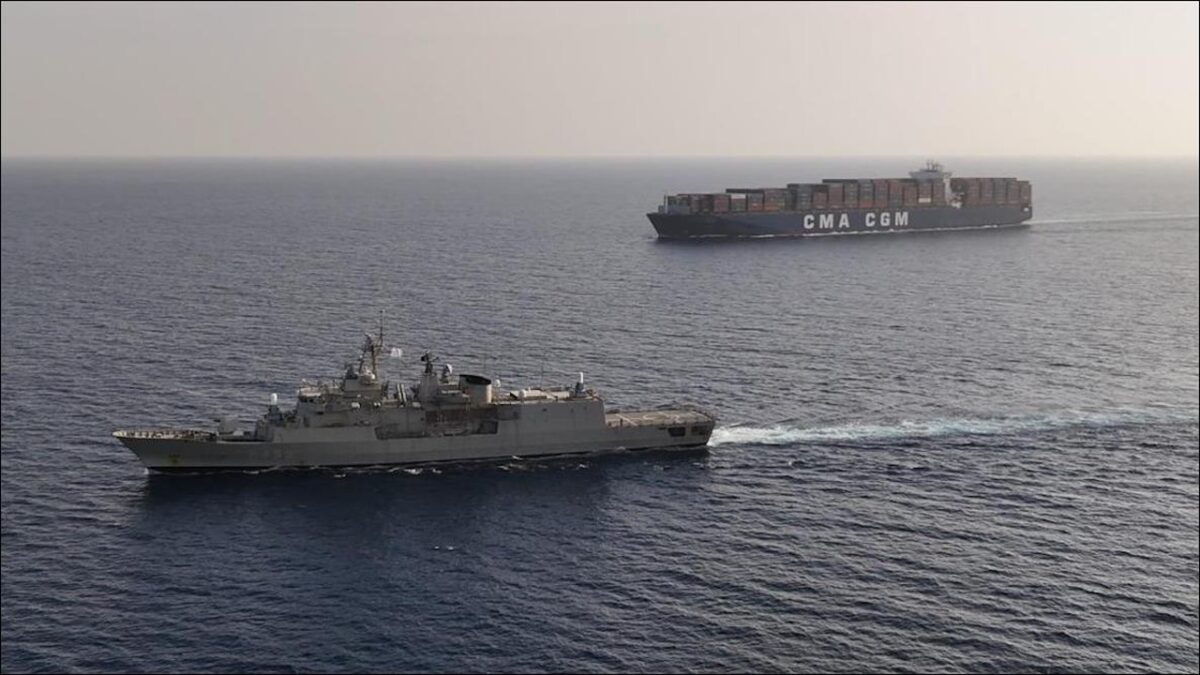
According to analyst Lars Jensen from Vespucci Maritime, two CMA CGM container ships are confirmed heading for the Red Sea. This aligns with a consistent pattern for the French carrier, which was among the first to resume transits during an earlier perceived lull in Houthi activity. This indicates a unique operational philosophy or a higher risk appetite within the container shipping sector. Motivations could include securing a competitive advantage via faster transit times for clients prioritizing speed, or fulfilling specific long-term contracts. If sustained, such a move could pressure other carriers to reconsider their strategies, risking market share on crucial Asia-Europe routes.
The implications of CMA CGM’s decision are profound. If initial voyages prove safe, it might encourage others to re-evaluate their positions. However, a single incident could trigger renewed collective caution. The financial benefits of the Red Sea route are clear: reduced fuel consumption, shorter transit times, and lower operational costs. These savings could offer CMA CGM a significant market advantage. Nevertheless, these benefits are juxtaposed against the acute perils of the Middle East conflict. Ongoing geopolitical instability means security can change rapidly, potentially turning a strategic advantage into a severe liability. Close monitoring of these pioneering voyages will be essential for understanding evolving shipping industry risks.
Global Trade Disruptions and Escalating Costs
Red Sea disruptions reverberate throughout the entire global supply chain. Vessel rerouting not only increased transit times but also triggered a domino effect across worldwide port operations. Ports accustomed to regular schedules now face unpredictable arrivals, leading to congestion and cargo processing delays, straining infrastructure and human resources. As the original description highlighted, container rates continue to rise due to the conflict, directly linked to longer voyages and increased operational overheads. These escalating costs are inevitably passed to consumers, contributing to inflationary pressures across a wide range of goods.
Furthermore, “war-related surcharges” implemented by carriers have caused significant unrest among customers. Shippers, already navigating volatile market conditions, view these charges as an additional burden impacting profitability and planning. These fees underscore the direct financial cost of geopolitical tensions on international trade. The crisis also tests carrier operations like bunker logistics, with Maersk reportedly struggling while Hapag-Lloyd maintains clarity. Adapting fuel supply strategies for drastically longer routes demands substantial flexibility. The widespread ripple effects highlight the delicate interconnectedness of global commerce and the profound influence of regional conflicts on worldwide economic stability.
Maritime Security Challenges and Industry Response
Persistent threats in the Red Sea necessitate a robust international maritime security response. Naval forces, through initiatives like Operation Prosperity Guardian, have deployed to provide protection for commercial shipping. Yet, the vastness of the area and the asymmetric nature of Houthi attacks make comprehensive protection formidable. Despite these efforts, substantial risks persist, as evidenced by ongoing incidents. A shipping line’s decision to traverse these waters involves a complex risk assessment, considering naval escort capabilities, response times, and evolving attacker tactics.
Different carriers have adopted varied strategies. While some, like CMA CGM, venture back, others maintain strict avoidance. The original text mentioned Maersk struggling with bunker logistics while Hapag-Lloyd was in the clear. This divergence illustrates how individual companies are uniquely impacted based on operational structures and resilience. The demand for comprehensive cargo security protocols has intensified, with carriers investing in advanced threat detection and real-time intelligence for routing decisions. Challenges extend beyond direct attacks to increased insurance premiums, difficulty securing crews for high-risk voyages, and the psychological toll on seafarers. This underscores the urgent need for sustained diplomatic efforts to de-escalate the Middle East conflict and restore stability to these critical shipping lanes.
The Future of Red Sea Shipping: A Risky Bet?
CMA CGM’s apparent re-entry into the Red Sea marks a pivotal moment for the global shipping industry. It challenges the collective cautious stance, potentially signaling a shift in how major carriers perceive and manage shipping risks in conflict zones. However, this move carries substantial dangers. The volatile nature of the Middle East conflict means security conditions can change rapidly and unpredictably. The long-term viability of sustained Red Sea shipping routes hinges heavily on significant de-escalation of regional tensions and guaranteed, effective maritime security. Without these, any return to the traditional route remains a highly risky bet.
The economic pressure to utilize the shorter Red Sea route is immense, given the added costs and delays of circumnavigating Africa. For businesses, shorter transit times offer lower inventory costs, faster market access, and reduced working capital. Yet, the cost of an incident – a damaged vessel, lost cargo, or, tragically, loss of life – far outweighs these potential savings. Consequently, the industry will closely monitor CMA CGM’s deployments, analyzing every transit for signs of sustained safety or renewed peril. The Red Sea situation serves as a stark reminder of the fragile balance between efficiency and security in global trade, underscoring the continuous need for adaptability, robust risk management, and international cooperation to safeguard global economic arteries against geopolitical instability. Ultimately, the return to stability in the Red Sea is contingent on broader regional peace, a challenge profoundly impacting the maritime sector.