China’s Deep Sea Mining: Surveillance or Science? | Mariner News
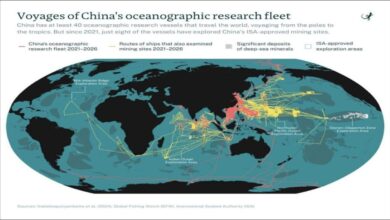
China’s deep sea mining research is increasingly suspected of covert surveillance in strategically vital international waters, a significant claim from a Mongabay and CNN investigation. The inquiry tracked eight Chinese state-owned ships designated for deep-sea mining exploration in ISA-allocated zones. Findings revealed these vessels spent minimal time there, instead operating frequently in militarily strategic regions. This suggests a dual-use strategy—blending scientific deep seabed exploration with military objectives—raising profound concerns for international maritime security, geopolitical rivalry for critical minerals, and the potential irreversible environmental impact on marine ecosystems.
Dual-Use Vessels and Strategic Maneuvers
The investigation detailed how China’s deep sea mining vessels exhibited behaviors inconsistent with purely scientific endeavors. These oceanographic research ships spent disproportionately less time in their assigned deep seabed exploration zones, routinely operating in militarily significant waters, often near other nations’ Exclusive Economic Zones (EEZs). Many vessels showed direct links to the Chinese Navy, regularly docking at military-connected ports, fueling suspicion regarding their true purpose.
Compounding concerns, these vessels frequently encroached on coastal EEZs and turned off their Automatic Identification System (AIS) beacons. This deliberate “going dark” in sensitive areas is a tactic commonly associated with military or intelligence operations. While not definitive proof, such patterns—unusual operational areas, military ties, EEZ incursions, and AIS disengagements—strongly suggest these advanced survey ships serve dual-use purposes, possessing both scientific and strategic military functions. This significantly contributes to maritime security tensions and international mistrust.
The Global Race for Critical Minerals
China’s assertive stance in deep sea mining is fundamentally driven by its strategic ambition to lead global critical mineral supply chains. The deep seabed is a vast reservoir of polymetallic nodules—rich in essential metals like manganese, nickel, cobalt, and copper—vital for electric vehicles, renewable energy, and advanced electronics. Securing access to these resources is crucial for national economic and technological dominance, positioning China to control future global mineral supplies.
This aggressive Chinese push has spurred the United States to accelerate its own efforts to access seabed areas. The objective is to counter China’s growing dominance in critical mineral supply chains, transforming the competition for deep-sea resources into a new front in the broader US-China geopolitical rivalry. Hotspots like the Cook Islands illustrate this intensifying competition as both powers vie for influence and access to mineral-rich Exclusive Economic Zones. Control over deep-sea critical minerals confers immense economic and strategic leverage, raising global supply chain vulnerability concerns.
Environmental Threats of Deep Sea Mining
Amidst escalating geopolitical rivalry for deep-sea minerals, critics warn that deep sea mining poses an irreversible threat to fragile marine ecosystems. The deep ocean, largely unexplored and home to unique biodiversity, faces unprecedented risks from industrial-scale extraction. Environmentalists fear vital ecosystems could become the main casualty in this fierce competition, with profound, long-term consequences for ocean health.
Proposed deep seabed exploration and mining methods, such as massive robotic dredges, cause significant physical disturbance to benthic habitats. Operations generate vast plumes of sediment, smothering organisms and disrupting deep-sea food webs. The removal of polymetallic nodules, crucial substrates for many endemic species, leads to permanent habitat destruction and irreparable biodiversity loss, often before species are even discovered. The activities of vessels like the Xiang Yang Hong 01, while scientific, inherently alter environments. The valuable metals come at an ecological cost that could alter deep-sea currents, impact carbon sequestration, and cause widespread biodiversity loss. Given limited scientific understanding, these environmental risks demand a stringent precautionary approach.
Challenges in Global Governance
The complex interplay of scientific research, strategic interests, and environmental protection underscores the critical need for effective international governance in deep seabed exploration. The International Seabed Authority (ISA) is mandated to regulate mineral activities beyond national jurisdiction. However, the current geopolitical climate, exacerbated by US-China competition and suspicions of surveillance, severely challenges the ISA’s ability to establish robust, transparent, and enforceable deep sea mining regulations.
Developing a comprehensive legal framework for deep sea mining is paramount. This framework must meticulously balance economic imperatives with ecological conservation, requiring stringent environmental impact assessments, robust monitoring, and clear accountability. Addressing “dual-use” vessels performing both scientific and military functions demands enhanced transparency and rigorous verification to rebuild trust and ensure compliance with international law. International collaboration and a steadfast commitment to sustainable practices are crucial, prioritizing scientific research, precautionary principles, and equitable benefit-sharing to prevent the deep ocean from becoming an unregulated battleground.
Conclusion
The controversy surrounding China’s deep sea mining research, with strong indications of its use for surveillance, marks a pivotal moment in global maritime affairs. This scenario merges scientific ambition, the intense global race for critical minerals, escalating geopolitical rivalry, and profound environmental concerns. The behavior of Chinese oceanographic vessels highlights formidable challenges in regulating and ensuring transparency across the vast, unknown deep ocean. Balancing resource acquisition with ecological preservation becomes paramount as nations accelerate strategic initiatives. Geopolitical tensions risk overshadowing the urgent need for sustainable practices and robust international governance. The ultimate question remains: will the pursuit of strategic advantage lead to irreversible harm to our planet’s marine ecosystems, or can a path of responsible stewardship be forged? The world watches closely as the future of deep sea mining, and global maritime security, unfolds beneath the waves.