China Commissions Record-Deep Offshore Wind Farm | Mariner News
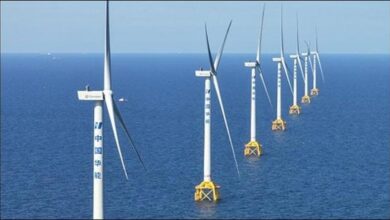
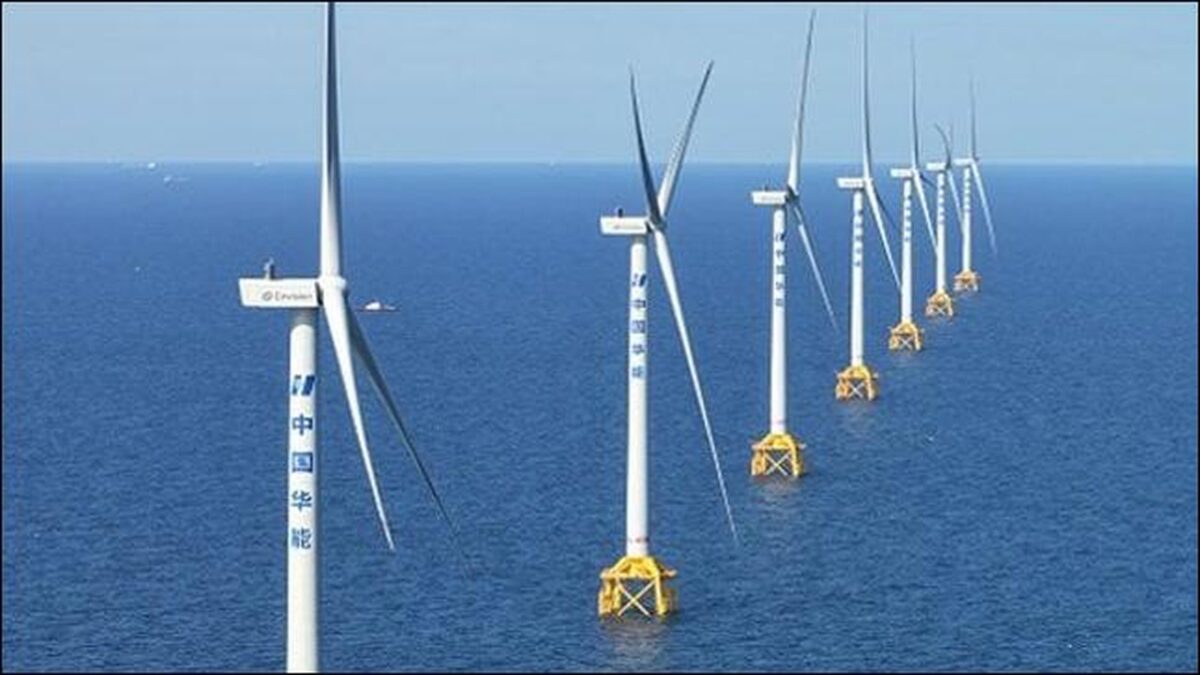
China has marked a significant milestone in its renewable energy ambitions with the official commissioning of its deepest fixed-bottom offshore wind farm. The Huaneng Shandong Peninsula North L Site, a massive 504 MW project developed by the state-owned China Huaneng Group and managed by the Yantai Power Plant, is now fully operational, setting a new national record for deep-water installations. This pioneering achievement underscores China’s relentless drive towards sustainable energy and its growing expertise in complex marine engineering. Positioned at depths up to 184 feet (56 meters) and more than 40 miles (70 kilometers) offshore, this project represents a formidable triumph over extreme sea conditions and intricate geological challenges in the Yellow Sea.
A New National Record in Offshore Wind Development
The commissioning of the Huaneng Shandong Peninsula North L Site positions China at the forefront of deep-sea wind power technology. This groundbreaking offshore wind farm is situated approximately 70 kilometers (43 miles) off the northeast coast of the Shandong Peninsula, an ambitious location that demanded exceptional engineering prowess. With foundations reaching depths between 52 and 56 meters (170 and 185 feet), it officially becomes China’s deepest fixed-bottom wind power installation, a significant step in the global race for harnessing stronger, more consistent winds found further offshore.
While globally, Scotland’s Seagreen wind farm still holds the title for the world’s deepest at 58.7 meters (192.5 feet), China’s new record demonstrates its rapid advancement and determination to push the boundaries of offshore wind energy. The 504 MW capacity of the Shandong project is substantial, capable of powering hundreds of thousands of homes with clean electricity, significantly contributing to China’s energy security and environmental goals. The complexity of the seabed geology in the Yellow Sea, coupled with the inherent difficulties of constructing in deep waters, presented an array of unique hurdles that engineers and project managers had to meticulously address and overcome.
Engineering Innovations for Deep-Sea Foundations
The success of the Huaneng Shandong Peninsula North L Site hinges on the ingenious engineering solutions employed to ensure the stability and longevity of the turbines in such a challenging marine environment. A key innovation highlighted by the China Huaneng Group is the utilization of a four-pile jacket foundation structure. This robust design, with a maximum height of 83.9 meters (275 feet), was critical for anchoring the colossal turbines securely to the seabed at record depths.
These advanced jacket foundations are specifically engineered to withstand the immense forces exerted by deep-sea currents, powerful waves, and the dynamic loads of the wind turbines themselves. Their intricate lattice design provides exceptional strength and rigidity, distributing stress effectively across multiple points of contact with the seafloor. Developing and installing these structures required highly specialized vessels and precise construction techniques, showcasing the sophisticated marine engineering capabilities that China has cultivated. The stability of these foundations is paramount, not only for operational efficiency but also for ensuring the safety of personnel and the structural integrity of the entire offshore wind power generation system over its projected lifespan.
Overcoming Logistical and Grid Integration Hurdles
The remote offshore location of the Huaneng Shandong Peninsula North L Site presented considerable logistical and technical challenges, particularly concerning power transmission. Connecting a power plant situated 70 kilometers (43 miles) out to sea to the national grid requires an extensive and robust infrastructure. The developers had to lay a monumental 95.6-kilometer (59-mile) submarine cable, a critical component for delivering the generated electricity back to shore and into the grid.
Laying such a lengthy submarine cable in deep water is an undertaking fraught with technical complexities. It involves careful route planning to avoid geological hazards, precise installation to prevent damage, and sophisticated protection mechanisms against marine abrasion, fishing activities, and anchoring. Furthermore, integrating a 504 MW offshore wind power source into an existing national grid demands significant upgrades and intelligent grid management systems to ensure stable and reliable power delivery. This extensive cabling and grid integration effort underscores the holistic approach required for large-scale offshore wind developments, stretching beyond just turbine installation to encompass the entire energy value chain.
China’s Ambition in Renewable Energy and Global Context
The commissioning of China’s deepest fixed-bottom offshore wind farm is not an isolated event but rather a significant stride within the nation’s ambitious broader renewable energy strategy. China has committed to achieving carbon neutrality by 2060 and is heavily investing in clean energy technologies, with offshore wind power playing a crucial role. This project, along with numerous others, cements China’s position as a global leader in both the deployment and technological innovation of renewable energy sources.
The drive to develop deeper and larger offshore wind installations reflects a global trend. Deeper waters often offer more consistent and powerful wind resources, leading to higher capacity factors and more efficient energy generation. Nations worldwide are exploring their marine territories for optimal wind farm sites, and China’s latest achievement provides valuable insights and benchmarks for future projects globally. The experience gained from the Shandong Peninsula North L Site in tackling complex geology, extreme conditions, and deep-water foundations will undoubtedly contribute to the international knowledge base for advancing sustainable energy solutions.
Economic and Environmental Impact
The operational launch of the 504 MW Huaneng Shandong Peninsula North L Site brings substantial economic and environmental benefits. Annually, this massive wind farm is expected to generate a significant amount of clean electricity, displacing power from fossil fuel sources and dramatically reducing carbon emissions. This contribution is vital for China’s efforts to combat climate change and improve air quality within its coastal regions, demonstrating a tangible commitment to ecological preservation and a greener future.
Economically, the project represents a considerable investment in infrastructure and technology, creating jobs throughout its development, construction, and operational phases. It also enhances energy independence and security for the region, diversifying the energy mix and reducing reliance on imported fuels. The successful long-term operation of this deep-sea installation will serve as a testament to the viability and scalability of offshore wind energy in challenging environments, further incentivizing investment and technological advancements in the renewable sector.
In conclusion, China’s commissioning of its deepest fixed-bottom offshore wind farm at the Huaneng Shandong Peninsula North L Site is a monumental engineering feat and a testament to the nation’s unwavering commitment to sustainable energy development. This project not only sets a new national benchmark for deep-water installations but also significantly contributes to global efforts in expanding renewable energy capacity. It showcases advanced marine engineering capabilities, the ability to overcome formidable logistical hurdles, and a clear vision for a future powered by clean, reliable wind energy.