Bound4blue Installs Wind Propulsion on EPS Tanker | Mariner News
In a significant stride towards sustainable maritime operations, Bound4blue has successfully completed the installation of its cutting-edge wind propulsion system on a second vessel for shipping giant Eastern Pacific Shipping (EPS). This milestone project, involving the MR tanker Pacific Sunstone, underscores the growing commitment within the global shipping industry to embrace innovative technologies for maritime decarbonization. The implementation of advanced wind-assisted propulsion solutions like Bound4blue’s eSAILs marks a crucial turning point, promising substantial reductions in fuel consumption and greenhouse gas emissions across the vast ocean-going fleet.
The installation on the Pacific Sunstone highlights a tangible shift in how major shipping firms are approaching their environmental responsibilities. As regulatory pressures intensify and the demand for greener supply chains grows, the adoption of such pioneering technologies becomes not just an option, but a necessity. This move by EPS, in collaboration with Bound4blue, demonstrates a clear pathway for integrating renewable energy sources into commercial shipping, setting a precedent for similar endeavors across the tanker segment and beyond. It’s a powerful testament to the industry’s capacity for innovation when faced with complex environmental challenges.
eSAILs Technology: Harnessing the Power of Wind for Efficiency
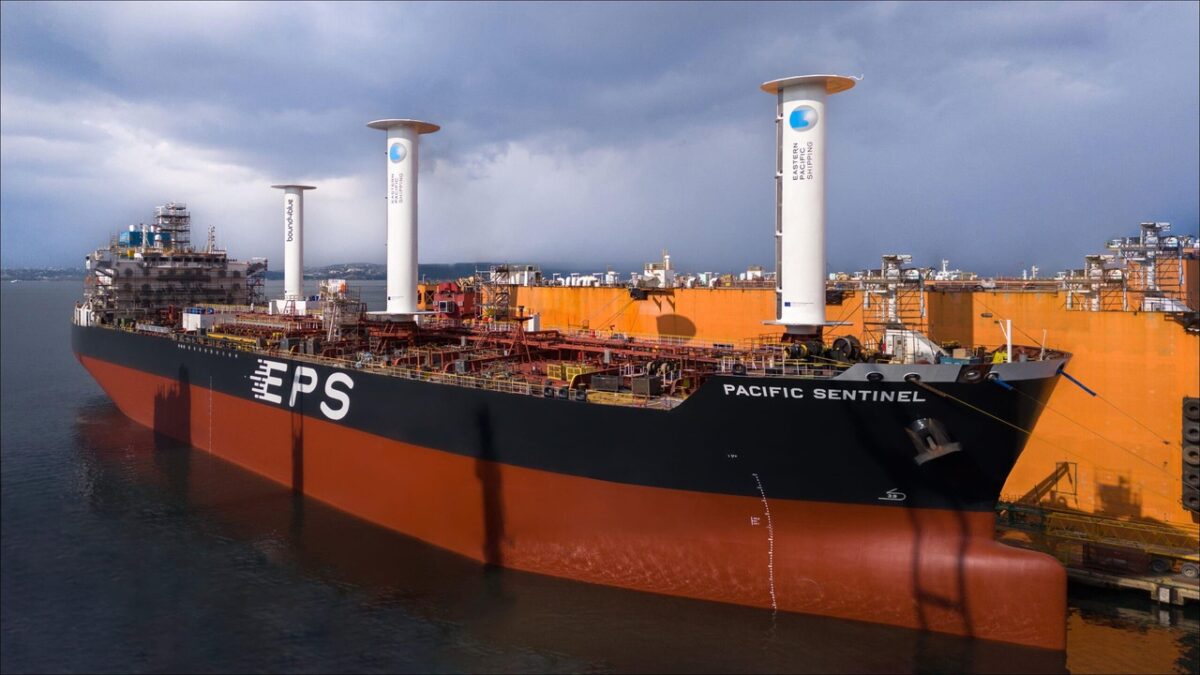
Bound4blue’s innovative wind propulsion system, known as eSAILs, represents a state-of-the-art advancement in sustainable shipping technology. The Pacific Sunstone was outfitted with three 22-meter suction sails, meticulously installed at New Times Shipbuilding in Jiangsu Province, China. Unlike traditional sails, these eSAILs operate on the principle of boundary layer suction, creating massive aerodynamic lift and generating significant forward thrust. This ingenious design allows vessels to harness the abundant power of the wind, thereby reducing their reliance on conventional engine power and fossil fuels.
The simplicity and ease of adoption of the eSAILs system make it particularly attractive for diverse vessel types, especially within the tanker wind propulsion sector. The technology integrates seamlessly with existing vessel operations, providing an auxiliary power source that contributes directly to fuel savings without necessitating radical changes to ship design or operational procedures. This pragmatic approach is crucial for widespread industry uptake, ensuring that the transition to more sustainable practices is both effective and economically viable for shipowners and operators.
Furthermore, the advanced control systems associated with eSAILs automatically adjust the sails to optimize performance based on real-time wind conditions, maximizing their efficiency across various maritime routes. This intelligent automation ensures that the vessel continuously benefits from the available wind power, contributing to consistent fuel consumption reduction and improved operational profiles. The robust construction and minimal maintenance requirements of the suction sails also add to their appeal, offering a long-term, reliable solution for enhanced vessel performance and environmental compliance.
Driving Maritime Decarbonization: Proven Savings and Industry Impact
At the heart of the widespread adoption of wind-assisted propulsion lies its undeniable potential to drive maritime decarbonization. The financial and environmental benefits are compelling. By generating supplementary thrust from wind, vessels equipped with eSAILs require less power from their main engines, directly translating into reduced bunker fuel consumption. This reduction not only lowers operational costs but, more importantly, slashes greenhouse gas emissions, including CO2, NOx, and SOx, aligning with global climate targets and stricter environmental regulations.
Concrete evidence of these savings comes from a comprehensive study conducted by the Singapore-based Global Centre for Maritime Decarbonisation (GCMD). Their analysis of the Pacific Sentinel, another EPS vessel retrofitted with Bound4blue’s system, revealed an average instantaneous power saving of 7.2%. The data indicated that the true figure is very likely between 6.2% and 8.2% during trials, a significant achievement for any vessel type. Such quantifiable results provide crucial validation for the technology, building confidence among shipowners and operators considering similar investments in clean shipping technology.
These verified power savings demonstrate that Bound4blue’s wind propulsion solution is not merely a theoretical concept but a practical, high-impact tool for achieving tangible environmental improvements. The operational data gathered from early adopters like EPS are vital for accelerating the broader acceptance and deployment of suction sails across the world’s merchant fleet. As the industry strives to meet ambitious decarbonization goals, proven efficiency gains from technologies such as eSAILs become indispensable assets in the arsenal against climate change, paving the way for a greener future in shipping.
The Tanker Segment: A Key Frontier for Wind Propulsion
Bound4blue’s wind propulsion system has garnered significant popularity within the tanker segment, a crucial but challenging sector for decarbonization. Tankers, essential for global trade, transporting vast quantities of crude oil, refined products, and chemicals, often pose unique headaches when it comes to reducing their environmental footprint. Their operational profiles, which frequently involve extensive voyages and specific cargo handling requirements, demand robust and reliable solutions that do not compromise safety or efficiency. The simplicity and ease of adoption of eSAILs are precisely what makes them an ideal fit for these complex vessels.
José Miguel Bermúdez, CEO and Co-founder of Bound4blue, emphasized this point, stating, “Tankers are integral to world trade, but, due to their complexity, can pose headaches in terms of decarbonization.” This acknowledgment underscores the strategic importance of tailoring solutions to specific vessel types. The ability of eSAILs to integrate without extensive modifications to the tanker’s structure or operational procedures offers a pragmatic pathway for fleet owners to enhance their environmental performance without incurring prohibitive costs or downtime. This is particularly attractive for the high-volume, continuous operations characteristic of the tanker industry.
The successful installation on the Pacific Sunstone, an MR tanker, is particularly noteworthy as MR tankers constitute a substantial portion of the global tanker fleet, carrying diverse liquid cargoes worldwide. Showcasing the efficacy of tanker wind propulsion on such a workhorse vessel demonstrates the technology’s versatility and broad applicability. It sends a strong signal to the wider industry that even the most conventional and economically critical vessel segments can adopt advanced renewable energy at sea solutions, contributing significantly to global shipping sustainability efforts.
Eastern Pacific Shipping’s Commitment to Sustainability and Innovation
Eastern Pacific Shipping (EPS) has consistently positioned itself as a leader in embracing sustainable shipping practices and technological innovation. The company’s decision to partner with Bound4blue for multiple eSAILs installation projects underscores its unwavering commitment to environmental stewardship. The Pacific Sunstone project is particularly significant as it marks EPS’s first newbuild installation, following a successful retrofit project on the Pacific Sentinel. This progression from retrofitting existing vessels to integrating the technology into new constructions demonstrates a long-term strategic vision for a greener fleet.
EPS’s proactive approach to adopting wind-assisted propulsion systems is a clear indication of its dedication to achieving ambitious decarbonization targets ahead of regulatory mandates. By investing in proven clean shipping technology, EPS is not only reducing its carbon footprint but also enhancing its operational efficiency and resilience against future fuel price volatilities. This forward-thinking strategy positions EPS at the forefront of the industry’s transition towards more environmentally friendly shipping models, showcasing a pragmatic blend of economic responsibility and ecological consciousness.
This robust commitment from a major player like EPS serves as a powerful catalyst for broader industry change. When leading companies demonstrate the viability and benefits of maritime innovation like Bound4blue’s wind propulsion, it encourages other shipping lines to consider similar investments. The collaboration between technology providers and shipowners is essential for accelerating the pace of decarbonization, fostering a collective movement towards a truly sustainable global maritime industry, where profitability and planetary health go hand in hand.
The Future of Wind Propulsion: Scaling Sustainable Shipping
The successful deployment of Bound4blue’s wind propulsion system on EPS vessels represents more than just an engineering feat; it symbolizes a tangible step towards a future where shipping sustainability is standard practice. As the global maritime industry grapples with increasingly stringent environmental regulations and the pressing need to reduce its carbon footprint, technologies like suction sails will play a pivotal role. The momentum generated by projects like the Pacific Sunstone installation is crucial for scaling these solutions across the vast and diverse world fleet.
The future of wind-assisted propulsion is bright, with continuous advancements in design, materials, and control systems promising even greater efficiencies and broader applicability. As operational data accumulates and the economic benefits become more widely understood, it is anticipated that more shipowners will integrate these systems into both newbuilds and existing vessels. The ongoing collaboration between technology developers, shipyards, and shipping companies is essential to overcome remaining challenges and unlock the full potential of renewable energy at sea for global trade.
Ultimately, the journey towards a fully decarbonized maritime sector requires a multi-faceted approach, incorporating alternative fuels, operational optimization, and, crucially, innovative clean shipping technology like wind propulsion. The strides made by Bound4blue and Eastern Pacific Shipping are an inspiring example of how dedicated effort and technological ingenuity can transform the industry, ushering in an era of greener, more efficient, and truly sustainable shipping operations for the benefit of our planet and future generations.