

ARC Transfers Titania to US Flag to Expand Military Sealift Capacity

American Roll-on/Roll-off Carrier Group reflags the vehicle carrier Titania, increasing its fleet capacity for U.S. military and commercial cargo.
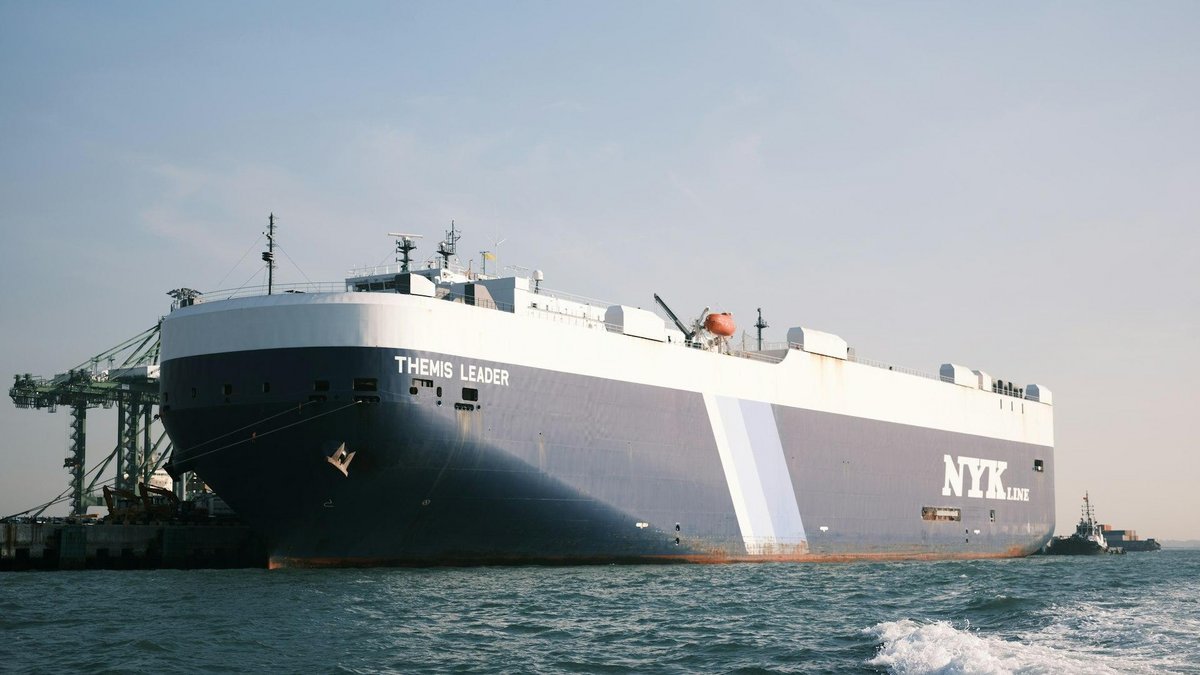
Florida-based American Roll-on/Roll-off Carrier Group (ARC) has transferred the 74,921-gross ton vehicle carrier Titania to the U.S. registry. Now renamed ARC United, the vessel joins the company’s fleet as part of a broader effort to increase capacity for transporting military equipment and commercial vehicles.
Built in 2011, the 757-foot vessel moved from the Malta flag to the U.S. flag during the summer. It features 13 cargo decks, including five with hoistable sections, and offers a capacity of nearly 8,000 car-equivalent units (CEU). The ship is equipped with a stern ramp rated for 320 metric tons, allowing for the loading and discharge of heavy rolling cargo without the need for shoreside cranes.
The vessel is the ninth in the ARC fleet capable of transporting V-22 Osprey and CH-47 Chinook aircraft. ARC operates as a subsidiary of Norway’s Wallenius Wilhelmsen Group and participates in the Maritime Security Program (MSP), which maintains a fleet of militarily useful merchant ships available to support U.S. Department of Defense sealift requirements.
Why it matters
The addition of the ARC United signals a continued commitment to maintaining a robust U.S.-flagged fleet capable of handling outsized military assets. For the U.S. Department of Defense, the primary value lies in the vessel’s specific design features, particularly the deck clearance and ramp capacity required for heavy military aircraft like the Chinook and Osprey. These capabilities are not standard on all commercial vehicle carriers, making this vessel a specialized asset for overseas deployments and military exercises.
For commercial charterers and industry participants, the transfer highlights the ongoing integration of commercial trade with government sealift needs. By operating the vessel in international trade while remaining available for military requirements, ARC maximizes the utility of the ship under the MSP framework. This dual-use model ensures that the vessel remains commercially viable during peacetime while guaranteeing that the U.S. maintains the necessary logistics infrastructure to support armed forces globally.
What to watch
The Maritime Security Program is currently authorized to support a total of 60 vessels, with the program’s authorization running through September 30, 2035.