Alfa Laval Ammonia Fuel System Test Advances Green Shipping | Mariner News
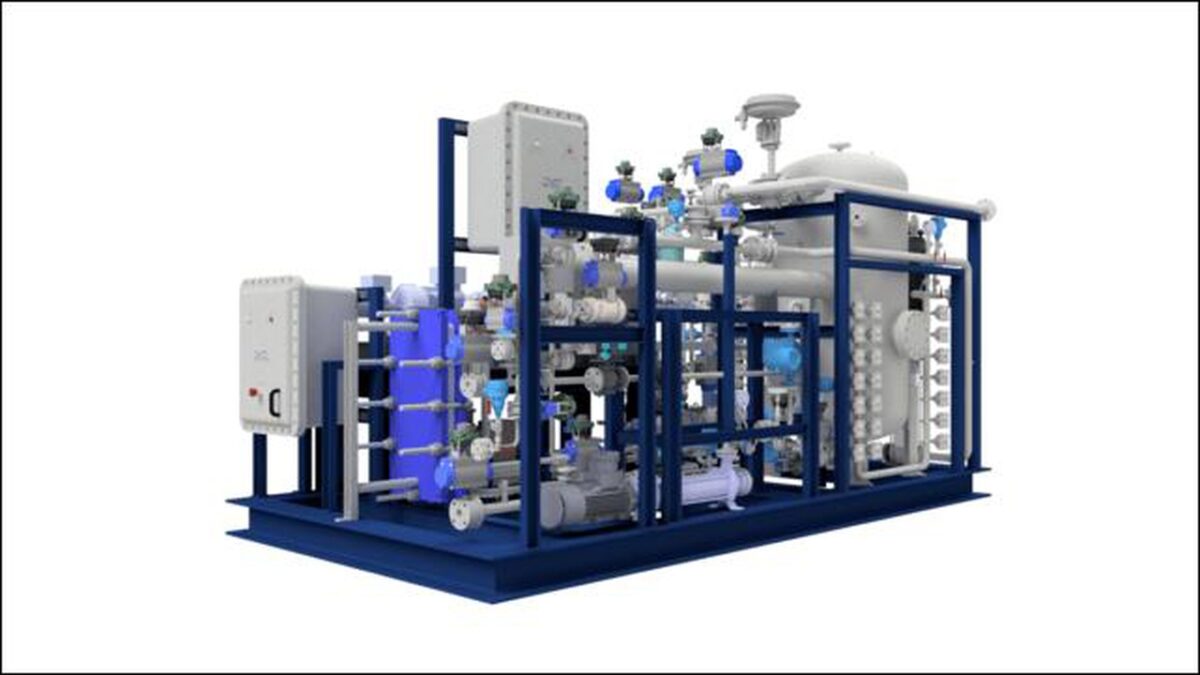
The global maritime industry is on an accelerating trajectory towards decarbonization, with a critical focus on developing and integrating sustainable marine fuels. A major milestone in this journey has been achieved by Alfa Laval, a leader in heat transfer, centrifugal separation, and fluid handling, which recently completed a pivotal factory acceptance test (FAT) for its cutting-edge ammonia fuel supply system. This landmark achievement not only reaffirms Alfa Laval’s commitment to sustainable shipping but also signals a significant leap forward in making ammonia a viable, carbon-neutral fuel for the next generation of vessels. The successful test validates the system’s readiness for seamless integration with ammonia-fuelled two-stroke engines, paving the way for a greener maritime future.
This crucial test was rigorously certified by the China Classification Society (CCS), an internationally recognized classification organization, which confirmed that the Alfa Laval system comprehensively meets all stringent safety and functional requirements essential for its application on ammonia-powered ships. Such certifications are paramount, providing confidence in the reliability and safety of emerging fuel technologies. The completion of this FAT is not an isolated event; it represents the first of seven advanced fuel supply units that have been ordered by Tianjin Southwest Maritime. These units are specifically designated for integration into a new fleet of ammonia dual-fuel carriers, demonstrating a tangible shift towards alternative propulsion solutions within the shipping sector. The vessels themselves are slated for construction by CSSC Huangpu Wenchong Shipbuilding, a prominent name in maritime construction, and will be equipped with high-performance ammonia dual-fuel engines supplied by WinGD, a leading developer of low-speed gas and diesel engines. This collaborative ecosystem underscores the industry-wide effort to pioneer and adopt sustainable marine technologies.
A Milestone for Sustainable Marine Propulsion
Alfa Laval’s successful completion of the certified factory acceptance test for its marine ammonia fuel supply system marks a monumental achievement in the quest for sustainable marine propulsion. This rigorous evaluation, a critical step before any system moves to onboard installation, confirmed that the innovative technology not only meets but exceeds the stringent safety and operational requirements demanded by the modern maritime sector. The certification by the China Classification Society (CCS) provides undeniable proof of the system’s robustness and compliance with international standards, ensuring safe and efficient operation with a highly potent fuel like ammonia. This development is particularly significant for the future of ammonia-fuelled two-stroke engines, which are expected to power a substantial portion of the global shipping fleet in the coming decades.
The test specifically validated the system’s design integrity, the sophistication of its control architecture, and the comprehensive nature of its ammonia-handling procedures. Through meticulous simulations of both routine operational scenarios and various fault conditions, Alfa Laval demonstrated the system’s ability to maintain safety and performance under diverse circumstances. This level of verification is essential for building confidence in alternative marine fuels and their associated technologies. The successful completion of this FAT paves the way for the physical integration of these units into the new dual-fuel carriers commissioned by Tianjin Southwest Maritime, vessels that will be constructed by CSSC Huangpu Wenchong Shipbuilding and utilize advanced WinGD ammonia dual-fuel engines. This convergence of expertise from various industry leaders highlights a collective commitment to accelerating maritime decarbonization.
Unpacking Alfa Laval’s Ammonia Fuel Supply Technology
The technological prowess behind Alfa Laval’s ammonia fuel supply system is a testament to years of research, development, and engineering excellence. At its core, the system is designed to safely and efficiently prepare and deliver ammonia as a fuel to marine engines, navigating the unique properties of this carbon-free energy carrier. Key aspects of the system include advanced pumping and conditioning units, sophisticated control mechanisms, and robust safety protocols for handling ammonia, which is known for its toxic characteristics. The successful verification of the system’s design and ammonia-handling procedures through the FAT confirms its operational integrity and reliability, crucial factors for widespread adoption in the shipping industry.
Crucially, the testing program incorporated comprehensive simulations of various operational and fault scenarios. This allows engineers to assess the system’s resilience and its ability to respond effectively to unexpected conditions, ensuring maximum safety for crew and vessel. The system’s control architecture, designed for precision and responsiveness, plays a vital role in optimizing fuel delivery and engine performance while minimizing emissions. Furthermore, the entire system underwent rigorous validation by CSSC Power Group Corporation (CPGC), acting as the system integrator. This collaborative approach, involving different specialists across the maritime value chain, underscores the complexity and importance of developing integrated green marine solutions that are both effective and secure. Alfa Laval’s innovation directly contributes to achieving ambitious emission reduction targets within the global shipping fleet.
Ammonia: The Promising Horizon for Future Marine Fuels
Ammonia (NH3) is increasingly recognized as a leading candidate among the future marine fuels vying to replace traditional heavy fuel oil. Its primary advantage lies in its potential for carbon-free combustion, directly contributing zero CO2 emissions at the point of use. This makes it an attractive option for the shipping industry, which is under immense pressure to meet the International Maritime Organization (IMO)’s ambitious decarbonization targets. The global availability of nitrogen, a key component of ammonia, and the possibility of producing green ammonia using renewable energy sources, offer a pathway towards truly sustainable fuel cycles. This makes it a powerful contender in the race towards net-zero shipping.
However, the transition to ammonia as a primary marine fuel presents its own set of challenges, including its inherent toxicity, requiring advanced safety measures and crew training. Furthermore, while direct CO2 emissions are eliminated, the combustion of ammonia can produce nitrogen oxides (NOx), necessitating exhaust gas after-treatment technologies to comply with air quality regulations. Despite these hurdles, the extensive research and development efforts by companies like Alfa Laval, coupled with significant investments in ammonia bunkering infrastructure and engine technology, are rapidly addressing these concerns. The economic viability and scalable production of green ammonia will be pivotal in its widespread adoption, but current progress indicates a strong future for this clean shipping fuel.
Driving the Global Maritime Decarbonization Agenda
The successful testing of Alfa Laval’s ammonia fuel supply system is more than just a technological achievement; it’s a significant catalyst driving the entire global maritime decarbonization agenda. Such breakthroughs instill confidence in shipowners, investors, and regulatory bodies that viable, large-scale solutions for sustainable shipping are within reach. This encourages further investment in research and development, stimulates the growth of green technologies, and accelerates the transition away from fossil fuels. The project involving Tianjin Southwest Maritime, CSSC Huangpu Wenchong Shipbuilding, and WinGD exemplifies the power of cross-industry collaboration in making zero-emission shipping a reality.
This development contributes directly to the long-term strategic goals of the maritime industry to achieve significant reductions in greenhouse gas emissions. As global trade continues to grow, so does the demand for greener logistics and transportation. Companies that lead in adopting and providing eco-friendly propulsion solutions will gain a significant competitive advantage. The focus on robust testing and certification by bodies like CCS ensures that these innovations are not only effective but also safe and reliable, which is paramount for a high-stakes industry like shipping. This forward momentum is crucial for the industry to meet its responsibilities towards environmental stewardship and to secure a sustainable future for global commerce.
The Path Forward: From Test Bench to Open Seas
Following this successful factory acceptance test, the Alfa Laval ammonia fuel supply system is now poised for its next critical phases: onboard installation, commissioning, and ultimately, sea trials. These steps will provide real-world data and insights into the system’s performance under dynamic operating conditions, confirming its efficiency and reliability at sea. This progression from laboratory testing to actual vessel integration is a vital part of de-risking new marine technologies and ensuring their seamless adoption across the global fleet. The rigorous testing regimen will encompass various operational scenarios, demonstrating the system’s adaptability and robustness in demanding maritime environments.
Looking ahead, the successful deployment of these ammonia-powered vessels will serve as a powerful proof of concept, inspiring further orders and wider adoption of this groundbreaking technology. Alfa Laval’s commitment extends beyond simply supplying equipment; it encompasses supporting the industry in its journey towards sustainable and emission-free shipping. This includes ongoing R&D, continuous product improvement, and collaborative efforts with partners to build a comprehensive ecosystem for ammonia as a marine fuel. The maritime sector stands at a pivotal juncture, and advancements like Alfa Laval’s ammonia fuel supply system are instrumental in shaping a future where international trade can thrive without compromising environmental health. The era of green shipping is not just an aspiration; it is becoming a tangible reality, driven by innovation and strategic partnerships across the globe.